The point
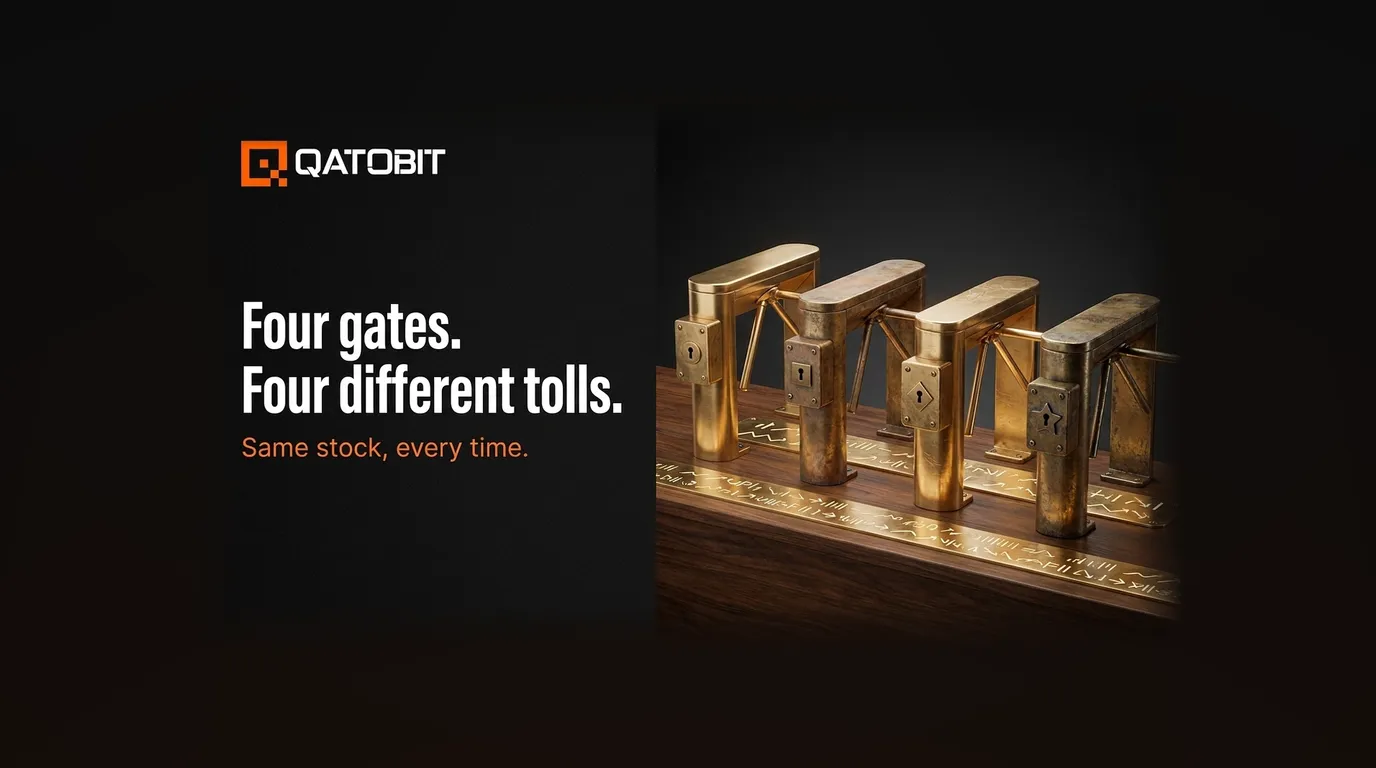
AMD's share price moved about six percent in a single US market session on 2026-09-08. Indian search interest for its share price spiked within hours of the close. Getting a piece of that move from India comes down to four routes. An international broker under the RBI's remittance scheme. An Indian mutual fund or ETF with US exposure. The GIFT City exchange route. Or a tokenized version on a crypto platform. Each hands the investor a different legal claim to that stock, at a different cost.
Why the same stock carries four different price tags
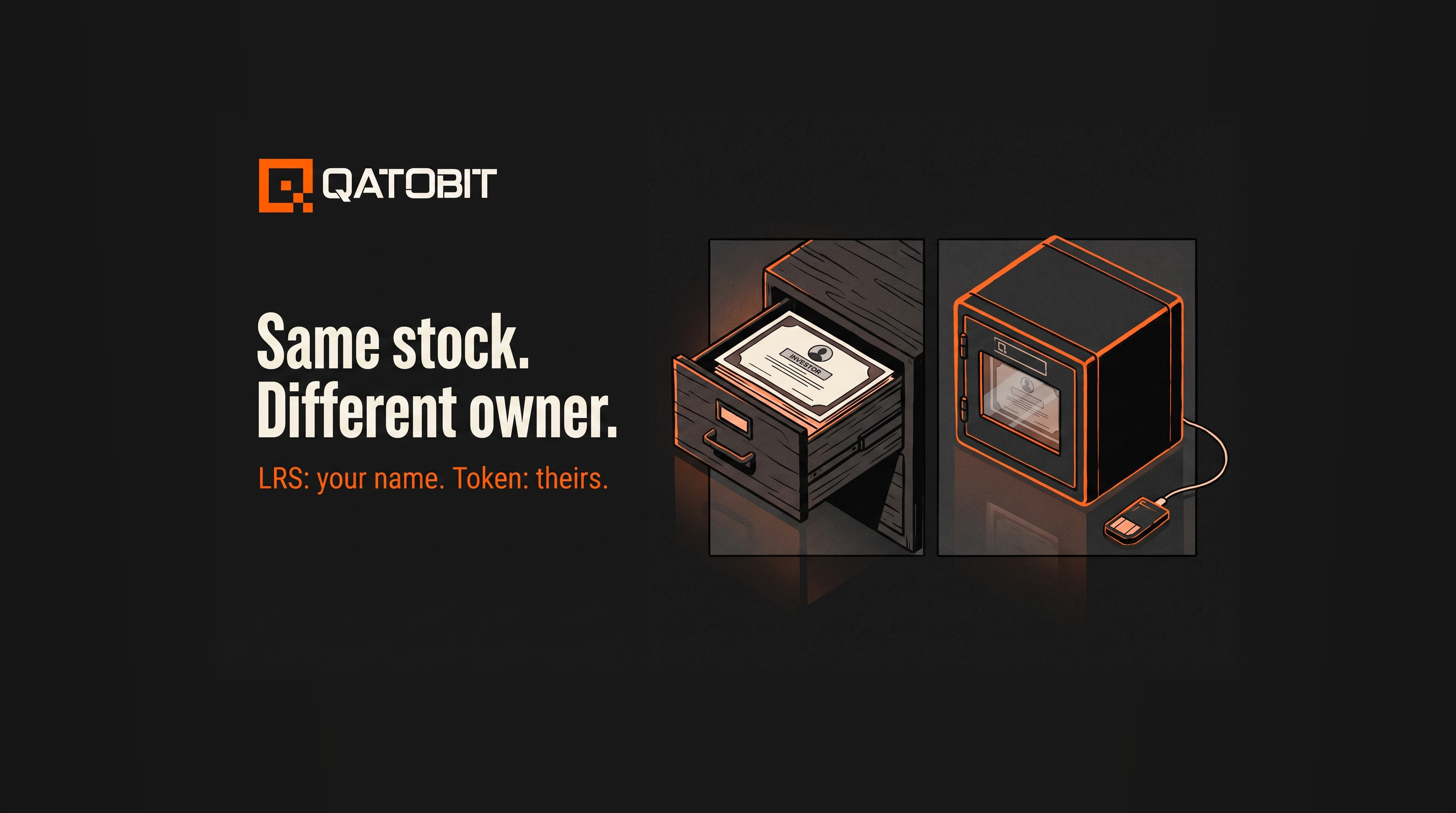
"Buy a US stock" sounds like one action. It is actually four separate legal arrangements wearing the same ticker symbol. One puts a US broker's name on a share in the investor's account. Another puts an Indian mutual fund's name on a pooled holding. A third opens a demat account inside a purpose-built Indian exchange zone. The fourth puts a token in a crypto wallet, backed by a share the platform's own custodian holds. Each has its own ceiling, its own tax collection point, and its own answer to whether a dividend or a vote reaches the investor.
Sending money abroad under the RBI's remittance scheme
A resident individual can remit up to USD 250,000 per financial year under the Reserve Bank of India's Liberalised Remittance Scheme (LRS). That ceiling covers every permitted purpose combined, education and travel included, and carries no separate allowance for stock purchases. Send the money to an international broker, and the share sits in the investor's own name, the same way it would for a US resident buying the identical stock.
Move money abroad for investment and it also crosses paths with tax collection. The threshold is a combined Rs 10 lakh a year across every LRS remittance made through every authorised bank. Nothing is collected on that first Rs 10 lakh. Remittances for a purpose other than education or medical treatment are taxed at source at 20 percent on whatever crosses that line, at the rate effective 2026-04-01. Remit Rs 12,00,000 in a year to buy US stock, and TCS falls on the Rs 2,00,000 above the threshold. That is Rs 40,000, collected at the time of transfer and set off against the investor's tax bill at filing. The broker's own transfer fee and currency conversion spread apply on top, at whatever rate that specific broker states on its own fee page, since these vary provider to provider.
One more line worth knowing before a position gets large. The United States taxes the estates of non-resident, non-citizen investors on US-situated assets, shares included, above a filing threshold of USD 60,000. The IRS states that threshold is never adjusted for inflation. This has nothing to do with the LRS ceiling. It is a separate US estate tax question that only matters at death, once a holding grows past that line.
Buying through an Indian mutual fund or ETF with US exposure
This route sends no money abroad and crosses no LRS ceiling. An investor buys units in an Indian mutual fund or ETF that itself holds US stocks, and the fund manager does the cross-border investing.
The catch sits one level up, at the industry rather than the investor. SEBI caps how much the entire Indian mutual fund industry can invest overseas at USD 7 billion, combined across every fund house. As that figure fills up, individual funds pause new subscriptions until redemptions free room again. As of early 2026, only around 28 international mutual funds and six ETFs stayed open to fresh money, against an industry managing more than Rs 80 lakh crore. A closed fund simply means the industry cap is full. It can reopen and close again as the cap moves.
The GIFT City exchange route
NSE IFSC, the National Stock Exchange's international arm, sits inside the GIFT City International Financial Services Centre in Gandhinagar. It lets resident retail investors buy Unsponsored Depository Receipts tracking individual US stocks on the NYSE and NASDAQ, in fractional quantities. The investor opens a demat account inside GIFT City, with a bank's IFSC banking unit as depository participant and custodian.
This route still draws on the same RBI remittance scheme as a direct international broker. It launched under a regulatory sandbox framework, so its coverage of stocks and brokers has changed as that sandbox has widened. Where it differs from a direct US brokerage account is what the receipt passes through. The investor is entitled to receive corporate action benefits tied to the underlying stock. A dividend the company pays is a benefit the receipt is built to carry, rather than something left to a platform's own discretion.
A tokenized version on a crypto platform
Buy a tokenized US stock on an Indian crypto platform, and the transaction settles in rupees, entirely inside India. No money leaves the country, so neither the LRS ceiling nor its TCS applies. That reading rests on the platforms' own position rather than on any RBI ruling addressing this specific product.
What does apply is India's tax treatment of a virtual digital asset. The Income Tax Act's Section 2(47A) defines a virtual digital asset broadly enough to catch a token that represents value and can be transferred electronically. Tax commentary treats a tokenized stock as sitting inside that definition, because the token itself changes hands rather than a direct transfer of the underlying share. No court ruling and no notification naming tokenized equity by itself has tested that reading either way.
Sitting inside the VDA regime brings two fixed numbers. Section 115BBH taxes any gain on transfer at a flat 30 percent, plus applicable surcharge and cess. Only the original cost of acquisition can be deducted, and no other expense is allowed. A loss cannot be set off against any other income, and cannot be carried forward to a future year. Section 194S adds 1 percent TDS on the transfer value once it crosses Rs 10,000 in a year. That threshold rises to Rs 50,000 for an individual or HUF below the Section 194Q turnover line. Neither rule changes with how long the position was held.
What the investor holds is a token representing a claim against the platform's own custody arrangement for the share. A dividend or a vote reaches the token holder only when that specific platform has built and documented the pass-through.
Qatobit's own tokenized-equity product sits in this route. QSI GEQ8 is an index of eight global companies at the intersection of technology, digital finance and innovation, rebalanced monthly. It holds three sleeves. Platform, 45 to 55 percent: Apple, Amazon, Alphabet, Meta Platforms and NVIDIA. Digital finance, 30 to 40 percent: Coinbase and Robinhood Markets. Innovation, 10 to 20 percent: Tesla. No single holding sits above 15 percent or below 3 percent. It starts at Rs 2,000, carries a 0.35 percent fee per rebalance, and no annual management fee. Like any tokenized-equity product, it sits outside SEBI's regulatory perimeter.
What Rs 2,00,000 costs on each route
A Rs 2,00,000 commitment for the year sits well under the combined Rs 10 lakh LRS threshold. Both the direct broker route and the GIFT City route owe no TCS on it at that size. Each route still carries its own cost. A broker's transfer fee and FX spread apply on the LRS route. GIFT City adds its own broker and demat charges. The mutual fund route carries only an expense ratio, no remittance cost at all. The tokenized route adds 1 percent TDS on the transfer, plus a flat 30 percent tax with no set-off if the position gains when sold.
Push the same investor to Rs 12,00,000 remitted abroad in the year, and the arithmetic moves only on the two routes that leave the country. Rs 10,00,000 of that carries no TCS. The remaining Rs 2,00,000 is taxed at source at 20 percent. That is Rs 40,000, collected when the money moves and credited against the investor's tax bill when they file. The mutual fund route and the tokenized route never touch this number, because neither one sends a rupee abroad.
Choosing the position, not the platform
None of these four routes is the right answer for every investor. What decides it is the position an investor actually wants to hold. A shareholder of record through a regulated foreign broker. A unit in a pooled Indian fund. A depository receipt inside GIFT City with the dividend built in. Or a token against a platform's own custody promise.
What a Crypto Index actually holds and how QSI GEQ8 is built and rebalanced cover the tokenized-index side of that choice in full. Who holds the share on a tokenized stock versus an LRS-bought one walks through the custody question this piece only touches. Price the toll before the money moves.
Frequently asked questions
What is the LRS limit for buying US stocks from India?
USD 250,000 per financial year per resident individual, combined across every purpose that person uses the Liberalised Remittance Scheme for that year. Stock purchases share the ceiling rather than getting a separate one.
Is tax collected when I send money abroad to buy a US stock?
Yes, for most investors. Nothing is collected on the first Rs 10 lakh remitted under LRS in a financial year. Twenty percent is collected at source on whatever crosses that threshold, for a purpose other than education or medical treatment. That rate took effect 2026-04-01, and it is credited against the investor's tax bill at filing.
Can I buy US stocks without sending money abroad at all?
Yes. An Indian mutual fund or ETF that holds US stocks directly does that on the investor's behalf, and a tokenized version on a crypto platform settles in rupees. The mutual fund route is capped at the industry level by SEBI's combined USD 7 billion overseas investment limit. That is why a specific international fund can sit closed to new money even when the investor is ready to invest.
Does a tokenized US stock pay a dividend?
Not by default. The token is a claim on the platform's own custody arrangement rather than direct ownership of the share. A dividend or a vote reaches the holder only if that specific platform has built and documented the pass-through. The tax treatment stays the same either way.
How is a tokenized US stock taxed in India?
As a virtual digital asset. Any gain on transfer is taxed at a flat 30 percent under Section 115BBH, with no set-off against other income and no carry-forward of losses. A 1 percent TDS applies under Section 194S once the transfer value crosses Rs 10,000 in a year.
Crypto investments are subject to market risk. Not financial advice.
“A better allocation begins with a better explanation.”
Qatobit principle
Published construction. Fixed cadence. Versioned control.