The point
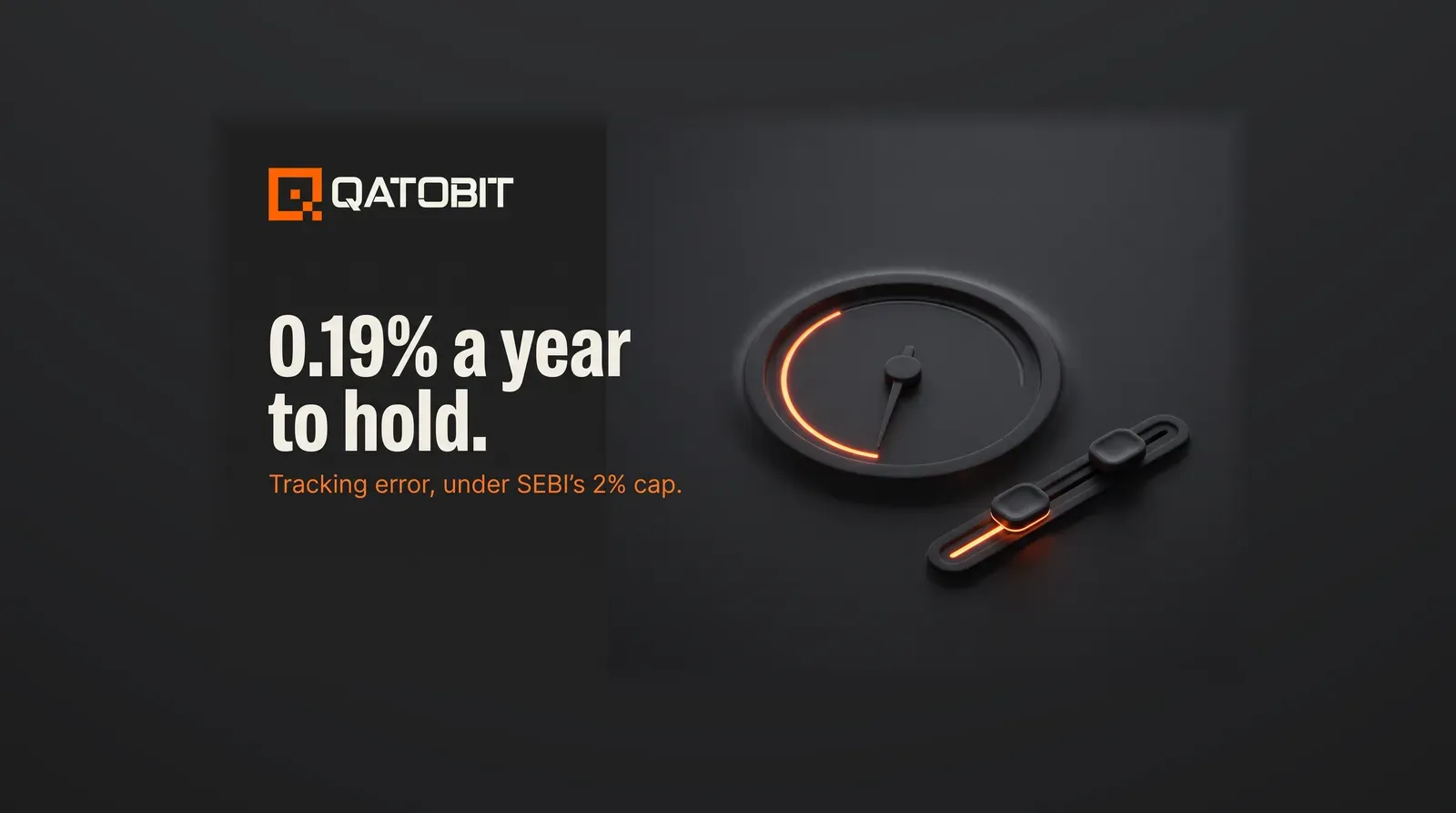
An index fund is a mutual fund that buys every stock in a benchmark index, such as the Nifty 50, in close to the same proportion as the index itself, instead of trying to pick winners. SBI's Nifty Index Fund direct plan carried a total expense ratio of 0.19% and a one-year tracking error of 0.0158% as of 31 May 2026, tight numbers that show what a well-run Indian index fund costs to hold.
What an index fund is
A market index such as the Nifty 50 or the Sensex is a fixed list of companies, weighted by size, that stands in for how a slice of the stock market is doing. An index fund is a mutual fund built to copy that list: the same companies, in close to the same weights, with no fund manager choosing what to buy or when to sell. That is what makes it passive. An actively managed equity fund pays a manager to research companies and try to beat the index. An index fund pays for the simpler job of replicating it.
In India, an index fund is registered and regulated the same way any other mutual fund scheme is, under the Securities and Exchange Board of India's mutual fund rules. What sets it apart in its own offer document is one promise: hold the benchmark's constituents in the benchmark's weights, and report, on a fixed schedule, how closely that promise was kept.
How closely an Indian index fund tracks its benchmark
Two numbers describe how well an index fund does its one job. Tracking difference is the plain gap between the fund's return and the index's return over a period, in percentage points. Tracking error is a tighter measure, the standard deviation of the daily return gap between the fund and its benchmark over a trailing one-year window, which captures how consistently the fund stays close rather than just where it lands on average. The full calculation is worked through here.
SEBI caps how loose that tracking is allowed to get. Under SEBI's circular on the development of passive funds, SEBI/HO/IMD/DOF2/P/CIR/2022/69, dated 23 May 2022 and effective from 1 July 2022, the tracking error for an equity index fund or ETF cannot exceed 2% on a trailing one-year basis, and every Asset Management Company must publish the number daily on its own website and on AMFI's. A fund that breaches the cap has to report the breach to its trustees.
SBI's Nifty Index Fund factsheet for May 2026 shows what that looks like on a large scheme tracking the Nifty 50 TRI, the Total Returns Index that adds back the dividends paid by the fifty constituent companies. As of 31 May 2026, the fund reported a one-year tracking error of 0.0200% on its regular plan and 0.0158% on its direct plan, with a three-year tracking error of 0.0300% on the regular plan. Its one-year tracking difference, the plain return gap against the index, was minus 0.4540% on the regular plan and minus 0.2515% on the direct plan over the same period. Both sit far inside SEBI's 2% ceiling, which is what a tightly run large-cap index fund looks like in practice.
What it costs to hold one
The expense ratio is the annual fee a fund deducts from its assets to run itself, expressed as a percentage of what you have invested. That fee compounds against you the longer you stay invested, so it is worth checking before anything else about a fund.
AMFI's own disclosure standard breaks the number into four parts: a base expense ratio for fund management, brokerage cost, transaction cost from buying and selling the underlying shares, and statutory levies such as GST and stamp duty, all reset and published monthly. Direct plans strip out one further cost, the distributor's commission, which is why a direct plan is always cheaper than the regular plan of the same scheme bought through an advisor.
The same SBI factsheet shows the gap plainly: a total expense ratio of 0.40% on the regular plan against 0.19% on the direct plan, as of 31 May 2026, with the base expense ratio at 0.34% and 0.16% respectively. The fund's assets under management stood at ₹13,284.20 crore on the same date, scale that lets a large index fund spread its fixed running costs over more money and keep the percentage low.
An index fund is not an ETF, even on the same index
A Nifty 50 index fund and a Nifty 50 ETF can hold the identical fifty stocks in the identical weights and still be different products to own. The difference comes down to how you buy and sell the unit, not what sits inside it: an index fund is bought and redeemed from the AMC at the day's closing price, while an ETF trades on the NSE or BSE all day at whatever price the market sets, through a demat and trading account you would otherwise not need.
The India-specific version of the index fund vs ETF question usually comes down to two things: whether you already hold a demat account, and whether you want a single end-of-day price or a live one. Cost tends to run close on both sides once a scheme is large and its expense ratio is low, so the account you already have decides more than the underlying index does.
The same rules-based idea, applied to a different asset
Hold a defined basket, weight it by a published rule, rebalance it on a fixed schedule, and never let one person's daily opinion decide what stays in or out. That is the entire idea behind an index fund, and it is also the entire idea behind a crypto index. Qatobit is a crypto index investing platform in India: investors hold a curated basket of digital assets, rebalanced on a published methodology, rather than picking coins and timing entries. Its four QSI indices apply that same construction logic, a stated basket rebalanced monthly under a documented methodology, to a market that has none of the Nifty 50's regulatory wrapper.
That is where the parallel stops. A Nifty 50 index fund holds regulated Indian equities inside a SEBI-governed mutual fund structure, with a 2% tracking error ceiling enforced by the regulator. A crypto index holds digital assets that trade with far higher volatility and sit outside that framework. The methodology travels across both, but the risk each one carries does not.
What a crypto index holds, and how its monthly rebalance works, is covered in What Is a Crypto Index and How Does It Work?
What to check before you pick one
Before choosing between two funds tracking the same index, three numbers do most of the work: the expense ratio on the direct plan, the one-year tracking error and tracking difference on the AMC's own factsheet or on AMFI's site, and the fund's AUM, which tells you whether it is large enough to keep costs low and trading impact small.
A crypto index tries to bring that same discipline, publish the mechanics and let an investor check them before allocating, to a newer and far more volatile asset class. Whether that allocation belongs in a portfolio at all is a separate question from how the product itself is built.
Frequently asked questions
What are index funds?
An index fund is a mutual fund built to copy a market index, such as the Nifty 50, by holding the same stocks in close to the same weights instead of trying to beat the index. Its fund manager is involved only in the sense of replication, not stock selection, and its running cost sits far lower than an actively managed fund's as a result.
What is a good expense ratio for an index fund in India?
There is no fixed number, but direct plans on large Nifty 50 index funds tend to run close to 0.15% to 0.20%. SBI's Nifty Index Fund direct plan, for example, carried a total expense ratio of 0.19% as of 31 May 2026. The regular plan of the same fund, sold through a distributor, ran more than double that at 0.40%.
What is the difference between an index fund and an ETF in India?
Both can track the identical index. An index fund is bought and redeemed directly from the AMC at the day's closing price. An ETF trades on the NSE or BSE throughout the day at live market prices, and buying one needs a demat and trading account. The full mechanics are covered here.
What is tracking error, and how tight should it be?
Tracking error measures how consistently a fund's daily returns move with its benchmark's, calculated as a standard deviation over a trailing one-year period. SEBI caps it at 2% for equity index funds and ETFs under its May 2022 circular on passive funds. SBI's Nifty Index Fund reported a one-year tracking error of 0.0158% on its direct plan as of 31 May 2026, well inside that ceiling.
Is a crypto index the same idea as an index fund?
The construction idea is the same: hold a defined basket, rebalanced on a published schedule, with no one picking individual names. Qatobit applies that idea to crypto through its four QSI indices. The asset and the risk are not the same. A Nifty 50 index fund holds regulated Indian equities under a SEBI tracking error ceiling, while a crypto index holds digital assets that are far more volatile and sit outside that framework.
Crypto investments are subject to market risk. Not financial advice.
“A better allocation begins with a better explanation.”
Qatobit principle
Published construction. Fixed cadence. Versioned control.