The point
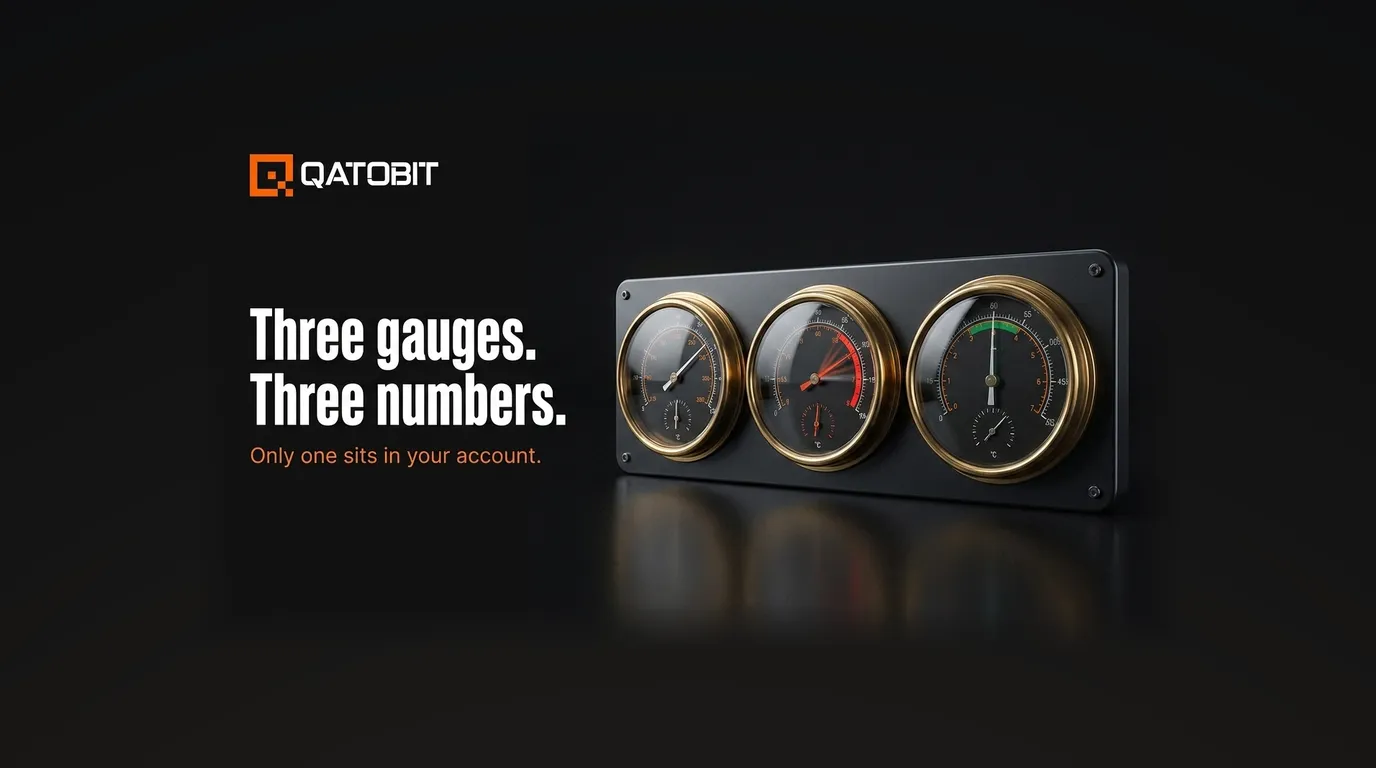
India's economy grew 7.8 percent in the April to June 2026 quarter. In the same window, the Nifty 50 closed lower for a fourth straight week, down 2.74 percent from 24,570.65 on 7 August to 23,897.70 on 4 September 2026. An economy, a market index and the specific basket a monthly investor holds are three separate numbers. Each is built by its own rule set, and only one of them sits inside that investor's own account.
A headline that puts both figures in one sentence invites the reader to treat them as the same kind of number. They are not. One totals rupees of output across an entire country. The other totals a price index built off fifty share prices.
Why a growing economy and a falling index are not a contradiction
Gross domestic product counts value added across the whole economy. Every listed company, every unlisted one, farms, factories, shops and services, added up by the Ministry of Statistics and Programme Implementation from national accounts data. Q1 FY27 real GDP came in at 7.8 percent, against 6.9 percent a year earlier. Manufacturing grew 9.2 percent, services grew 10 percent, agriculture eased to 3.6 percent and mining contracted 2.4 percent off a high base, per the MoSPI release.
A market index counts something much narrower. The Nifty 50 is 50 specific companies, picked against an eligibility rule and weighted by free-float market capitalisation. It is priced by whatever changes hands that day. Financial services alone carry 36.47 percent of the index's weight. Oil and gas carry 9.52 percent, automobiles carry 7.06 percent. Three stocks alone, HDFC Bank, ICICI Bank and Reliance Industries, carry a combined 27.13 percent, per the NSE Indices factsheet. A handful of sectors, and three names, can pull the whole index down the same quarter the broader economy grows. The index was never built to track the economy. It was built to track 50 prices.
The three layers behind one headline
Mechanism 1: what an economy measures
GDP is an output number. It answers how much the country produced, in a plain quarter-over-quarter count. The figure moves on a quarterly cycle and gets revised as fuller data arrives. It says nothing about any single stock, sector or basket an investor personally holds.
Mechanism 2: what an index measures
An index is a rule set applied to a list. Which companies qualify, how much weight each one gets, and how often the list and the weights get reviewed. The Nifty 50's rule set reviews its constituent list on a set schedule and recalculates weights on free-float market cap, inside stated caps. Change the rule set and the number changes, even when not one company's underlying business changed at all.
Mechanism 3: what you actually hold
What sits in an investor's own account depends on which product they bought. A crypto index works on the same construction logic as any rules-based basket. Assets are picked against a published eligibility rule, weighted by a documented scheme, and rebalanced on a fixed cadence, a rule set entirely separate from the Nifty's or from GDP's. A Qatobit QSI index rebalances monthly, on its own schedule, against its own published weights. The Nifty's fourth losing week changes nothing inside that basket between one rebalance and the next. Neither does the quarter's GDP print.
How a rebalance actually moves money (a worked example)
Say an investor runs a monthly SIP into a four-asset crypto index. Its published target weights are 40, 30, 20 and 10 percent. By the time a rebalance falls due, the portfolio is worth ₹20,000. The assets have drifted unevenly: the first now sits at ₹9,200, or 46 percent of the total. The other three sit at ₹5,600, ₹3,600 and ₹1,600. These are hypothetical figures, used only to show the mechanism.
The rebalance brings every asset back to its published target, recalculated against the new ₹20,000 total. That means ₹8,000 for the first asset, ₹6,000 for the second, ₹4,000 for the third and ₹2,000 for the fourth. In practice, ₹1,200 is trimmed off the first asset and ₹400 is added to each of the other three. The only fee on that transaction is the standard 0.35 percent basket fee, applied to the amount traded. Trimming ₹1,200 costs ₹4.20. No annual management fee applies. This math runs the same way whether the Nifty closed up or down that week, and whether GDP printed 6 percent or 9 percent that quarter. The trigger is the calendar date on the index's own methodology, rather than the day's headline.
What this means for a monthly investor
A weekly index move, or a quarterly GDP print, is not information about a basket built on a different rule set. What actually changes a rules-based holding is a change to its own published methodology, or its own scheduled rebalance running as documented. Two things are worth checking each month instead of reacting to either headline. Has the index's published eligibility list or target weights changed. Did the scheduled rebalance execute on its stated date. A methodology page answers both questions directly. Neither the Nifty's weekly close, nor MoSPI's quarterly print, can answer them at all. A published rule set that has not changed this quarter is one line of that check. A rebalance log showing every scheduled date executed on time is the other. Together they matter more than whichever way that week's headlines went.
How to evaluate any crypto index's methodology walks through that checklist in full. What a crypto index actually is covers the construction from scratch. How a crypto index behaves during a market crash covers the same mechanism under stress, rather than in a routine month. An economy, a benchmark and a held basket will keep printing three different numbers in the same week. Reading the right one starts with knowing which rule set produced it.
Frequently asked questions
Why did the Nifty fall for a fourth straight week even though GDP grew 7.8 percent?
GDP measures output across the whole economy over a quarter. The Nifty 50 measures the priced performance of 50 specific companies that week. They are different populations, measured on different clocks, so one can rise while the other falls in the same period.
Does a falling Nifty mean a crypto index is falling too?
Not by construction. A crypto index holds a published list of digital assets under its own eligibility and weighting rules. That rule set is entirely separate from the Nifty's constituent list, so a Nifty move carries no mechanical link to a crypto index's holdings or weights.
What actually decides what is inside my crypto index basket?
The index's own published methodology. Which assets qualify, how much weight each one gets, and how often that gets reviewed. Qatobit's QSI indices publish this and rebalance monthly against fixed target weights.
How often does a crypto index rebalance?
A Qatobit QSI index rebalances monthly, on a fixed schedule, back to its published target weights. The only cost on that transaction is a 0.35 percent basket fee on the amount traded. There is no annual management fee.
What should I check instead of the week's headline number?
Whether the index's published eligibility list or target weights changed, and whether the scheduled rebalance ran on its stated date. A methodology page answers both. A GDP print or a benchmark's weekly close answers neither.
Crypto investments are subject to market risk. Not financial advice.
“A better allocation begins with a better explanation.”
Qatobit principle
Published construction. Fixed cadence. Versioned control.