The point
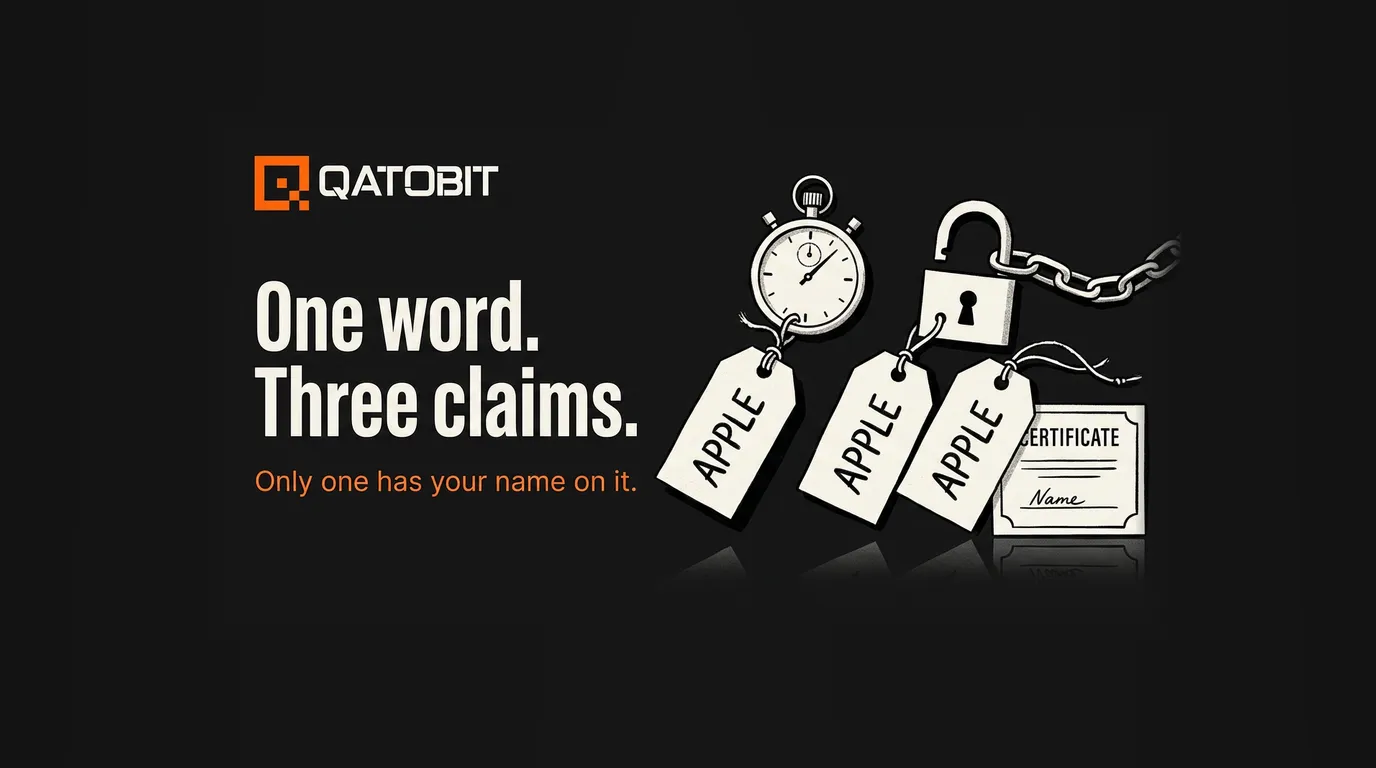
Coinbase filed with the US Securities and Exchange Commission on 1 September 2026 for perpetual futures on individual US stocks. It already runs the same contract for customers outside the US, on Apple, Microsoft, Nvidia and Amazon. A perpetual future, a tokenized stock and an actual share all get sold under the same word, "Apple." Each hands the buyer a different legal claim. Only one of the three puts the buyer's own name on Apple's shareholder register.
What "Apple exposure" actually means, three different ways
Mechanism 1: a perpetual future is a bet with no expiry date
A perpetual future is a contract between the buyer and the exchange rather than a claim on an Apple share. It tracks Apple's price without ever settling into a share. An ordinary futures contract converges to the spot price as it approaches a fixed expiry date. A perpetual has no expiry. Instead, the exchange holds its price near the spot price with a periodic payment called the funding rate.
Coinbase describes the mechanism itself: the funding rate is a fee exchanged between long and short positions. Coinbase applies it every hour, calculated from a fixed interest rate plus the gap between the futures price and the spot price. When more traders want to go long, the futures price rises above spot and the funding rate turns positive. Long position holders then pay short position holders until the gap closes. Read it as a running cost of keeping the bet open rather than a purchase.
Coinbase's 1 September filing is a first step. It still needs a separate approval from the CFTC before it can list a US contract. Coinbase has not said which stocks it would list domestically, or what leverage it would allow.
Mechanism 2: a tokenized stock is a claim on a share someone else holds
A tokenized stock is a token, priced to track a company's share and usually backed by an actual share a custodian holds on the buyer's behalf. The buyer's wallet holds the token. The custodian's own account holds the underlying share.
Kraken's xStocks are one live version of this model, each token meant to be backed one to one by the underlying stock. Kraken's own product page says the tokens "don't confer ownership" of the underlying stock. A dividend, when the underlying company pays one, shows up as more tokens credited to the same balance rather than as ownership passing through. A shareholder vote does not travel with the token by default. It travels only if the issuing platform specifically builds a pass-through and states so in its own terms.
The US Securities and Exchange Commission's own investor guidance describes three structures a tokenized security can take. An issuer-sponsored token carries the same voting and dividend rights as an ordinary share. A custodial token gives the holder the same rights as holding the share through a broker. A synthetic token only tracks the referenced security's price, and its holder has no claim against the company behind it at all. The three look identical inside an app. What rights actually travel with a specific token is a design choice the issuing platform made, rather than something the word "tokenized" answers by itself.
Mechanism 3: a share is a registered claim on the company itself
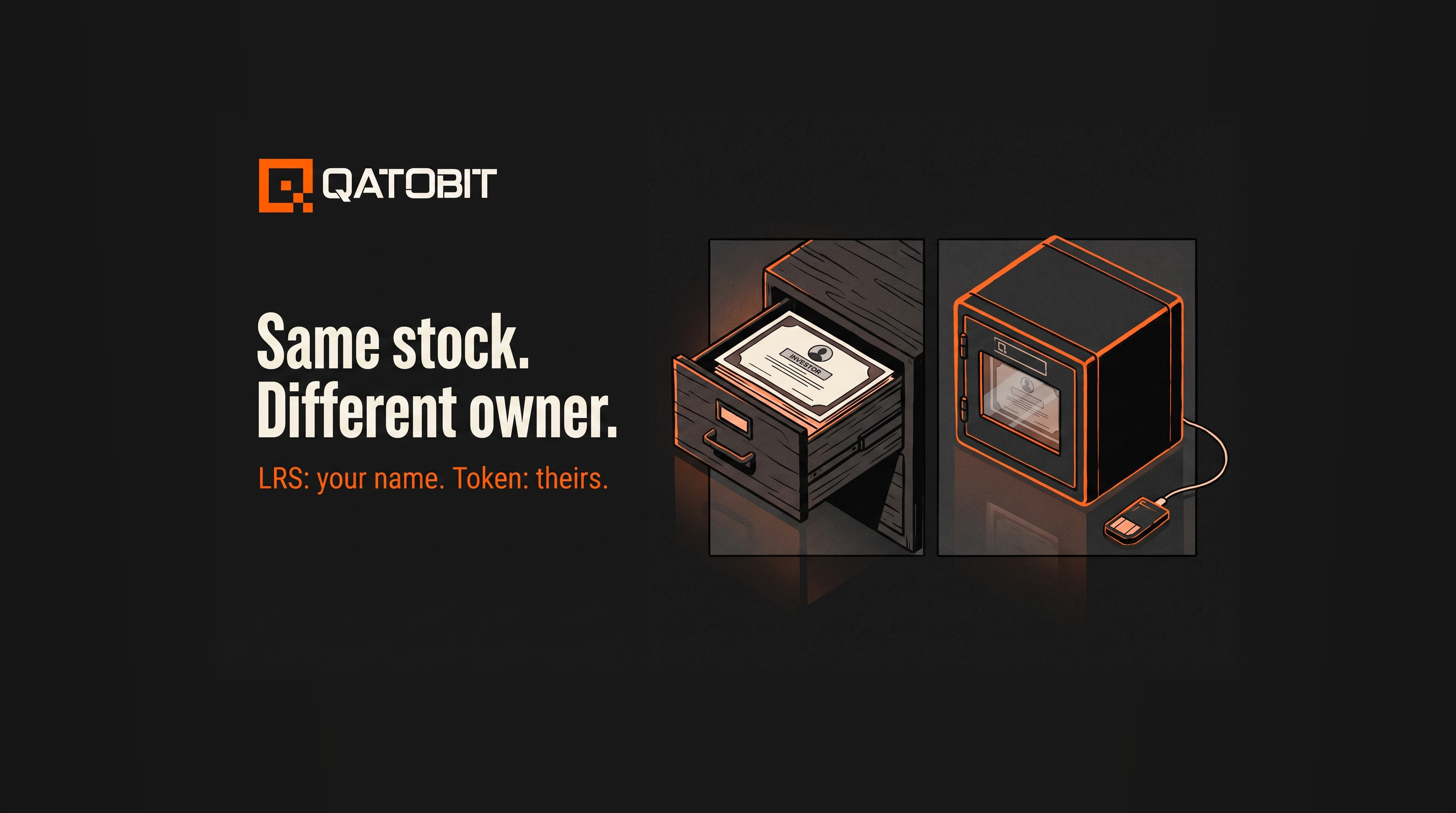
Buy a US share directly, and a US broker registers the purchase in the buyer's own name, inside the Liberalised Remittance Scheme's rules for money leaving India. Who holds the share works through what that route costs and where its own limits bite. The short version: it is the only one of the three that puts the buyer's own name, instead of a platform's or a custodian's, on the company's own register.
Put the three next to each other on three questions: what the buyer holds, whose name is on the underlying share, and what ends the position. With a Coinbase-style perpetual future, the buyer holds a contract with the exchange that tracks Apple's price. No share exists anywhere in that contract, so no name sits on one. The position has no fixed date, and an hourly funding rate keeps accruing until the buyer closes it. With a Kraken xStock, the buyer holds a token backed by an Apple share held in custody. The custodian's name is on that share. The position has no fixed date either, and it ends when the buyer sells or withdraws the token. With a share bought under the Liberalised Remittance Scheme, the buyer holds the Apple share itself, registered in the buyer's own name on Apple's own register. There is no fixed date, and the position ends when the buyer instructs the broker to sell.
Source: investor.gov, "Tokenized Securities" (read 2026-09-06); Coinbase, "Understanding Funding Rates in Perpetual Futures and Their Impact" (read 2026-09-06); Kraken, xStocks product page (read 2026-09-06).
Why the same word covers three different legal positions
An exchange calling a contract, a token and a share all "Apple" is a branding choice rather than a technical description. Nothing about the underlying legal position changes because the label matches. A perpetual future never touches an actual Apple share at any point; it is a bet between two parties about where Apple's price goes next. A tokenized stock sits closer to the real thing, a claim against a share that exists, but the claim runs through whichever custodian the issuing platform picked. A share bought directly is the only one where the company's own record shows the buyer's own name.
Reading past the label to the actual structure is the only way to know which of the three an app is actually selling.
What five thousand rupees buys under each structure
Put ₹5,000 into a long perpetual position on Apple. The position pays or receives Coinbase's stated hourly funding rate for as long as it stays open, with no fixed date it has to close by. Take a hypothetical, flat funding rate of 0.003 percent an hour, purely to show the arithmetic. Over 720 hours, a month, that adds up to about 2.16 percent of the position's value in funding payments alone. That cost sits separate from whatever Apple's own price does. A real funding rate moves hour to hour and can run positive or negative; nothing here forecasts what it will actually do.
Put the same ₹5,000 into a tokenized stock such as an xStock. It buys a fractional token backed by a custodied Apple share, tradable on the issuing platform's own market. The buyer holds a price-tracking claim rather than a seat on Apple's shareholder register, and picks up a dividend only if that specific platform states that it passes one through.
Route the ₹5,000 through the Liberalised Remittance Scheme instead, and it buys a fraction of an actual Apple share, registered in the buyer's own name through a US broker. Who holds the share works out what a ticket that size actually costs once a transfer fee, a currency spread and a brokerage minimum are counted in.
Read the terms before tapping buy
Read the specific platform's own terms before assuming an answer. Ask whether the position expires, whether a funding rate applies and how often, and whether a dividend or a vote passes through to the holder. Ask too whose name sits on the underlying share, if one exists at all.
Frequently asked questions
Does a tokenized stock make me a shareholder of the company?
Not by default. The US Securities and Exchange Commission's own guidance describes a synthetic tokenized security as tracking a company's price with no claim against the company itself. A custodial token, by contrast, gives the holder the same rights as holding the share through a broker. Which one a specific platform is selling is stated in that platform's own terms, rather than implied by the word "tokenized."
Can a perpetual future lose more money than I put in?
Losses on a leveraged perpetual future are not capped at the ticket size the way a straightforward purchase is. A leveraged position can trigger a liquidation before the underlying stock even moves much. Coinbase's own funding-rate mechanism is a separate, ongoing cost that accrues on top of any price move, whether the position is winning or losing at the time.
Is Coinbase's stock perpetual futures product available to Indian investors?
The 1 September 2026 filing only asks US regulators for permission to offer the product to Coinbase's own US customers. It says nothing about which other countries could access it or under what rules. Check a specific platform's own terms for India, rather than assuming an answer from a US regulatory filing.
Does a tokenized stock pay a dividend?
Only if the issuing platform has built a pass-through and states it in its own terms. Kraken's own xStocks page describes a dividend showing up as more tokens credited to the same balance, rather than as cash paid to a shareholder. The underlying share sits with a custodian rather than with the token holder.
What is a funding rate?
A periodic payment exchanged between the two sides of a perpetual futures contract, long and short. It keeps the contract's price close to the underlying asset's spot price, since the contract has no fixed expiry to force the two together. Coinbase applies its own funding rate every hour.
Crypto investments are subject to market risk. Not financial advice.
“A better allocation begins with a better explanation.”
Qatobit principle
Published construction. Fixed cadence. Versioned control.