The point
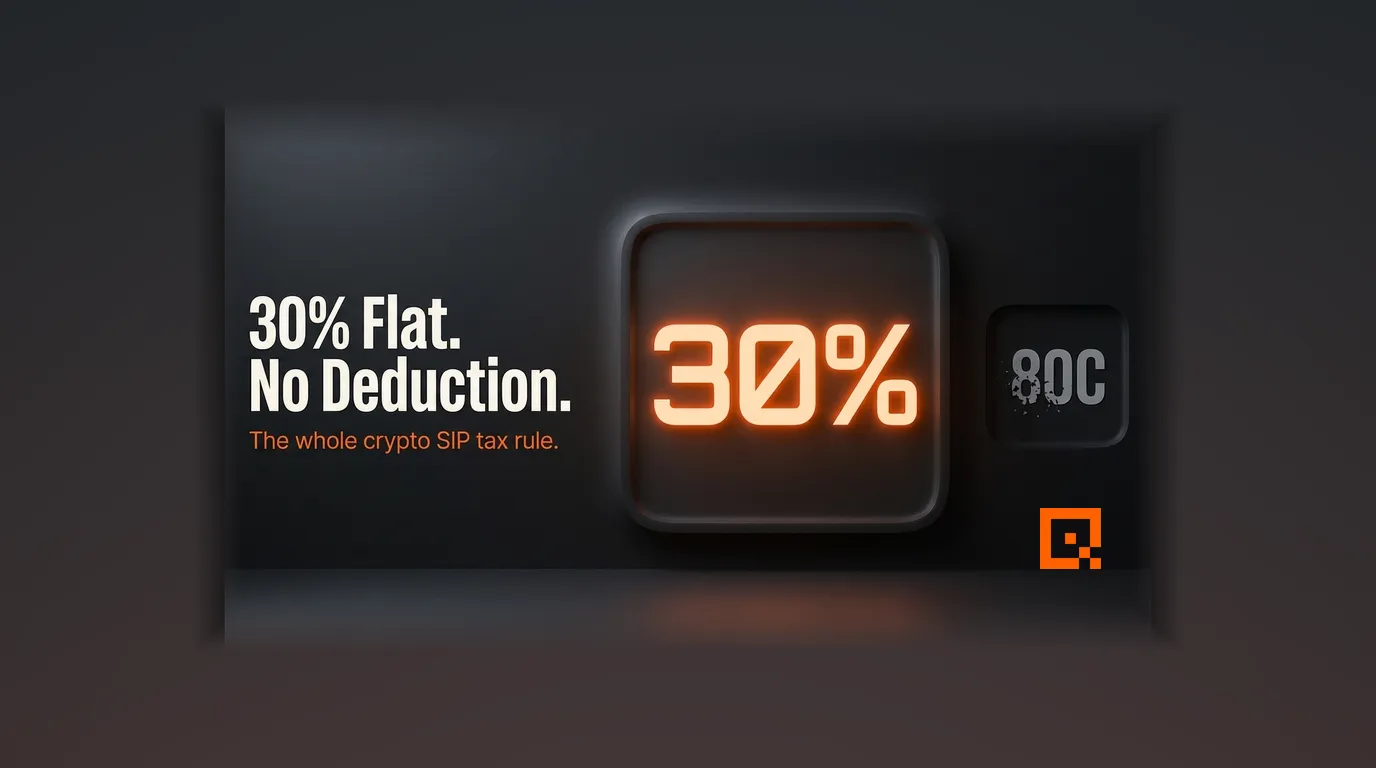
No. A crypto SIP is taxed flat at 30 percent on every gain. Nothing is deductible on the way in, and a loss elsewhere cannot be set off against that gain. A mutual fund SIP into an ELSS, or Equity Linked Savings Scheme, earns a deduction of up to 1.5 lakh rupees under Section 80C. Its gains, once past a 3-year lock-in, are taxed at 12.5 percent above a yearly exemption. Both are systematic monthly investments. The Income Tax Act still files them under separate asset classes with separate rules.
Why anyone expects the two to be taxed alike
A SIP is one autopay instruction with two possible destinations, and the destination is what changes the tax. The autopay behind a SIP pulls a fixed rupee amount on a fixed date and buys whatever you told it to buy. That destination can be mutual fund units or a crypto index; the SIP mechanics work the same either way. Expecting two identically built SIPs to be taxed identically is a fair place to start.
The Income Tax Act taxes the asset, though, and a SIP is only the delivery method. A mutual fund unit and a virtual digital asset sit in separate parts of that Act. Each part sets a deduction rule, a rate, and a loss treatment of its own.
What an ELSS mutual fund SIP earns at tax time
Section 80C caps a combined deduction at 1.5 lakh rupees a year. The list of qualifying instruments is fixed: PPF, EPF, life insurance premiums, five-year tax-saving deposits, and Equity Linked Savings Schemes. ELSS is the category a mutual fund SIP uses to earn this deduction. Money placed into an ELSS SIP counts toward that 1.5 lakh ceiling, rupee for rupee, in the year it is invested.
ELSS carries a 3-year lock-in on every instalment. Money that went in through a March 2026 SIP payment stays locked until March 2029, no matter when the SIP itself started. Because the holding period always clears 12 months by the time the lock-in ends, ELSS gains are automatically long term. Long-term gains on equity mutual funds are taxed at 12.5 percent. The first 1.25 lakh rupees of those gains in a financial year is exempt entirely. An investor with a 2 lakh rupee gain pays 12.5 percent only on the 75,000 rupees above that exemption.
What a crypto SIP earns at tax time
Section 80C's list has no room for a crypto SIP. No form of virtual digital asset, crypto included, appears anywhere in that section. No rupee of a crypto SIP instalment reduces your taxable income the way an ELSS instalment does.
The rate on the way out ignores holding period entirely. Section 115BBH taxes every gain on a virtual digital asset at a flat 30 percent, whether the position was held for a month or for five years. There is no long-term or short-term rate, and no exemption threshold to clear first. That 30 percent applies from the first rupee of gain, and 1 percent is withheld at the point of sale as TDS under Section 194S. The full breakdown of crypto's effective tax rate, cess included, runs to 31.2 percent for most investors.
The loss rule that costs more than the missing deduction
An equity mutual fund investor who loses money on one long-term holding can set that loss off against a long-term gain on another holding in the same year. If there is nothing to offset right now, the loss carries forward instead. Section 74 of the Income Tax Act allows eight assessment years for this, provided the return is filed on time.
Crypto losses get neither option. Say an investor exits one crypto index at a 40,000 rupee gain and a different holding at a 15,000 rupee loss, both in the same financial year. Tax is owed on the full 40,000. The 15,000 sitting right next to it cannot be set off against it, this year or any year after. Whatever legitimate tax reduction options exist for a crypto investor, this is not one of them. A year that felt flat can still close with a tax bill on it.
How to plan around each one
An ELSS SIP's 3-year lock-in forces a long hold. That holding period is what qualifies each instalment for the lower rate and the yearly exemption once the lock-in clears.
A crypto SIP has no such mechanism. The rate stays flat at every holding period, so waiting longer does nothing to the rate. Timing only decides which financial year a gain, and its tax bill, land in. How the 1 percent TDS credit actually works at year-end is the closest thing to a timing lever a crypto investor gets. It moves when the tax is paid and leaves the amount alone.
A Qatobit crypto SIP falls under the same rule. Section 115BBH governs the exit, and the platform cannot change the rate or add a deduction the Income Tax Act does not contain.
Frequently asked questions
Does a crypto SIP qualify for a Section 80C deduction?
No. Section 80C lists specific instruments, including PPF, EPF, life insurance, and ELSS mutual funds, and virtual digital assets are not among them. No rupee invested into a crypto SIP reduces your taxable income under this section.
What tax rate applies to gains from a crypto SIP?
A flat 30 percent under Section 115BBH, plus a 4 percent cess, on every gain regardless of how long the asset was held. There is no separate long-term or short-term rate, and no yearly exemption threshold.
Can I set off a loss on one crypto holding against a gain on another?
No. Losses on virtual digital assets cannot be set off against gains on other virtual digital assets, or against any other kind of income, in the same financial year.
Can crypto losses be carried forward to future years, the way equity mutual fund losses can?
No. Equity mutual fund losses can carry forward for eight assessment years under Section 74. Crypto losses expire at the end of the financial year they occur in, with no carry-forward and no future offset.
What is the single biggest tax difference between a crypto SIP and a mutual fund SIP?
The loss rule. An equity mutual fund investor can set a loss off against a gain, and carry an unused loss forward for eight assessment years under Section 74. A crypto investor gets neither, so a 40,000 rupee gain is taxed in full even with a 15,000 rupee loss beside it in the same year. The missing Section 80C deduction costs less.
Crypto investments are subject to market risk. Not financial advice.
“A better allocation begins with a better explanation.”
Qatobit principle
Published construction. Fixed cadence. Versioned control.