The point
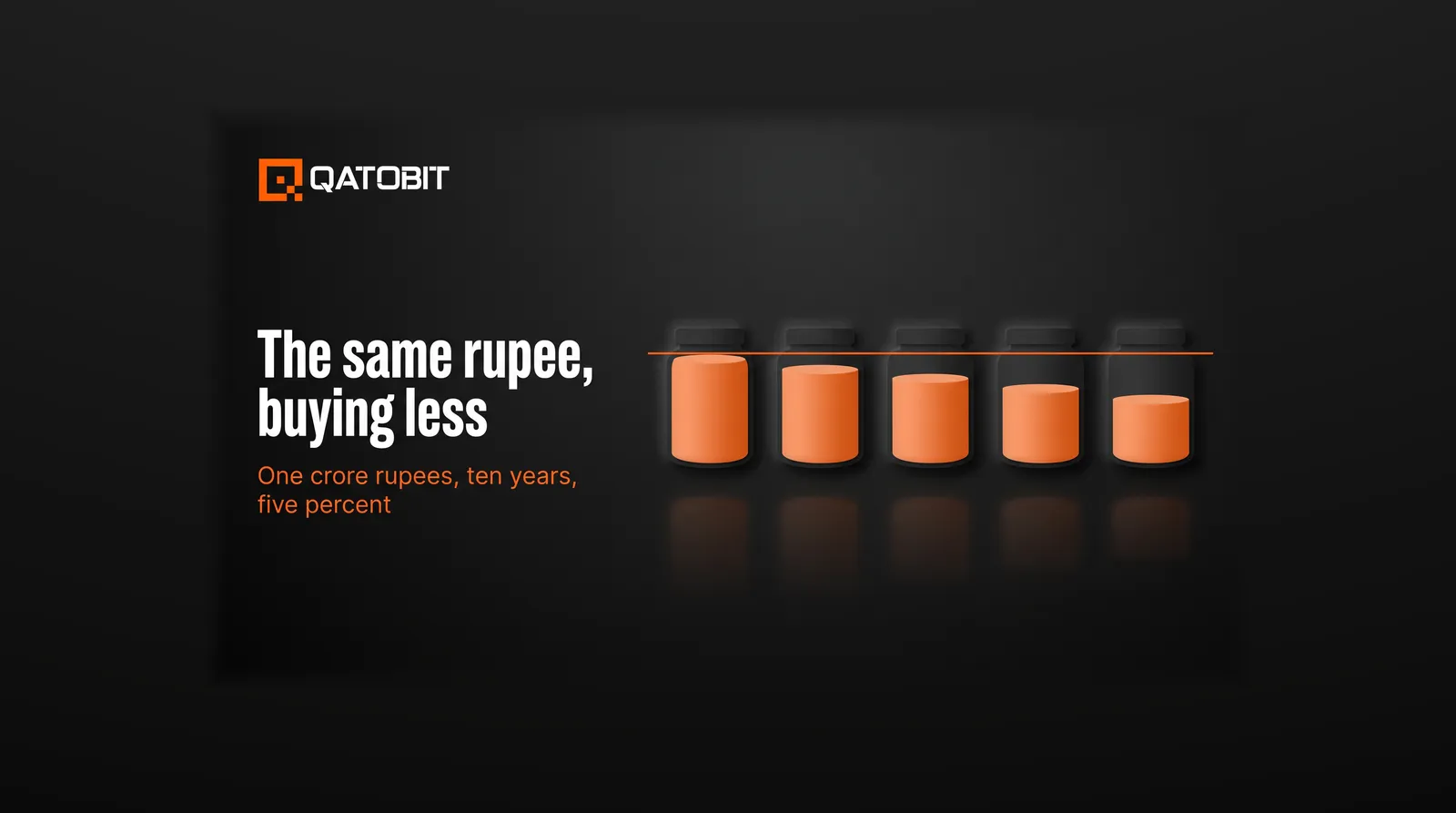
Inflation is the yearly rate at which the rupee buys less, measured as the change in a price index. It never appears on a statement, because a balance of ₹1 crore still reads ₹1 crore after ten years. What changes is the basket of goods that balance buys. At 5 percent a year, ₹1 crore held still buys what ₹61.39 lakh buys today.
What inflation is and how it is measured
Inflation is a rate, and the rate comes from a price index. The Ministry of Statistics and Programme Implementation (MoSPI) prices a fixed basket of goods and services every month. The Consumer Price Index (CPI) is the cost of that basket set against a base year. The current series uses 2024 as its base year.
Retail inflation is the percentage change in that index against the same month a year earlier. In the provisional August print, the All India CPI stood at 108.74, up from 107.95 in July. Headline inflation read 4.82 percent, against 4.45 percent in July, and food inflation read 5.95 percent (Business Standard, reporting MoSPI data, read 29 September 2026).
Those figures move every month and this page will outlive them, so treat them as one reading of a moving number. The structure is what stays: a basket, a base year and a monthly print.
The Government of India sets the target that the Reserve Bank of India (RBI) works to. It is 4 percent, with a tolerance band of 2 percent on either side. The government has kept it for 1 April 2026 to 31 March 2031 (Drishti IAS, read 29 September 2026).
What it does to money that sits still
Take ₹1 crore held in a balance that does not grow at all. The rate below is invented for the illustration and is not a forecast or a claim about any asset.
Suppose prices rise 5 percent a year for ten years. The same basket then costs 1.05 multiplied by itself ten times, which is 1.6289. A basket that costs ₹1 crore today costs ₹1.63 crore at the end.
Your ₹1 crore is still ₹1 crore. Divide it by 1.6289 and you get ₹61.39 lakh in today's prices. The ₹38.61 lakh gap is the rise in the basket's price.
The same arithmetic at the 4 percent target gives 1.04 to the power of ten, which is 1.4802. The ₹1 crore then buys what ₹67.56 lakh buys today. At 6 percent, the top of the band, it buys what ₹55.84 lakh buys today.
Nothing is debited and no fee is charged, so the only place this loss is written down is the price index.
The real rate of return
A balance that grows is a different case from a balance that sits still, but the same test applies. The real rate is what remains of growth after prices have risen. The exact formula divides one plus the nominal rate by one plus inflation, then subtracts one.
Take a balance that grows 4 percent a year while prices rise 5 percent. The real rate is 1.04 divided by 1.05, minus one, which is minus 0.95 percent. On ₹1 crore, the statement reads ₹1.04 crore after a year. The basket that cost ₹1 crore now costs ₹1.05 crore, so the balance buys what ₹99.05 lakh bought a year earlier.
A statement that shows growth can therefore describe a smaller position in real terms. That is why a horizon is worth writing down in purchasing power. A target of ₹1.63 crore in ten years is a target for the same lifestyle that ₹1 crore supports today, if prices rise 5 percent a year.
The rule of thumb, nominal minus inflation, is close enough at low rates. The division above is the exact version.
What a portfolio is for
A portfolio holds claims. Each claim has its own way of responding when prices across the economy rise. Holding only rupees in a balance means holding one kind of claim. Its face value is fixed and only its buying power moves, so it responds worst to a rising price level.
A portfolio is therefore a set of claims chosen so that they do not all respond to the same thing in the same way. Its job is to protect the position's purchasing power across a horizon. It does that by holding claims whose payments or prices link to the price level in different ways.
That is a statement about structure, and no one can state in advance which claim will pay more than another over any period.
What inflation does to each type of claim
The response depends on what the claim is a promise of.
A bond with a fixed coupon pays the same rupees every year. When prices rise, each rupee buys less, so the real value of that stream falls.
A company's shares are a claim on its earnings. Revenues and costs both move with prices, so what matters is whether the company can pass higher costs on to its customers.
Gold is priced in dollars in the international market, so a weaker rupee lifts its rupee price. It pays nothing in the meantime.
A crypto asset has no rupee coupon and no link to any price index. Its price is set by what the next holder will pay, in whatever currency the buyer uses.
Each claim has a different link to the price level, and that difference is the reason to hold more than one.
Where the two prices meet
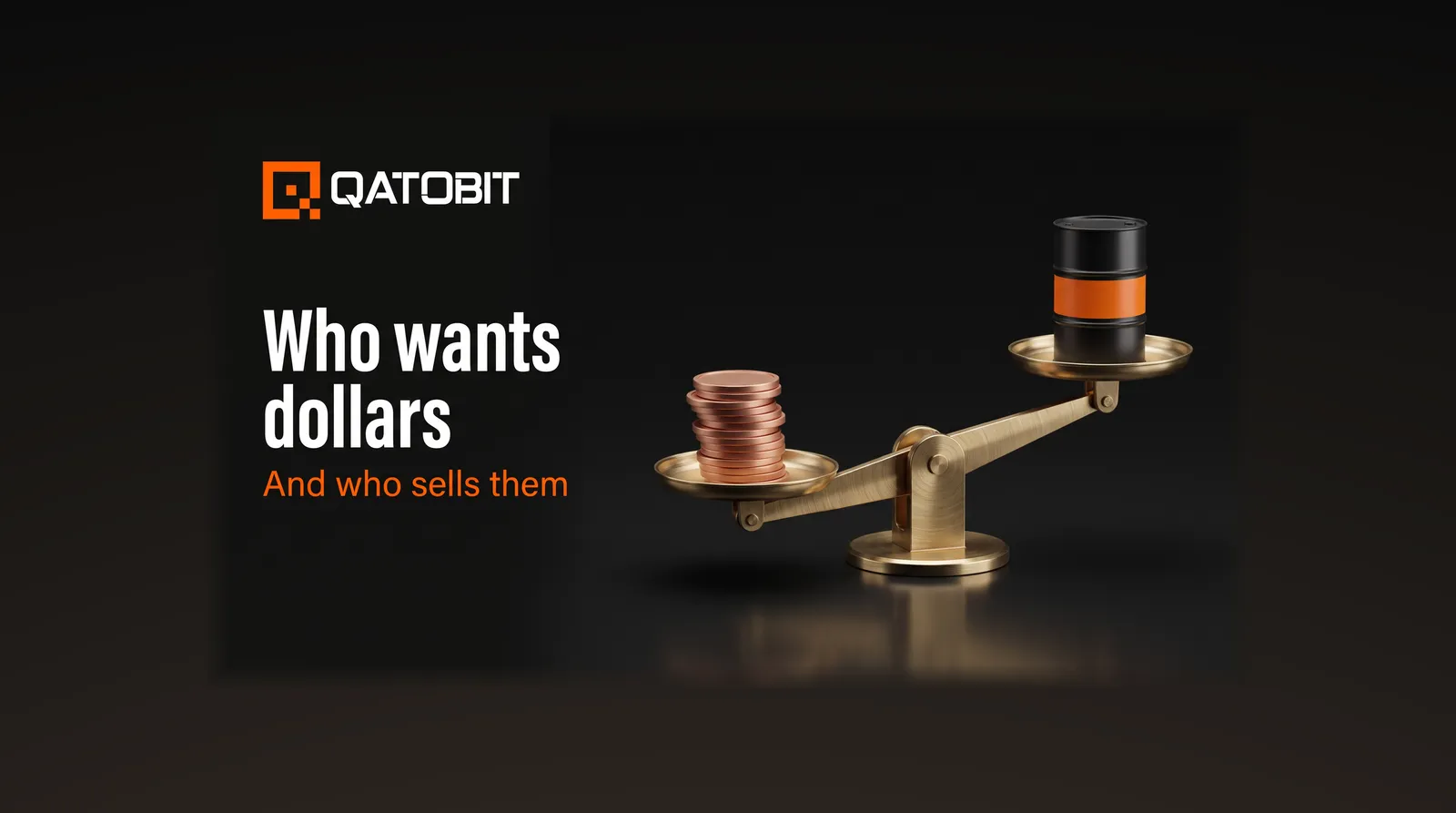
Oil and the exchange rate are the two channels through which a price shock reaches the basket. Crude is priced in dollars, so when oil rises and the rupee weakens, the same barrel costs more rupees twice over.
As of 29 September 2026, the rupee had traded past 96 to the dollar and Brent crude was near 107 dollars a barrel. India's crude oil import bill for April to August 2026 rose 48 percent year on year to 74.8 billion dollars, with volumes broadly unchanged. The figures are from the Petroleum Planning and Analysis Cell, as cited by SSBCrack News (read 29 September 2026).
Volumes were flat, so the rise is all price, and price is the route by which fuel becomes transport, food and manufacturing costs in the CPI basket. MoSPI's August print already showed transport inflation at 4.60 percent (Business Standard, read 29 September 2026).
The basket's price is set by forces a holder does not control, and the position's purchasing power depends on them.
What a holder writes down
An objective stated in rupees hides the problem. An objective stated in purchasing power carries it. Write the horizon, the amount in today's prices and the inflation rate you assume, and the rupee target follows by arithmetic. For ₹1 crore of today's purchasing power in ten years at 5 percent, the target is ₹1.63 crore.
Then the allocation has a job. What an investment objective is covers how a horizon and a tolerance for loss decide the mix. What asset allocation decides before any pick covers the mix itself. The time side of the same question is in what compounding is and why time beats the rate. Rate pressure reaches the same portfolio from the other direction, and what hawkish means for a rupee portfolio follows that route.
Qatobit's four QSI indices are QSI Core, QSI Growth, QSI VRION and QSI GEQ8. Three of the four hold crypto, and QSI GEQ8 holds global equities. All four are rebalanced monthly on a documented methodology. A crypto index is one sleeve of a portfolio, sized inside the same written objective as every other claim the holder owns.
The next question is which of the claims you hold responds to the price level in a way you can explain in one sentence.
Frequently asked questions
What is inflation?
Inflation is the yearly percentage rise in the price of a fixed basket of goods and services, measured by a price index. At 5 percent a year, ₹1 crore held still buys what ₹61.39 lakh buys today after ten years.
How is inflation measured in India?
MoSPI publishes the Consumer Price Index every month, on a basket of goods and services with 2024 as the base year. Retail inflation is the change in that index against the same month a year earlier. The provisional August reading was 4.82 percent.
What is the real rate of return?
The real rate is the growth of a balance after prices have risen. It is one plus the nominal rate, divided by one plus inflation, minus one. A balance growing 4 percent a year while prices rise 5 percent has a real rate of minus 0.95 percent.
Does inflation affect crypto?
A crypto asset has no rupee coupon and no link to a price index. Its price is set by what the next holder will pay.
What is the RBI inflation target?
The target is 4 percent CPI inflation with a tolerance band of 2 percent on either side. The Government of India set it for 1 April 2026 to 31 March 2031.
Crypto investments are subject to market risk. Not financial advice.
“A better allocation begins with a better explanation.”
Qatobit principle
Published construction. Fixed cadence. Versioned control.