The point
An anchor book is a block of shares that large institutions agree to buy at a fixed price one working day before an IPO opens to everyone else. It tells a later applicant that professionals priced the issue. It also comes with a clock: half of each anchor's shares stay locked for 30 days and the rest for 90.
What is an anchor investor, and why do they bid a day early?
An anchor investor is a large institution, such as a mutual fund, an insurer, a pension fund or a foreign portfolio investor, that bids before the public window opens. Anchor bidding happens one working day before the issue opens. The names and allocations are disclosed before public subscription begins (Outlook Money, read 20 October 2026).
The allocation is not open to everyone. One-third of the anchor portion is reserved for domestic mutual funds, subject to valid bids, according to the same source.
Jio Platforms is the live example. Reliance's exchange filing, reported by Devdiscourse, set the price band at ₹1,065 to ₹1,119 per equity share. The issue opens on 21 October 2026 and closes on 23 October 2026, with anchor bidding on 19 October 2026 (Devdiscourse, read 20 October 2026).
The two sources I read for the issue size disagree, so this piece leaves the size out. The mechanism is the subject, and it works the same at any size.
What does an anchor book actually tell you?
It tells you that a group of institutions agreed to a price before anyone else could. Whether the price is low, whether the company will do well and where the shares trade on listing all stay open questions.
An anchor bids because its own research supports the price and because it receives an allocation that a public applicant may not. Its reason for buying is a mandate and a view, and neither of them is yours. A book that fills quickly says institutions wanted the allocation, while what the shares are worth to a holder with a different horizon stays a separate question.
My position is that the anchor names are the least useful part of the announcement. They are the part everyone reads because names are easy to read. The part that matters to a later holder is the lock-in, because it decides when the anchors' shares can reach the market.
Why does the lock-in matter more than the names?
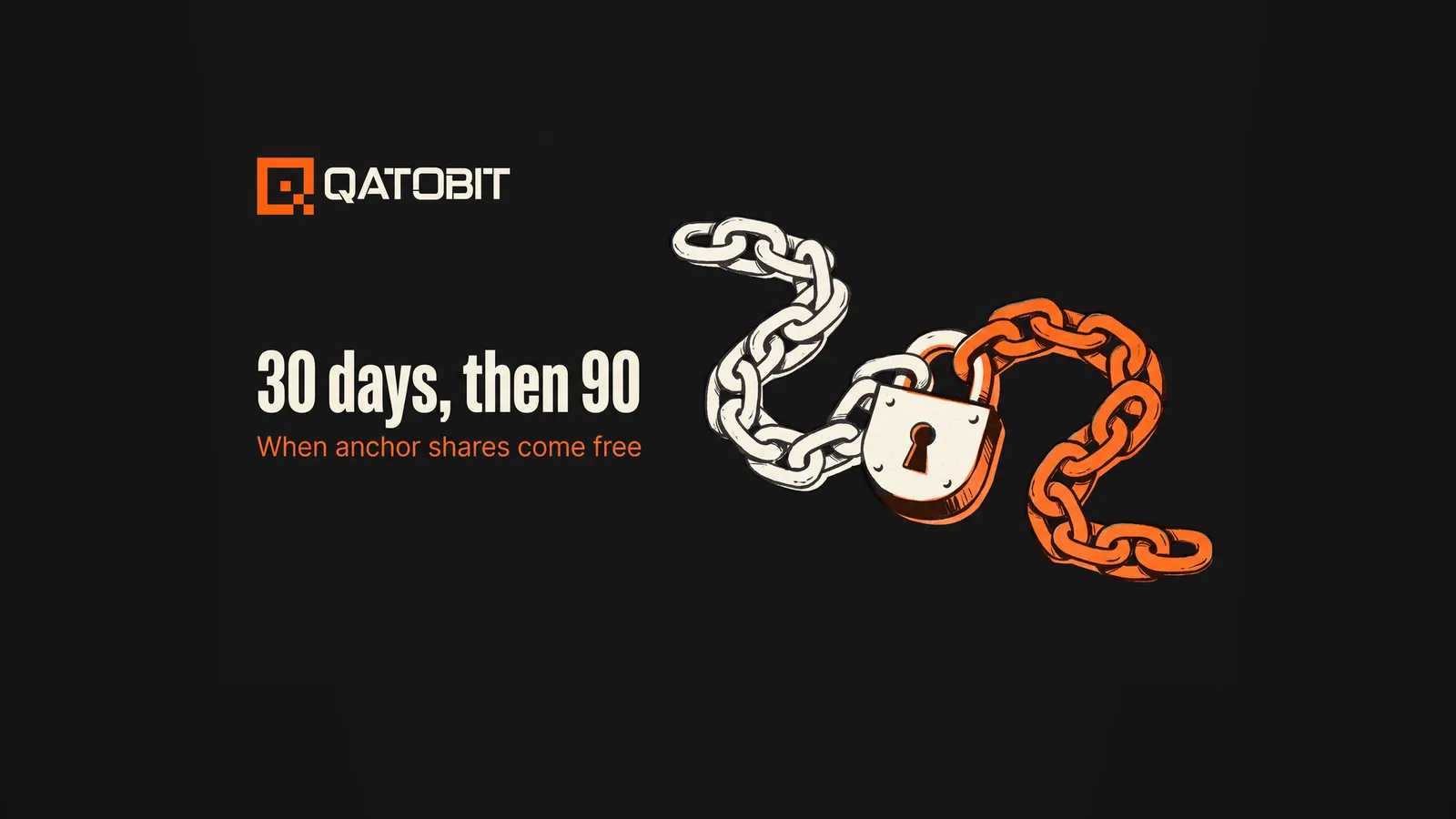
Supply is what a later holder meets. Anchors must hold 50 percent of their allocation for 30 days and the remaining portion for 90 days. The market regulator set that rule at a board meeting in December 2021 (Business Standard, read 20 October 2026).
The 90-day leg was added because earlier exits were quick. Business Standard noted that shares of Zomato and One97 Communications, the parent of Paytm, slipped 9 percent and 13 percent when their one-month anchor lock-ins ended.
A worked example makes the arithmetic plain. Say an anchor is allotted 1,00,000 shares. After 30 days it may sell 50,000 of them. After 90 days it may sell all 1,00,000. Until then, those shares cannot be sold by that holder, which keeps supply thin.
When a lock-in ends, that supply is allowed to exist. The date forecasts no sale; it marks the day the holder's choice opens, and you can read it in the allotment disclosure.
For the general mechanics of what changes when shares come free, how a lock-in period works covers it in full.
What should a later applicant read in the anchor disclosure?
Read three things, in this order. First, the price the anchors paid, which sits inside the band and is the one number every public bidder can compare against their own bid.
Second, how the book splits between mutual funds, insurers and foreign portfolio investors. Outlook Money notes that one-third of the anchor portion goes to domestic mutual funds when valid bids exist. A book with few mutual funds departs from that default.
Third, the two lock-in dates, which are counted from allotment. Write both down. They are the days on which the shareholder list can start to change, and they cost nothing to track.
Do anchors hold on after the lock-in ends?
Often they do not. Outlook Money reports an analysis by the market regulator of 242 mainboard IPOs listed between April 2022 and October 2025. About 51 percent of the original anchor allocation was sold within a year, and foreign portfolio investors exited 60 percent of their holdings (Outlook Money, read 20 October 2026). Smaller IPOs saw even faster exits.
That figure is the strongest argument against reading an anchor as a long-term endorsement. The institution committed for a lock-in, then made a portfolio decision. Your decision is a separate one, made at a different price and horizon.
How does an anchor book change what you do with your own money?
Take a ₹5,00,000 application at the cap price of ₹1,119 per share. ₹5,00,000 divided by ₹1,119 is 446 shares, and 446 × ₹1,119 is ₹4,99,074, so the application ties up nearly the full amount. The anchor book changed none of that arithmetic. It changed only your sense of how safe the price is.
That sense is the part to test. Ask what you would hold the shares for, and at what point you would sell, before the anchor list shapes the answer. A position taken because institutions were seen buying carries no thesis of its own, and a position without a thesis has no exit rule.
The listing day is a separate event with its own measure. What a listing gain measures sets out what the first-day number shows.
What does this look like when a rule replaces the event?
An IPO asks a holder to read a book, a band, a lock-in and a listing. A rule-based index asks for none of that. A Qatobit index is a basket of digital assets. Qatobit designs it and rebalances it monthly on a published methodology, so there is no anchor list to read and no unlock date to watch.
That is a different kind of decision, and it suits a different holder. If you prefer a position held on a thesis and a schedule, you can invest in QSI Growth or start a Bitcoin SIP. How an index behaves under stress is covered in how a crypto index rebalances during a market crash.
Frequently asked questions
What is an anchor investor in an IPO?
An anchor investor is a large institution that bids for shares one working day before an IPO opens to the public. Half of its allotment is locked for 30 days and the rest for 90 days.
How many days are anchor shares locked in?
Half of the anchor allocation is locked for 30 days and the other half for 90 days, under the rule the market regulator set in December 2021.
Does a strong anchor book mean an IPO is a good buy?
No. A strong anchor book shows that institutions agreed to a price. It does not show what the shares are worth to you, so the decision still rests on your own thesis and horizon.
How much of an anchor allocation goes to mutual funds?
One-third of the anchor portion is reserved for domestic mutual funds, subject to valid bids, according to Outlook Money.
Do anchor investors sell after the lock-in?
Many do. The market regulator's analysis of 242 mainboard IPOs found about 51 percent of anchor shares were sold within a year, with foreign portfolio investors exiting 60 percent of their holdings.
Crypto investments are subject to market risk. Not financial advice.
“A better allocation begins with a better explanation.”
Qatobit principle
Published construction. Fixed cadence. Versioned control.