The point
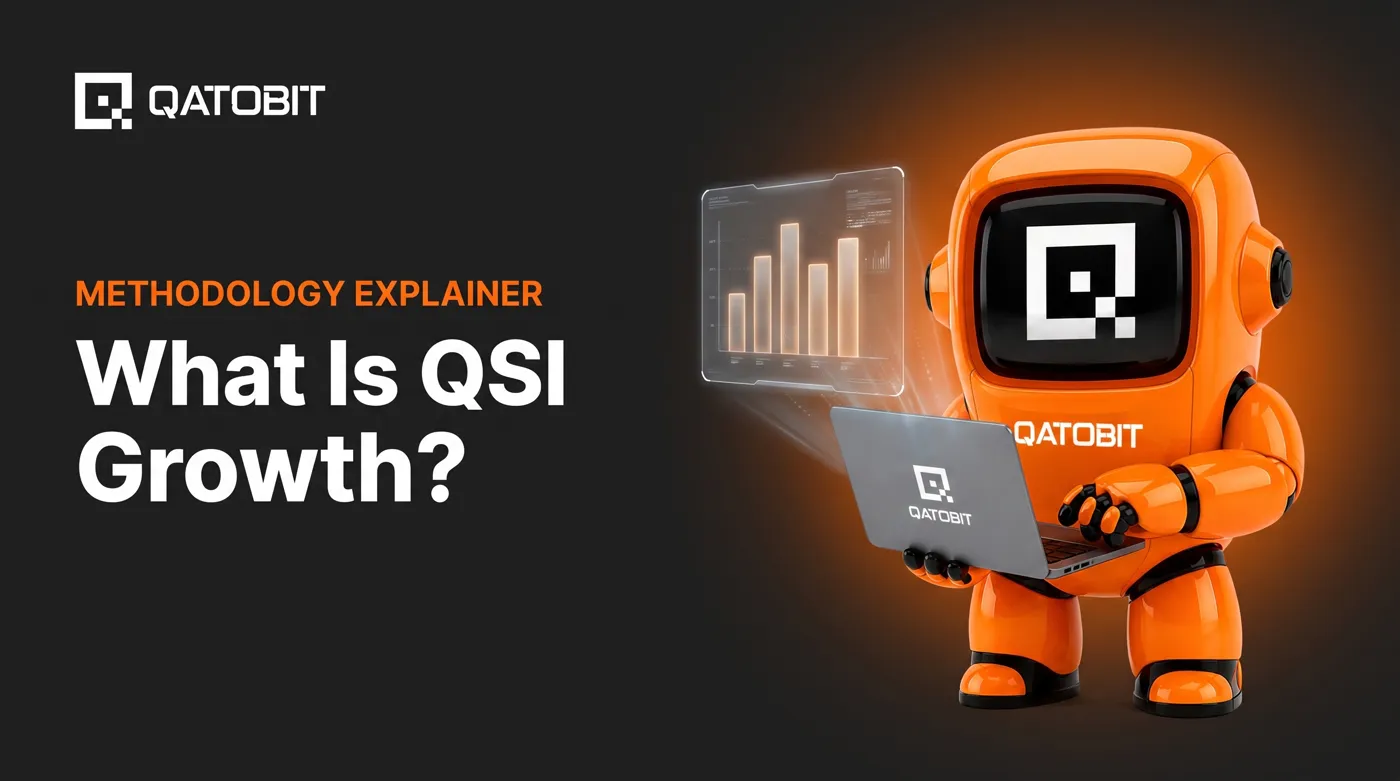
QSI Growth is a five-asset Crypto Index that adds Solana to the QSI Core construction, trading a smaller Gold buffer for more crypto upside.
QSI Growth is the upside-leaning Crypto Index in Qatobit's QSI suite. It is a five-asset basket that sits at a different point on the risk-return spectrum than QSI Core, designed for investors who want a structured allocation with more crypto-side upside than the conservative construction provides. This piece walks the composition, the weighting logic, the monthly rebalance, and what the Solana addition specifically does inside the construction.
QSI Growth is a five-asset Crypto Index holding Bitcoin, Ethereum, Solana, Gold, and a stable reserve, designed and rebalanced by Qatobit on a documented methodology. Top-weighted to Bitcoin and Ethereum with Solana as the upside lever and Gold as a smaller structural buffer. Monthly rebalancing trims highs and buys troughs counter-cyclically. The per-index minimum is ₹2,000. The basket transaction fee is 0.35 percent.
What QSI Growth is built for
The investor QSI Growth is built for is the multi-asset allocator with crypto conviction: someone who has already decided that crypto belongs in the portfolio and now wants more upside-leaning exposure than the conservative construction in QSI Core provides, without going to the full-conviction position represented by QSI VRION. The construction answers this brief specifically. Three large-cap crypto assets give a broader crypto-side base than the two-asset crypto core in QSI Core. A Gold position retains structural counter-cyclical protection. A stable reserve continues to provide rebalancing capital and a stability layer, sized smaller than in QSI Core because the construction tilts further into crypto exposure.
The point of the construction is to capture more of crypto's upside through a documented index methodology that an investor can actually hold through a cycle. QSI Growth is built for the investor who wants the structural discipline of an index (mechanical rebalancing, defined constituents, documented methodology) combined with a higher-conviction crypto exposure than the conservative construction. Qatobit is India's Crypto Wealth Architect, and the four QSI Crypto Indices are designed so that each serves a different point on the risk-conviction spectrum. QSI Core sits at the conservative end. QSI Growth sits one step into upside. QSI VRION sits at full crypto conviction. QSI GEQ8 sits in a different category entirely, holding global digital-finance equity.
The construction is the answer to the question "I want more crypto exposure than QSI Core, but I want it inside a structured basket with a methodology." QSI Growth is that basket.
The composition and methodology
QSI Growth holds five assets, selected against documented criteria and rebalanced on a monthly cadence.
The five assets
Bitcoin is the foundational position, present in every QSI Crypto Index by design. Bitcoin's role is its role in the asset class: the largest, most liquid, most institutionally recognised crypto asset, with the longest price history, the deepest market structure, and the most settled regulatory treatment globally. Across the QSI suite, Bitcoin appears in every index as the institutional-grade base of crypto exposure.
Ethereum is the second crypto core position. Ethereum brings different exposure from Bitcoin: a smart-contract platform with a different value-accrual mechanism, a different developer ecosystem, and meaningful periods of divergence from Bitcoin's price action despite overall high correlation. The combination of Bitcoin and Ethereum captures the bulk of the crypto market's institutional-grade exposure.
**Solana** is the growth lever and the defining differentiator of QSI Growth over QSI Core. Solana's role in the construction is upside exposure at a different risk-return point than Bitcoin or Ethereum. Solana's network has demonstrated specific growth characteristics in throughput, developer activity, and use-case adoption that operate independently of Bitcoin and Ethereum's growth vectors. Including Solana converts the index from a two-asset crypto core (in QSI Core) to a three-asset crypto core. The volatility profile of Solana is typically higher than Bitcoin and Ethereum, which is the structural reason it sits in QSI Growth and not in QSI Core; the construction takes on more volatility in exchange for more upside potential.
Gold is the structural buffer, retained from the QSI Core construction. Gold and crypto are typically lowly correlated, and during severe crypto drawdowns Gold has historically held value or appreciated. The Gold allocation in QSI Growth is smaller in proportion than in QSI Core, because the construction is tilted further into crypto. The buffer remains in place; it is sized for partial protection rather than the larger proportional protection that QSI Core's allocation provides.
**Stable reserve (USDT Earn)** is the rebalancing capital and operational stability layer. The stable reserve is dollar-pegged and earns a yield through the platform's stable-asset programme. Its role in QSI Growth is the same as in QSI Core: stability for a portion of the basket and dry powder for the rebalancing process that does not require liquidating other constituents to fund repositioning.
The five-asset construction is intentionally structured. Three risk-on crypto positions provide the upside thesis, with Solana extending the range of crypto exposure beyond the Bitcoin and Ethereum core. One diversifying counter-cyclical hedge (Gold) maintains structural protection at a smaller proportion. One stability layer with yield (stable reserve) provides the rebalancing infrastructure. The methodology document is where the specific construction rules, target weights, and rebalancing bands are published; investors evaluating QSI Growth should read it directly.
The weighting logic
The index is top-weighted to Bitcoin and Ethereum, with Solana as a smaller crypto allocation that operates as the growth lever, the Gold allocation as a structural buffer (smaller in proportion than in QSI Core), and the stable reserve as a smaller stability layer. Specific weights are set by the methodology and drift between monthly rebalances; the published methodology document describes the target weights and the band within which they operate.
This piece does not publish static weight numbers because the weights move between rebalances and a snapshot would mislead a reader who saw it months after publication. The methodology document, available on the QSI Growth product page, is the authoritative reference for the specific weights at any given time.
The weighting choice is a structural design decision. A larger Solana allocation would produce more upside but a deeper drawdown profile. A smaller Solana allocation would reduce the upside thesis and converge QSI Growth toward QSI Core. The chosen weights are the design balance between crypto upside and structural protection, with the construction explicitly positioned at a different point on the risk-return spectrum than QSI Core.
The monthly rebalance
Every month, the QSI Growth methodology runs the rebalance. The trigger is calendar-defined: the rebalance happens on a specific date, regardless of market conditions. The process is mechanical, not discretionary.
On the rebalance date, the methodology observes the current actual weights of each constituent against the target weights. Assets that have grown above target are trimmed. Assets that have fallen below target are increased. The transactions execute through the platform's liquidity sources, with execution timing managed to limit market impact. The basket fee of 0.35 percent applies to the transacted amount per rebalance event.
The counter-cyclical effect is what the rebalance produces over time. When the crypto allocations have outperformed in a month and grown above their target weights, the methodology trims them; Gold and the stable reserve, having fallen below their target weights, are bought back. The index is selling crypto strength at the moment most investors would be reluctant to do so behaviourally. When crypto has had a weak month, the inverse runs: Gold and the stable reserve are trimmed, crypto allocations are bought back to weight.
For Solana specifically, which historically has had higher volatility than Bitcoin and Ethereum, the monthly rebalance is structurally important. Solana's larger swings produce larger drift from target weights between rebalances. The monthly cadence keeps the position within the documented band and prevents the Solana allocation from running away from its target after a strong month or falling out of balance after a weak month.
Across a full cycle, this pattern of trimming highs and buying troughs is the mechanical advantage the methodology produces. The investor benefits from the disciplined behaviour without having to make the rebalancing decisions themselves.
How QSI Growth compares to the other QSI indices
The four QSI Crypto Indices together cover the spectrum from conservative crypto allocation through to global digital-finance equity exposure.
QSI Core is the conservative four-asset construction (Bitcoin, Ethereum, Gold, stable reserve) for the disciplined first-time allocator who wants meaningful crypto exposure with the deepest structural protection.
QSI Growth is the upside-leaning five-asset construction for the investor with established crypto conviction who wants more crypto upside than QSI Core provides, while retaining structural protection through the Gold buffer and stable reserve. The construction takes on more volatility for more upside potential; the Gold and stable reserve portions are sized smaller to make room for the larger crypto allocation.
QSI VRION is the three-asset pure-crypto construction (Bitcoin, Ethereum, Solana, no Gold buffer, no stable reserve) for the investor with the highest crypto conviction and the longest horizon. The construction removes the buffer entirely; the upside potential is the largest in the suite, and the drawdown profile is the deepest.
QSI GEQ8 is a different category from the three crypto-asset indices. It is a Qatobit-designed Crypto Index of global companies at the intersection of technology, digital finance, and innovation, providing tokenized equity exposure rather than direct crypto-asset exposure. QSI GEQ8 sits outside SEBI regulation and carries the same 0.35-percent-per-rebalance fee as the rest of the suite, with no annual management fee.
The investor evaluating QSI Growth is typically evaluating it against QSI Core and QSI VRION. QSI Growth is the middle position: more upside-leaning than Core, more structurally protected than VRION. The choice between the three is a function of the investor's risk tolerance, time horizon, and crypto conviction.
What QSI Growth does not do
QSI Growth does not eliminate crypto market risk. The three crypto positions in the basket move with the asset class. If the crypto market falls, the index value falls with it, partially buffered by the Gold position but not fully insulated. The buffer is smaller in QSI Growth than in QSI Core, by design, so the drawdown protection is smaller. The buffer reduces drawdown depth; it does not prevent drawdowns.
QSI Growth does not generate predictable returns. The construction is designed to capture the asset class's upside through a structured basket over a multi-year horizon, with the buffer producing a more holdable experience through drawdowns than a pure-crypto basket would, but the realised return depends on the underlying asset performance. A flat or down crypto cycle produces a flat or down QSI Growth position. A strong crypto cycle produces a strong position with the buffer trimming some of the upside in exchange for the buffer-driven downside protection.
QSI Growth does not replace QSI Core for conservative investors. The construction is positioned at a higher point on the risk-return spectrum. An investor who wants the deepest structural protection that the QSI suite offers should be evaluating QSI Core, not QSI Growth. The construction is upside-leaning by design.
QSI Growth does not change the Indian tax framework on crypto. Gains on sale are taxed at 30 percent flat plus 4 percent cess under Section 115BBH. The 1 percent TDS under Section 194S applies on qualifying transactions. The cost basis for tax purposes is the price at which units were purchased. The tax position is the same for QSI Growth holders as for any other crypto holder; the index does not provide tax advantages.
QSI Growth does not eliminate the investor's responsibility to evaluate the methodology. The hub on what a Crypto Index actually is, the framework for evaluating any index methodology, and the rebalancing mechanic specifically are all upstream reading for any allocator considering QSI Growth. The index is one implementation of the construction logic; the framework for evaluating any implementation is the same.
What this means for your decision
If you are evaluating a measured crypto allocation as part of a diversified portfolio and you have established crypto conviction beyond the conservative entry point, QSI Growth is the upside-leaning option in the QSI suite. The product is built for investors who want the structural discipline of an index methodology applied to a more aggressive crypto exposure than QSI Core. The construction is designed for that purpose; the rebalancing mechanic supports it; the Solana addition is the specific design feature that produces the upside thesis.
For the practical mechanics, a Crypto SIP into QSI Growth from ₹2,000 per cadence builds the position systematically. The SIP runs the same buying discipline that the index's internal rebalancing applies, but at the investor level: cadenced buying that produces a smoothed cost basis without depending on entry timing. The combination of a SIP into a rebalancing index gives two layers of cadenced discipline operating together.
The QSI Crypto Indices operate under Qatobit's documented index methodology. The methodology document for QSI Growth is published on the product page.
For the hub piece on what a Crypto Index is, see What is a Crypto Index?. For the mechanics of the monthly rebalance specifically, see How a Crypto Index rebalances. For the conservative companion in the QSI suite, see What is QSI Core?. The QSI Growth product page is at /products/qsi-growth.
The construction is the product
QSI Growth is not a generic upside-leaning crypto basket. The five-asset construction, the documented weighting logic, the monthly rebalance, and the Solana growth lever together define a specific allocation product with a specific risk profile. Investors who understand the construction can decide whether it fits their portfolio brief. Wealth, by Design. That principle runs through the QSI suite: each index is a documented design choice, not a discretionary basket.
Frequently asked questions
What does QSI Growth hold?
QSI Growth holds five assets: Bitcoin, Ethereum, Solana, Gold, and a stable reserve (USDT Earn). The construction is top-weighted to Bitcoin and Ethereum, with Solana as the upside lever and Gold as a smaller structural buffer than in QSI Core. Specific weights are published in the methodology document and drift between monthly rebalances; static weight numbers are not published here because they would mislead readers who encountered them after a rebalance shifted the targets.
How is QSI Growth different from QSI Core?
QSI Growth adds Solana to the QSI Core construction. The Gold and stable-reserve allocations are sized smaller in QSI Growth than in QSI Core to make room for the additional crypto allocation. The construction is intentionally upside-leaning: more crypto exposure, more potential upside, more potential drawdown. QSI Core is the conservative construction for the disciplined first-time allocator; QSI Growth is the upside-leaning construction for the investor with established crypto conviction.
**Why does QSI Growth include Solana?**
Solana is the growth lever in the construction. Solana's network has demonstrated specific growth characteristics in throughput, developer activity, and use-case adoption that operate independently of Bitcoin and Ethereum's growth vectors. Including Solana converts the crypto core from two assets to three and adds an upside exposure at a different risk-return point. The volatility profile of Solana is typically higher than Bitcoin and Ethereum; the construction takes on more volatility for more upside potential.
How often does QSI Growth rebalance?
Monthly. The rebalance is calendar-defined, runs on a specific date each month, and is mechanical rather than discretionary. The methodology brings actual weights back to target weights at each rebalance, with the basket fee of 0.35 percent applying to the transacted amount per event. The monthly cadence is particularly important for the Solana allocation, whose higher volatility produces larger drift between rebalances than the Bitcoin and Ethereum positions.
What is the minimum to invest in QSI Growth?
The per-index minimum is ₹2,000. A Crypto SIP into QSI Growth also starts at ₹2,000 per cadence at all available cadences (weekly, biweekly, or monthly). The minimum applies on each purchase, whether a one-time buy or a SIP cadence buy. Deposits to the platform start at ₹200; the ₹2,000 minimum is specific to the QSI Growth index allocation.
Disclaimer
Crypto investments are subject to market risk and volatility. Past performance is not indicative of future returns. This is not investment advice. Please consult a qualified financial advisor before investing.
*Written by Sneha, Content Strategist, Qatobit Research Team.*
“A better allocation begins with a better explanation.”
Qatobit principle
Published construction. Fixed cadence. Versioned control.