The point
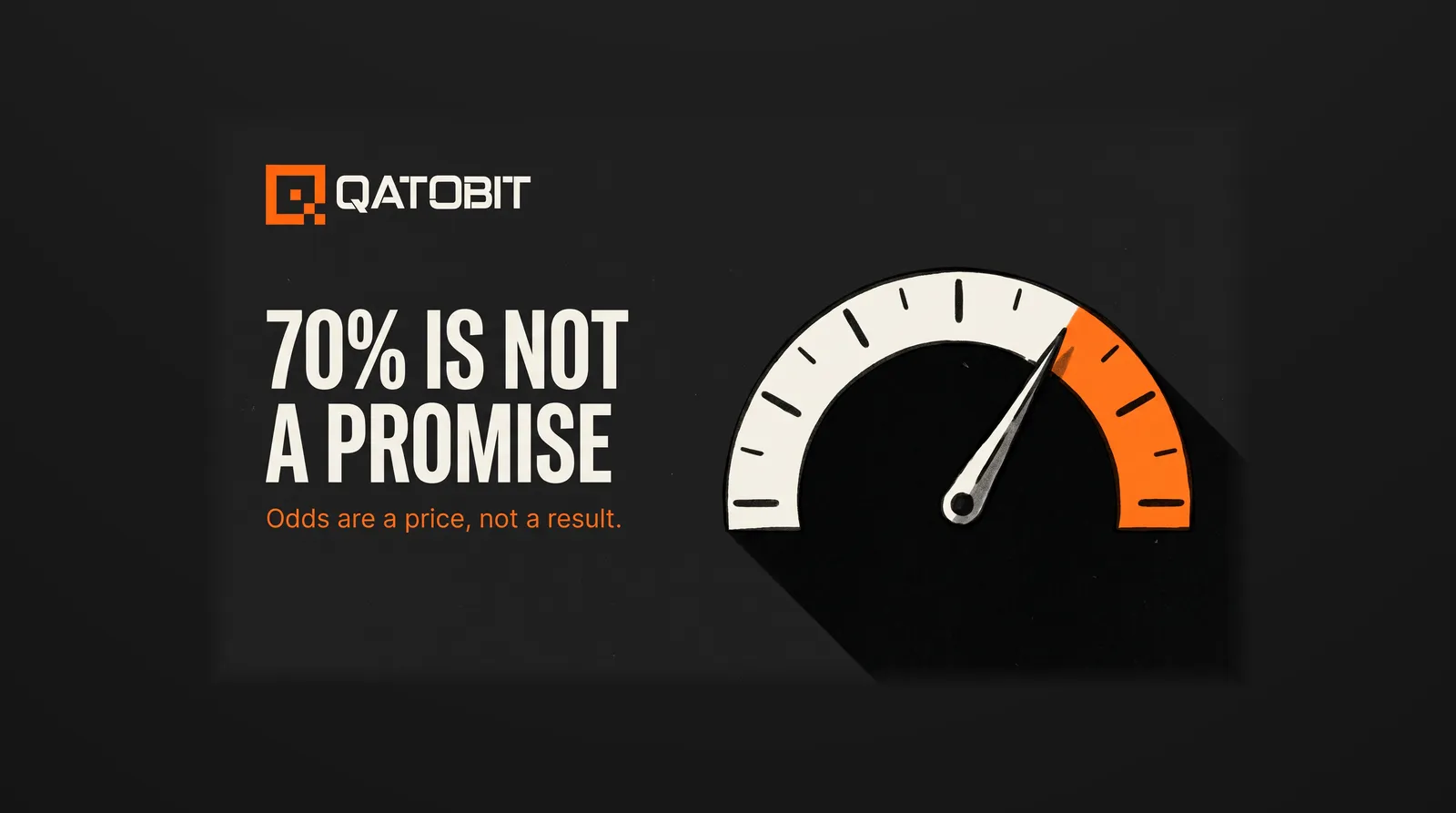
One lost race does not show that prediction markets got the 2026 US midterms wrong. Reuters reported that more than $1.48 billion was wagered on the elections and that the markets called the overall result, a Democratic win of both chambers. In South Carolina, Kalshi and Polymarket implied a 70% chance for Republican Darline Graham, and Democrat Annie Andrews won. A 70% price always carries a 30% chance of the other outcome.
What did the prediction markets get right, and what did they miss?
Reuters, in a report carried by the Economic Times, says the markets "got the big picture right". Democrats took the Senate and the House. Democrats won Senate seats in Texas and Ohio, and in many races the result tracked what the markets expected.
Kalshi traders were assigning a 55% probability to a "blue tsunami" as early as April, according to the same report. Kalshi's election volume reached more than $2.5 billion in the 2026 cycle, against $1.3 billion in the 2024 cycle, which included a presidential race.
The miss came in South Carolina. As of late afternoon on election day, Kalshi and Polymarket had implied a 70% chance that Graham would win. Andrews won the seat.
Reuters adds that the markets have had other high-profile misses, in US primaries and in Brazil's presidential election. Critics say the odds can be skewed by speculation, thin liquidity and concentrated bets.
Source: Reuters via The Economic Times, "Prediction markets get Democratic win right, with a few surprises", https://economictimes.indiatimes.com/markets/us-stocks/news/prediction-markets-get-democratic-win-right-with-a-few-surprises/articleshow/135543698.cms, read 5 November 2026.
What does a 70% price actually say?
A prediction market is a venue where people buy and sell contracts tied to real-world events, and the price of a contract reflects the traders' collective expectation. Polymarket's help centre describes the mechanics. Shares in an outcome are priced between 0.00 and 1.00. Each YES and NO pair is backed by $1.00 of USDC. When the market resolves, the shares on the correct outcome pay out $1.00 each.
So a share trading at 0.70 is the market's way of saying 70%. If the event lands the favourite's way seven times in ten, the price is fair, and the other three times are the price working as designed.
Take ten separate races, each priced at 70% for the favourite. A market that is well calibrated expects seven favourites to win and three to lose. Seeing one of those three lose tells you very little about the market. Seeing the favourites lose five or six of the ten would tell you a lot.
A single result cannot run that test, because accuracy for a probability is measured across many events.
Source: Polymarket Help Center, "What is Polymarket", https://help.polymarket.com/en/articles/13364060-what-is-polymarket, read 5 November 2026.
Why does one result prove so little?
A forecast of 70% is a claim about how often the favourite wins across many races. When the favourite loses, the forecast is not refuted, and when the favourite wins, the forecast is not confirmed either.
Reuters quotes a person familiar with the matter who told the agency that Polymarket's election forecasts were about 98% accurate. That is a single unnamed source, so treat it as an unverified claim. Even if the number holds, a market can be right about nearly every race and still contain races that went against a 70% price.
Brian Jacobsen, chief economic strategist at Annex, put the limit in one line to Reuters: "a prediction isn't a promise". He added that "you still have to hold the election or play the game to know the result".
A price tells you where the weight of information points, and the one case in front of you can still go the other way.
What does a 70% favourite losing say about your own portfolio?
The same logic applies to any view you hold about an outcome. If you are 70% sure of something, you are 30% sure of the opposite, and the question that matters is how much of the portfolio rides on being right.
Take a ₹1 crore portfolio and a thesis you hold at 70% confidence. Put ₹40 lakh behind it, which is 40% of the portfolio. If the thesis fails and that position halves, the loss is ₹20 lakh, or 20% of the portfolio. At 70% confidence, that failure arrives three times in ten.
Size the same thesis at 3% of the portfolio, which is ₹3 lakh. If it fails and the position halves, the loss is ₹1.5 lakh, or 1.5% of the portfolio. The thesis and the confidence are identical, and the sizing alone decided what a miss costs.
My view is plain: a portfolio built on being right about outcomes has to be right every time, and no forecaster is. A portfolio built on allocation rules does not have to call anything, because the rules were written for the case where the call is wrong. We wrote about how a few large holdings end up deciding the whole result in concentration risk and why a few holdings decide everything.
How does an allocation approach differ from a forecast?
A forecast asks which outcome will happen. An allocation asks what mix of holdings you are willing to carry if the forecast is wrong. The second question has an answer you can write down in advance, which is why it does not depend on any single result.
In what asset allocation is and what it decides before any pick, the allocation is the decision that comes before any individual holding. A rule for how much each position may hold, set before the outcome is known, is the same discipline a calibrated forecaster applies to a probability.
Qatobit's indexes follow that approach for crypto. An investor holds a curated basket of digital assets, designed and rebalanced monthly by Qatobit on a published methodology, rather than picking coins and timing entries. The investor makes one decision, the thesis that fits their risk appetite and horizon, and the rules handle what follows. What a crypto index is covers how the basket is built. When one holding drifts, portfolio rebalancing when one holding falls 10 percent shows how a schedule returns the weights to plan without anyone guessing the next move.
A rule leaves the loss in place and decides how large it can grow before the next rebalance.
Frequently asked questions
Did prediction markets get the 2026 US midterm elections wrong?
No. Reuters reported that the markets got the big picture right, with Democrats winning both the Senate and the House, and that more than $1.48 billion was wagered on the elections. One race, South Carolina, went against a 70% market price, which is consistent with a 70% price carrying a 30% chance of the other result.
What does a 70% prediction market price mean?
It means the market's collective estimate is that the outcome happens about seven times in ten. On Polymarket, a share is priced between 0.00 and 1.00 and pays $1.00 if the outcome is correct, so a share at 0.70 reads as 70%. A favourite losing at that price is expected three times in ten.
How do you judge whether a prediction market is accurate?
Across many events, not one. Ten races priced at 70% should produce about seven favourite wins. A market whose 70% favourites win far more or far less often than seven in ten is miscalibrated. A single loss tells you nothing about that.
Can a prediction market price guide how much I put in one position?
A price gives you a probability, and the probability is only half the decision. The other half is size. On a ₹1 crore portfolio, a 40% position that halves costs 20% of the portfolio, and a 3% position that halves costs 1.5%, so size decides what a miss costs.
How does a crypto index handle a call going wrong?
A Qatobit index holds a basket on a published methodology and rebalances it monthly, so no one call carries the whole portfolio. The rules decide the weights, and the investor chooses the thesis. A rebalance does not prevent a loss.
Crypto investments are subject to market risk. Not financial advice.
“A better allocation begins with a better explanation.”
Qatobit principle
Published construction. Fixed cadence. Versioned control.