The point
Concentration risk is the share of your portfolio that rides on one or two holdings. In a portfolio of five equal ₹20 lakh positions, one position that grows to ₹60 lakh becomes 42.9 percent of the whole. If it then falls 40 percent, you lose ₹24 lakh, which is 17.1 percent of the portfolio.
What is concentration risk, in plain words?
Concentration risk is the chance that one holding, one sector or one theme decides how your whole portfolio does. The holdings can all look different on the statement and still move together, because one thing sits behind them.
The US Securities and Exchange Commission's Investor.gov defines diversification as spreading your money among various investments. The hope is that if one loses money, the others make up for it. Concentration is what remains when that spreading has quietly stopped working.
Nobody decides to become concentrated. It happens when a winner grows faster than the rest and nobody trims it.
How does a portfolio become concentrated without anyone deciding?
It drifts. You start with weights you chose, and the market changes them for you.
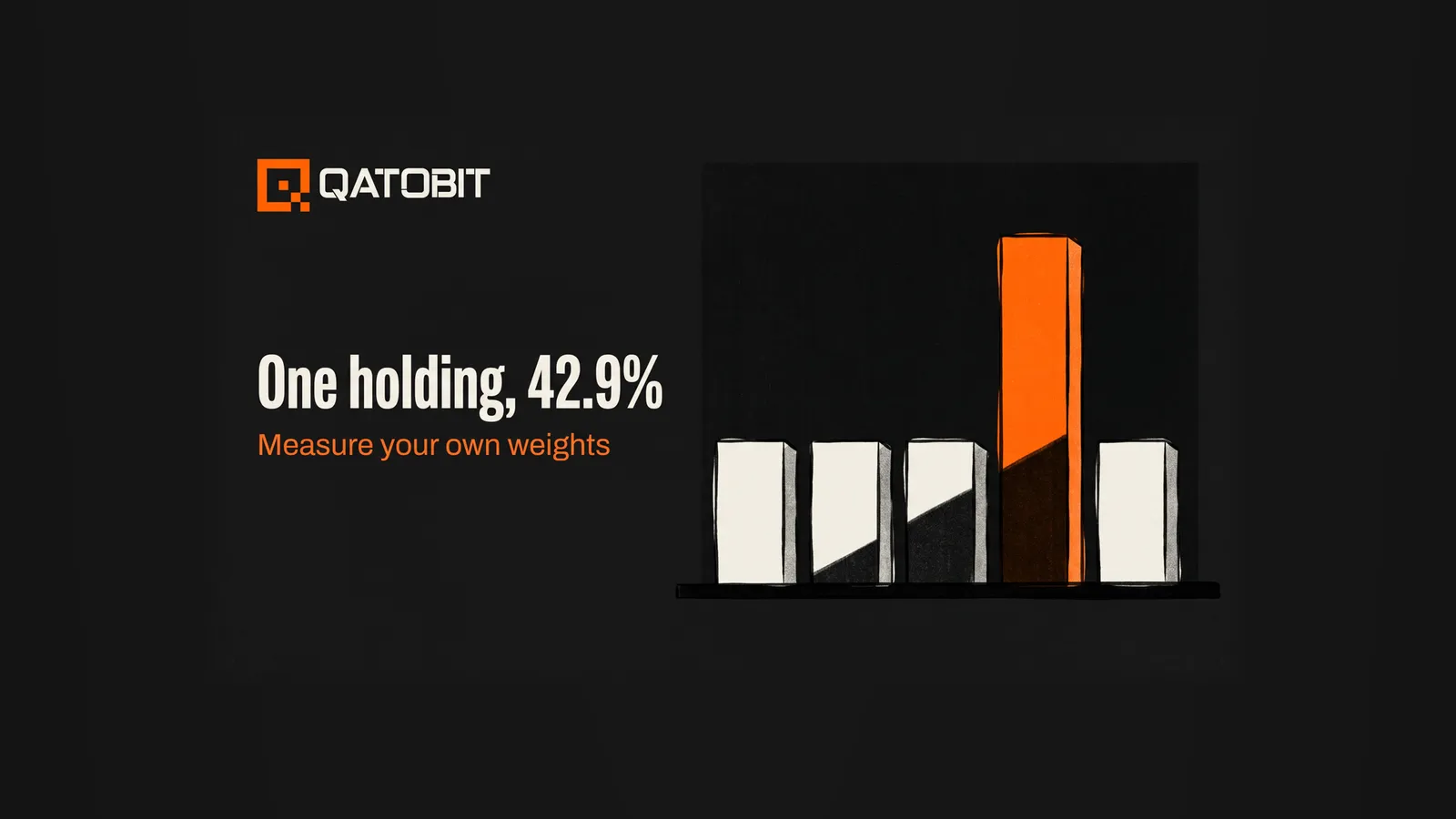
Take a ₹1 crore portfolio split into five holdings of ₹20 lakh each, so every holding is 20 percent. Four of them stay flat. The fifth grows to ₹60 lakh.
The total is now 4 × ₹20 lakh + ₹60 lakh = ₹1.4 crore. The winner is ₹60 lakh ÷ ₹1.4 crore = 42.9 percent of the portfolio. You made no new decision, and your largest position has still more than doubled its weight.
Investor.gov says rebalancing brings a portfolio back to its original asset allocation mix. It is needed because some investments grow faster than others, so holdings drift out of line with goals.
What does a concentrated position cost when it falls?
It costs more than the same fall would have at the weight you started with. The arithmetic is short enough to run on your own numbers.
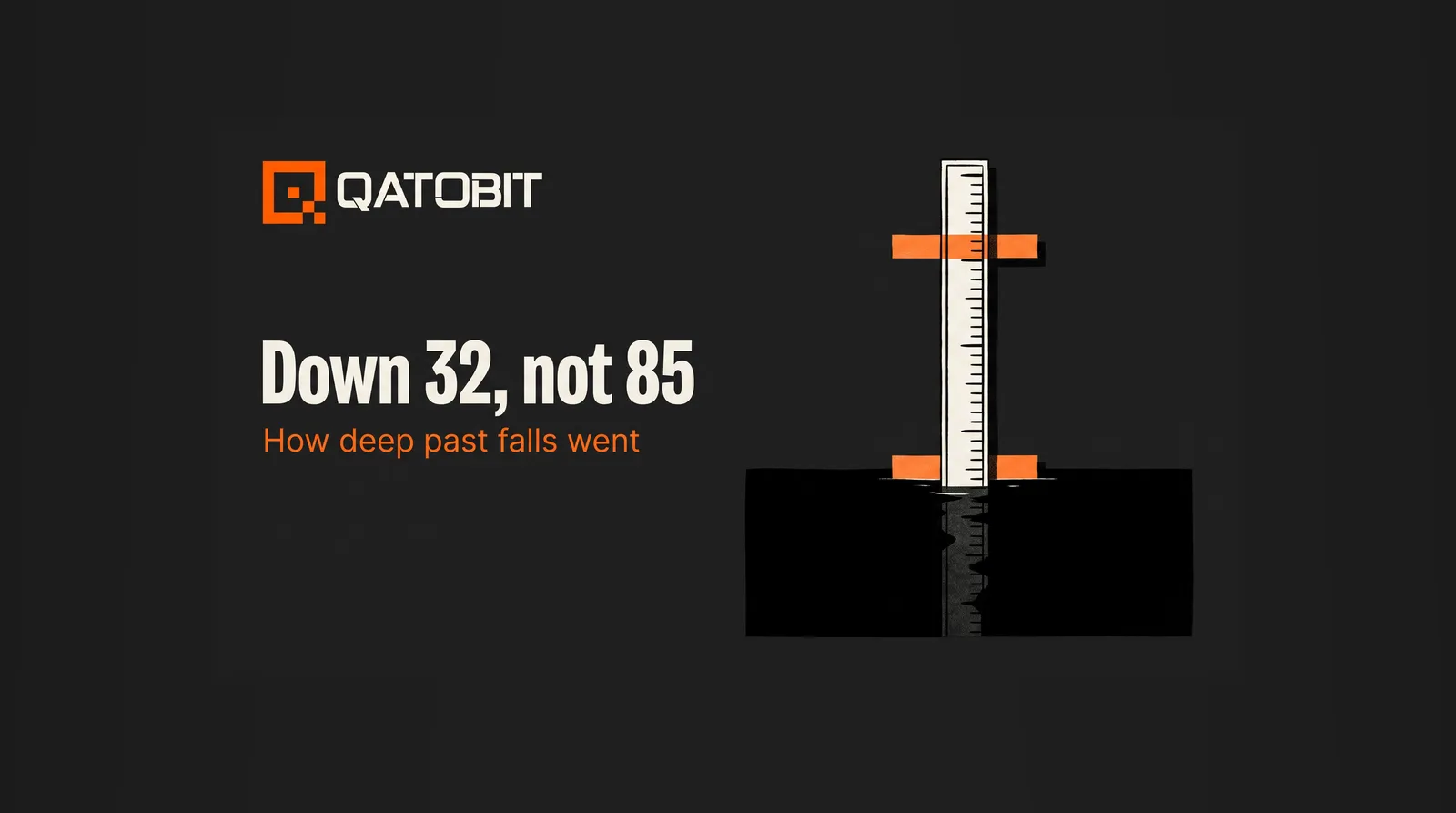
Stay with the same example. The ₹60 lakh holding falls 40 percent. The loss is 0.40 × ₹60 lakh = ₹24 lakh. On a ₹1.4 crore portfolio that is ₹24 lakh ÷ ₹1.4 crore = 17.1 percent.
Now run the same 40 percent fall on the holding at its starting size of ₹20 lakh. The loss is ₹8 lakh, which is 8 percent of the original ₹1 crore. The fall is identical and the damage to the portfolio is a little over twice as large, only because the weight drifted.
The risk you carry is the size of the fall multiplied by the weight of what falls, and you control only the second number.
Why do holdings that look different move together?
Because a shared driver can sit behind them. Five names in one sector, or five coins that follow Bitcoin, are one bet written five times.
In crypto this is the ordinary case. Most tokens rise and fall with Bitcoin, so a portfolio of six coins can behave like one position. Diversification is measured by how many separate things can go wrong at once, and a count of holdings cannot tell you that.
This is also why a wide index can leave a personal portfolio narrower than it looks. An index spreads across many names by its own rules. Your portfolio spreads only as far as you have kept it spread.
How do you measure your own concentration?
Three numbers are enough, and none needs software.
- The weight of your largest holding. Divide its value by the total value of the portfolio.
- The combined weight of your top three holdings. Add their values and divide by the total.
- The number of holdings that share one driver. Group them by what moves them, and count the groups.
Put rupees on it. Say your portfolio is ₹5 lakh as a lump sum across four holdings: ₹2,50,000, ₹1,25,000, ₹75,000 and ₹50,000. The largest is ₹2,50,000 ÷ ₹5,00,000 = 50 percent. The top three together are ₹4,50,000 ÷ ₹5,00,000 = 90 percent. If the top two share a driver, a single event reaches ₹3,75,000 of the ₹5,00,000, which is 75 percent.
Pick a maximum weight for any one holding before the market picks it for you, write it down, and check it on a fixed date. A ceiling you decided in a calm month is the only one you will keep in a frightening one.
What does rebalancing do about it?
Rebalancing sells a little of what has grown and buys what has lagged, so the weights return to the ones you chose. It is a rule, so it does not depend on how you feel about the winner.
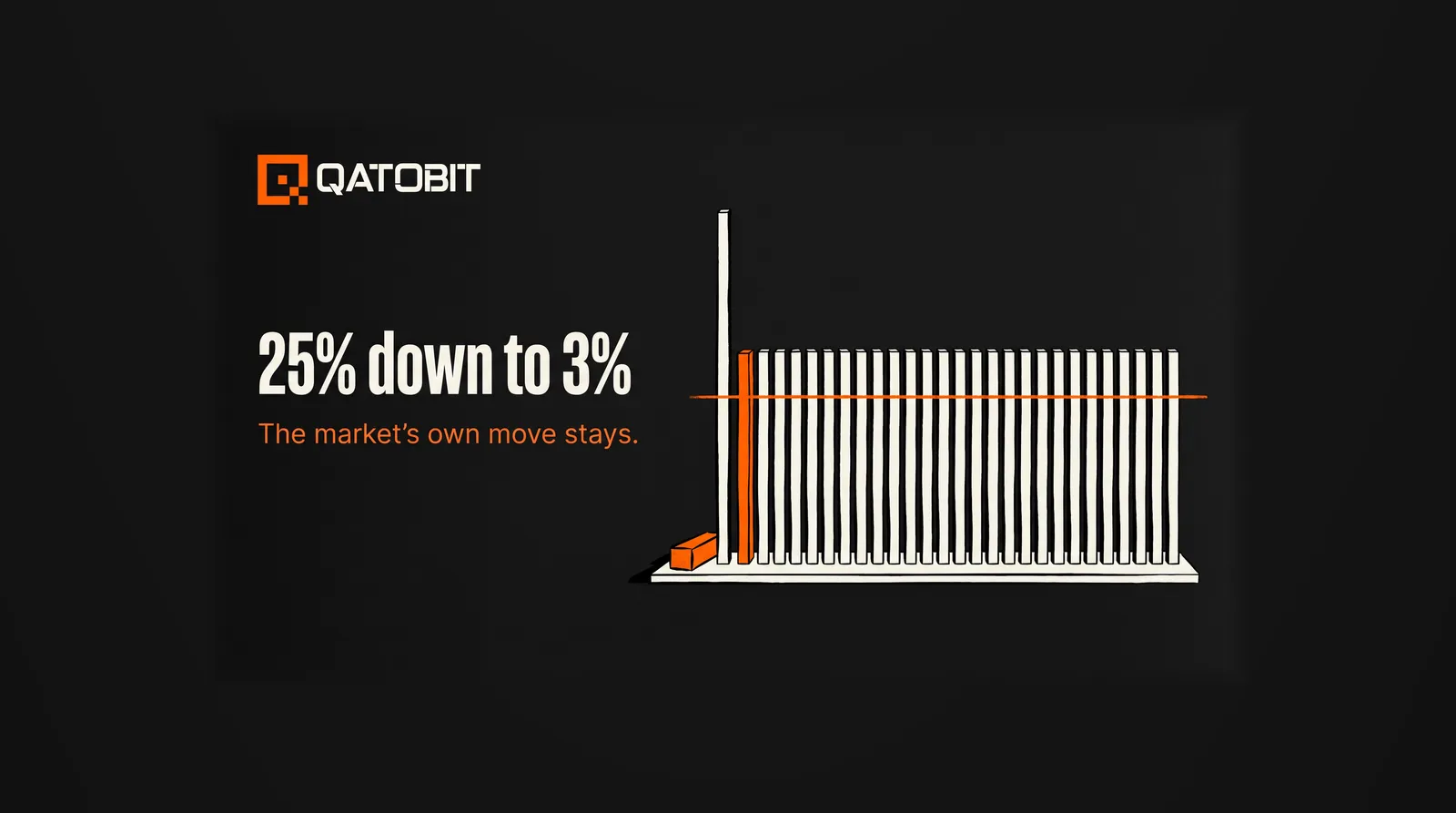
Run it on the earlier example. Back to equal weights on ₹1.4 crore means each of the five holdings returns to ₹28 lakh, since ₹1.4 crore ÷ 5 = ₹28 lakh. The winner gives up ₹32 lakh, and the four others each take in ₹8 lakh. The same 40 percent fall on the winner now costs 0.40 × ₹28 lakh = ₹11.2 lakh, which is 8 percent of ₹1.4 crore.
Doing this on your own holdings means making the sales yourself and deciding the date each time. That is where a written rule helps. Rebalancing is also a cost, since each trade has a fee, so the date and the size of the drift that triggers it belong in the rule.
How do the QSI indices handle concentration?
By setting the weights by methodology and rebalancing on a schedule. The four QSI Crypto Indices are rebalanced monthly on a documented methodology, so the weights return to the rules each month. The fee is 0.35% per rebalance, and there is no annual management fee. A monthly rebalance inside an index is not the investor's taxable event.
QSI Core holds Bitcoin, Ethereum, Gold and a stable reserve. QSI Growth holds Bitcoin, Ethereum, Solana, Gold and a stable reserve. QSI VRION holds Bitcoin, Ethereum and Solana, with no hedge layer, and risk there is held by the investor and not by the structure. QSI GEQ8 holds eight global companies, with a hard cap of 15 percent on any one holding and a floor of 3 percent.
The index weights and backtested figures are published on the index pages. Backtested results are history and do not forecast what an index will do.
What should you do with your own portfolio?
Open your holdings and run the three numbers above. If your largest holding is well above the weight you started with, decide the ceiling and the date, then write both down. The risk appetite piece puts a position limit in rupees. The crypto liquidation piece shows a concentrated, borrowed position being forced out.
Sources, read on 11 October 2026: Investor.gov on diversification and rebalancing.
Frequently asked questions
What is concentration risk?
Concentration risk is the risk that a few holdings, or one shared driver behind them, decide your whole portfolio's result. In a ₹1 crore portfolio where one holding has drifted to 42.9 percent, a 40 percent fall in it costs 17.1 percent of the portfolio.
How many holdings are enough to avoid concentration risk?
No count is enough on its own. Five coins that all follow Bitcoin are one driver, so measure the weight of your largest holding and the number of separate drivers, not the number of names.
How do I calculate concentration in my portfolio?
Divide the value of your largest holding by the total value, then do the same for your top three combined. On ₹5 lakh with holdings of ₹2,50,000, ₹1,25,000, ₹75,000 and ₹50,000, the largest is 50 percent and the top three are 90 percent.
Does rebalancing remove concentration risk?
It resets the weights to the ones you chose, which removes the drift. It does not remove a shared driver behind several holdings, so check what moves them as well as how much each weighs.
What is the minimum investment in a Qatobit index?
Crypto Indices start at ₹2,000 per index, and a SIP into an index starts at ₹2,000 per cadence.
Crypto investments are subject to market risk. Not financial advice.
“A better allocation begins with a better explanation.”
Qatobit principle
Published construction. Fixed cadence. Versioned control.