The point
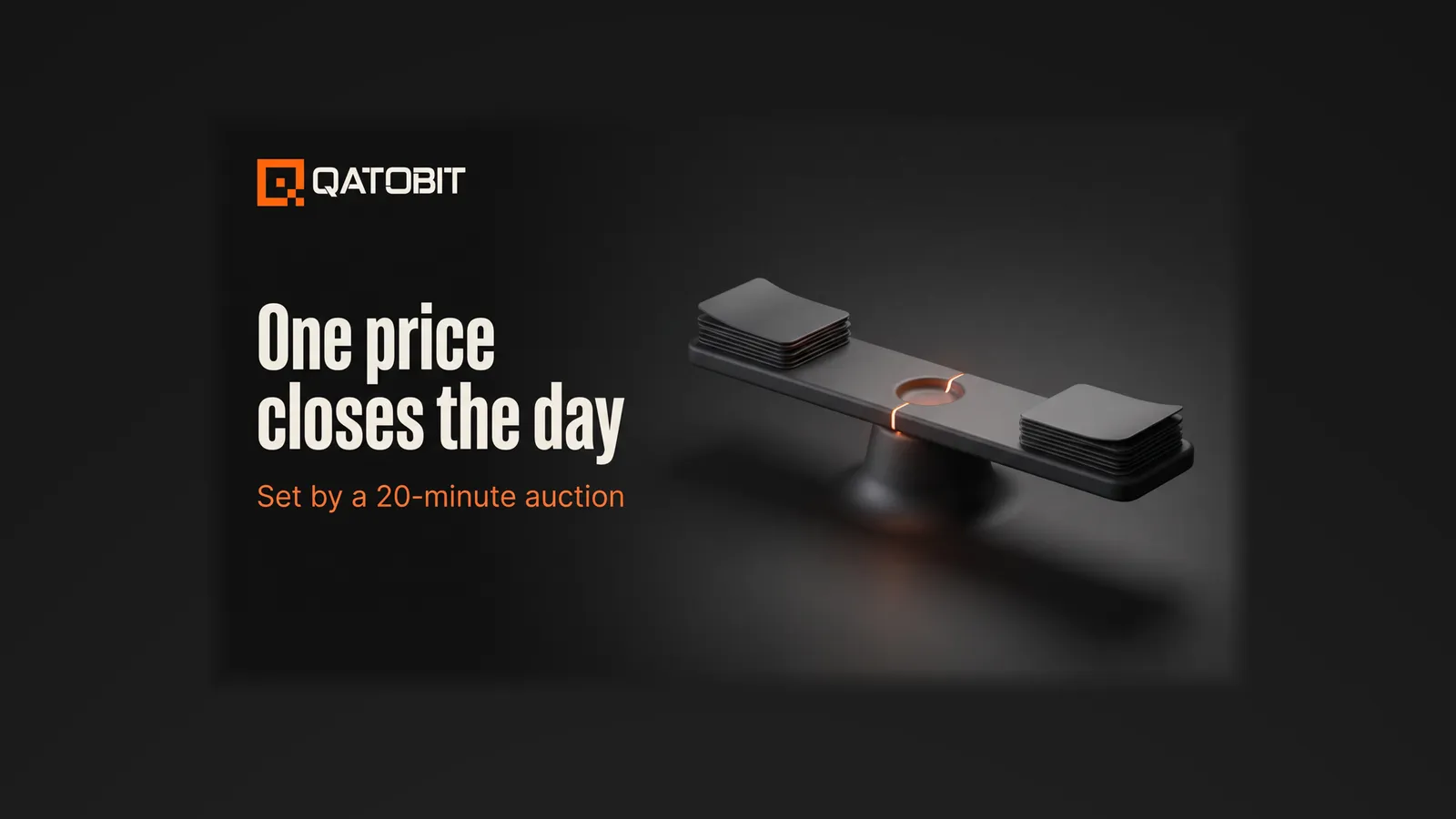
The closing price of an Indian stock is not the last trade of the day. For stocks with futures or options, it is the price at which a 20-minute closing auction matches the most shares. For every other stock, it is the volume-weighted average price of the last 30 minutes. Your portfolio value each evening rests on one of these two numbers.
What is a closing price, and why does it matter?
A closing price is the one official price an exchange publishes for a stock at the end of a session. It is the number your portfolio statement uses to value what you hold.
Zerodha's support page lists what rests on it. Index levels such as the Nifty 50 and the BSE Sensex use it. So do mutual fund net asset values, expiry settlement, your portfolio value and profit and loss, and the value of shares pledged as collateral.
So a price set in a few minutes ends up in many places. If you hold a position and check it on your phone at 6 pm, you are reading the output of a rule. The rule changed in 2026, which is why it is worth knowing.
How was the closing price set before the auction?
The older method is the volume-weighted average price, VWAP. It takes every trade in the last 30 minutes of the session and weights each price by the number of shares that traded at it.
Zerodha's page explains why the exchange avoids the last traded price. If a stock trades between ₹1,000 and ₹1,010 all day and one small trade prints at ₹980 near the close, that single trade should not define the closing price. VWAP gives the large trades more weight, so a small one barely moves it.
The weakness is that VWAP is an average of what happened. It is not a price anyone could trade at. 5paisa's explainer notes the SEBI circular's concern that this method can produce distorted closing prices when large orders land in the final minutes.
It also leaves index funds and ETFs short. A passive fund wants to buy or sell at exactly the closing price, and a 30-minute average gives it no single price to trade at. The gap between what the fund earns and what its benchmark earns is called tracking error.
How does the closing auction work?
SEBI issued the circular introducing the Closing Auction Session, CAS, on 16 January 2026. According to the 5paisa and Zerodha explainers, it took effect on 3 August 2026.
For stocks that have futures or options, continuous trading now stops at 3:15 pm. A 20-minute auction then runs to 3:35 pm. All other stocks stay on the VWAP method until further notice.
Zerodha's support page sets out the sequence.
- 3:00 to 3:15 pm, regular trading. The exchange calculates the VWAP of these 15 minutes. It becomes the reference price for the auction.
- 3:15 to 3:20 pm, transition. No new orders are accepted. Open limit orders carry forward, except stop-loss orders, iceberg orders and orders outside a 3 percent band on either side of the reference price.
- 3:20 to 3:25 pm, first order entry session. Market and limit orders can be placed, changed or cancelled. The exchange shares an indicative price, total buy and sell quantities and the order imbalance.
- 3:25 to 3:30 pm, second order entry session. Only limit orders can be placed, changed or cancelled. The session closes at a random moment between 3:28 and 3:30 pm, so nobody can time an order to the last second.
- 3:30 to 3:35 pm, matching. The exchange matches all orders at the price where the most shares can trade. That equilibrium price is the closing price.
If the auction finds no equilibrium, 5paisa reports that the reference price becomes the closing price.
Source: Zerodha Support and 5paisa, both read on 12 October 2026. Timings differ slightly between explainers, so the SEBI circular of 16 January 2026 is the authority on exact windows.
How does one price get chosen from all those orders?
Think of the auction as a single room where every buyer and every seller leaves a sealed offer. A buyer willing to pay ₹1,010 will also accept ₹1,005 or ₹1,000. A seller willing to sell at ₹1,000 will also accept ₹1,005 or ₹1,010.
The exchange looks for the price at which the largest number of shares can change hands. Everybody who can trade at that price does, and that price is the close.
Take a stock with these orders, all in shares.
- Buyers: 400 at ₹1,010 or better, another 300 at ₹1,005 or better, another 300 at ₹1,000 or better.
- Sellers: 300 at ₹1,000 or lower, another 300 at ₹1,005 or lower, another 400 at ₹1,010 or lower.
At ₹1,000, buyers cumulatively offer 1,000 shares and sellers 300, so 300 trade. At ₹1,005, buyers offer 700 and sellers 600, so 600 trade. At ₹1,010, buyers offer 400 and sellers 1,000, so 400 trade. The most trade at ₹1,005, so the close is ₹1,005. The arithmetic is the whole method: count what trades at each price and take the maximum.
This example is illustrative and uses made-up orders.
What does a few rupees of closing price do to a position?
Suppose three percent of a ₹1 crore portfolio sits in one stock. That is ₹3,00,000, and at ₹1,000 a share it is 300 shares.
If the stock closes at ₹1,010 instead of ₹1,000, the position is valued at 300 x ₹1,010 = ₹3,03,000. That is ₹3,000 more, or 1 percent of the position and 0.03 percent of the whole portfolio.
The number is small for one stock on one evening. The same price decides an expiry settlement, a collateral value or a fund's NAV, and there the rupees multiply across many holders at once. A rule that cannot be nudged by one late trade protects all of them equally.
Who does the auction change things for?
Three groups see a difference.
- Holders of index funds and ETFs. A fund can now buy or sell in the auction at the single closing price, and Zerodha's page says CAS reduces tracking error for these funds.
- Holders of F&O stocks. Their stocks stop trading at 3:15 pm and sit in the auction. Their derivatives, Zerodha says, keep trading until 3:40 pm.
- Everyone else. Stocks without derivatives keep the 30-minute VWAP, so the same exchange runs two methods side by side. NSE and BSE each run their own auction, so 5paisa notes the two exchanges can print different closing prices.
SEBI's chairman Tuhin Kanta Pandey said on 17 August 2026, according to Akashvani News, that the auction will continue and that the regulator will weigh industry suggestions. He said some participants have not yet updated systems built on the VWAP method. He added that SEBI will issue a consultation paper on securities lending and borrowing to help stabilise the session.
So the rule is live, and the details around it are still being tuned.
What do we make of the change?
Our view is that an auction is the more honest price. A VWAP tells you what the average trade looked like. An auction tells you where the largest number of people agreed to deal, and everyone who wanted that price could get it.
The cost is a longer close with more rules in it. The final 20 minutes now have rules about order types, bands and random cut-offs that a holder who only glances at the app will never see.
That is fine, provided you know a rule exists. The price on your screen is the product of a written procedure, and procedures can change. Check which one applies to the stocks you hold.
What does this have to do with a crypto allocation?
A stock market has an official close because it has a closing bell. A crypto market has no bell, so a crypto portfolio is valued at a moment someone chooses rather than at a published close.
That makes a written rule matter more. A Qatobit index rebalances monthly on a published methodology, so the point at which the basket is reset is fixed in advance instead of being decided on the day. The reader can see what was sold and what was bought around each rebalance.
The principle is the one the closing auction follows. A price that comes out of a stated procedure is easier to trust than one that comes out of a mood. For the wider case on why timing is a poor substitute for a rule, see investing vs trading. For a look at an adjacent part of the day, the NSE pre-open auction works on a similar idea at the start of the session.
Frequently asked questions
Is the closing price the last traded price?
No. For stocks with futures or options, the closing price is the equilibrium price of a closing auction that matches the most shares. For other stocks it is the VWAP of the last 30 minutes of trading.
What time does the closing auction run?
Zerodha's support page says the session runs from 3:15 to 3:35 pm on trading days for stocks in the futures and options segment. Continuous trading in those stocks stops at 3:15 pm, and the closing price is set between 3:30 and 3:35 pm.
Which stocks are in the closing auction?
For now, stocks that have active futures or options contracts. Zerodha and 5paisa both say all other stocks continue on the 30-minute VWAP method until further notice.
Can a small trade at the very end move the closing price?
Much less than before. Under VWAP a small trade carries little weight. Under the auction, the second order session closes at a random time between 3:28 and 3:30 pm, so no trade can be timed to the last second.
Does my portfolio value use the closing price?
Yes. Zerodha lists portfolio value, profit and loss, index levels, mutual fund NAV, expiry settlement and collateral valuation among the uses of the closing price.
Crypto investments are subject to market risk. Not financial advice.
“A better allocation begins with a better explanation.”
Qatobit principle
Published construction. Fixed cadence. Versioned control.