The point
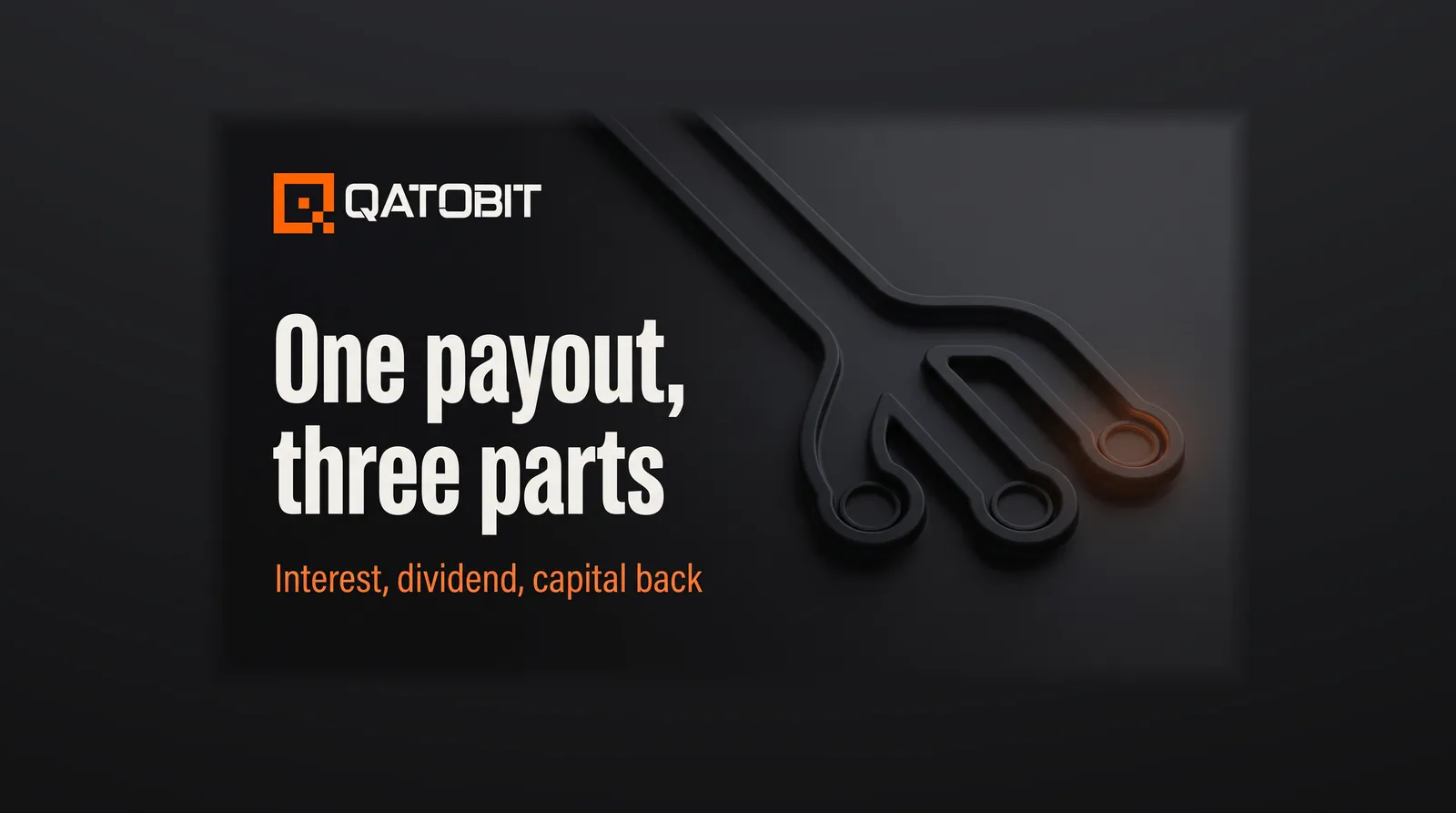
An InvIT unit is a claim on the cash that roads, transmission lines or towers earn, held through a trust that SEBI regulates. A publicly offered InvIT must distribute at least 90 percent of its net distributable cash flows to unitholders. That payout is a mix of interest, dividend and repayment of capital, and each part is taxed differently.
What does an InvIT unit actually hold?
A claim on a trust, and the trust owns the infrastructure, usually through companies set up for each asset. The Indian Economic Service's Arthapedia page describes an InvIT as a trust that pools money from investors to invest in infrastructure and return a portion of the income to unitholders. These companies are called special purpose vehicles, or SPVs, and each one typically holds a single road, a transmission line or a tower portfolio.
The units list on a stock exchange, so you buy and sell them like a share. What you own is the right to a share of what the trust earns, and the road itself stays with the SPV.
An InvIT is regulated by SEBI under its Infrastructure Investment Trusts Regulations, 2014. Arthapedia notes the trust must hold a controlling interest in an SPV it invests through. That means at least 50 percent of the equity, unless a regulatory or concession requirement makes it impossible.
Source: Indian Economic Service, Arthapedia, Infrastructure Investment Trust (InvITs), https://ies.gov.in/arthapedia/concept/infrastructure-investment-trust-invits, read 23 November 2026.
Who are the parties behind a trust?
Four, and each has a separate job. Arthapedia lists the trustee, the sponsor, the investment manager and the project manager as the four parties of an InvIT.
The sponsor sets the trust up. The investment manager runs the assets and the investments of the trust. The project manager is responsible for executing the project, which on a public private partnership road means meeting the milestones in the concession agreement.
The trustee watches over the other three for unitholders. It must be a SEBI-registered debenture trustee, and it cannot be an associate of the sponsor or the manager. That separation is the control worth looking for in any trust, because it keeps the supervisor apart from the people it supervises.
A public InvIT that puts at least 80 percent of its assets into completed, revenue-generating projects raises money through a public issue of units, per Arthapedia. A trust that puts more than 10 percent into projects still under construction raises money by private placement instead. Both types list on an exchange.
Source: Arthapedia, as linked above, read 23 November 2026.
How does the money reach the unitholder?
Cash moves up in steps. A toll road collects tolls and the SPV pays its costs and debt service. What remains goes to the trust as interest on loans, as dividend, or as repayment of capital. The trust then passes it to unitholders.
IndiGrid Infrastructure Trust, a listed InvIT, states the result on its unitholder FAQ page: distributions can be characterised as interest, dividend, other income, capital repayment, or a combination of these. The mix depends on the nature of the net distributable cash flows the trust receives from its SPVs.
Timing is a rule too. IndiGrid's page says publicly offered InvITs must disburse distributions at least once every six months under the SEBI regulations as amended, and that IndiGrid itself distributes quarterly. A trust may pay more often than the rule asks, but not less often.
Source: IndiGrid Infrastructure Trust, Unitholder FAQ, https://www.indigrid.co.in/investor/faq, read 23 November 2026.
Why does the split of a distribution matter more than the total?
Because the three parts reach your tax return in three different ways. The same rupee of distribution can be fully taxed, partly taxed or not taxed in the year you receive it. A headline payout tells you nothing until you know how it divides.
So read the split before the amount, because two trusts can pay out the same rupees and leave a holder with very different tax bills.
Interest
Interest is taxed in your hands at your applicable rate. IndiGrid's FAQ shows the trust deducting tax at 10 percent on interest distributed to resident unitholders, and the holder settles the difference at the slab rate when filing.
Dividend
Dividend depends on the SPV. IndiGrid's FAQ says the dividend is exempt in the holder's hands when the SPV has not opted for the concessional corporate tax regime. When it has, the dividend is taxable at the applicable rate, with 10 percent deducted at source for residents.
Repayment of capital
The trust returns part of what unitholders originally put in. IndiGrid's FAQ states that no tax is withheld on a capital repayment to a resident unitholder. The holder's treatment follows section 92(2)(k) of the Income-tax Act, 2025 (earlier section 56(2)(xii)). The trust's own tax note shows how that part is treated against your cost.
The same page records that the Income-tax Act, 2025 took effect from 1 April 2026 and replaced the 1961 Act. Withholding on these distributions now sits under section 393(1) (earlier section 194LBA). The trust keeps the old section numbers alongside so holders can match earlier statements.
Source: IndiGrid Infrastructure Trust, Unitholder FAQ, as linked above, read 23 November 2026.
What does that split look like in rupees?
Take a holder who receives ₹1,00,000 in distributions over a year. The amounts below are invented to show the arithmetic and are not the mix of any real trust.
Say ₹50,000 arrives as interest, ₹20,000 as dividend and ₹30,000 as repayment of capital.
Withholding applies to the first two parts. Ten percent of ₹70,000 (₹50,000 plus ₹20,000) is ₹7,000 deducted before the money reaches the holder. The ₹30,000 of capital repayment arrives with no withholding.
Now follow the interest alone. A holder in the 30 percent slab pays 30 percent plus 4 percent cess, which is 31.2 percent, before any surcharge. On ₹50,000 of interest that is ₹15,600. Withholding on the interest was ₹5,000 (10 percent of ₹50,000), so ₹10,600 remains for the holder to settle.
The tax deducted at source is lower than the tax owed in a higher slab, so part of the cash that arrives goes back out at filing time. The ₹30,000 returned as capital deserves a second look too, because it is your own money coming back rather than income.
Dividend is left out of the tax step because it depends on the SPV's regime.
What should you read in an offer document before buying?
Five things, in this order.
The mix of cash flows
Look for how the trust expects to receive cash from its SPVs: interest, dividend or repayment. Per IndiGrid's FAQ, that mix sets how a distribution is characterised, so a trust leaning on capital repayment hands you a different payout than one leaning on interest.
The concession, where there is one
Public private partnership assets run on a concession agreement, a right granted for a fixed term. Ask how many years remain on each asset and what happens when the term ends, because the cash flow to the trust is tied to that right.
Debt
A trust that borrows has lenders ahead of unitholders for the cash. Find the borrowing level and how it is rated. Arthapedia notes SEBI requires a credit rating and unitholder approval above a stated borrowing threshold, so the document should name both.
Valuation
Arthapedia says an InvIT must value its invested assets in full at least once a year and update that half-yearly. Read the latest valuation and who carried it out.
The trustee and the sponsor
Check that the trustee is independent of the sponsor and the manager, as the regulations require. Then read how much the sponsor holds in the units, because a sponsor with money in the trust shares your outcome.
What is happening in the InvIT market now?
As of 22 November 2026, Millennium Post reports four to five privately placed InvITs expected to tap public markets by March 2027, raising about ₹17,000 crore combined, citing investment bankers. The same report puts India's InvIT market at around ₹7.5 lakh crore, with about 6.5 lakh unitholders as of the first quarter of FY27. It adds that InvITs have distributed nearly ₹1 lakh crore to investors over ten years.
Source: Millennium Post, InvIT IPO rush gathers pace, https://www.millenniumpost.in/business/invit-ipo-rush-gatherspace-4-5-trusts-likelyto-go-public-by-march-684225, published 22 November 2026, read 23 November 2026.
Where does this sit next to the rest of a portfolio?
An InvIT is a listed unit in a regulated trust, and it asks the same question of you as any holding: what rule decides what you receive, and when. Qatobit does not offer InvITs. Its QSI indices are baskets that follow a published methodology, with three of the four holding crypto and QSI GEQ8 holding global equities.
The habit of reading the rule carries across. For an InvIT the rule is the distribution requirement and the trust deed. For a QSI index it is the methodology, with a monthly rebalance. Both reward the holder who reads the rule before the headline.
For another allocation question, see the piece on how much of a portfolio crypto should be. A second piece covers how a coin gets in and gets cut in a crypto index.
What to take from it
An InvIT unit pays you what a set of infrastructure assets earn, after costs and debt, through a trust built to pass that cash on. The structure has four parties, a regulator and a distribution rule. The payout splits three ways, and the split decides what you owe.
Carry one question into any offer document: of each rupee distributed, how much is income and how much is your own capital coming back?
Frequently asked questions
What is an InvIT in simple terms?
An InvIT is a SEBI-regulated trust that holds infrastructure assets such as roads and transmission lines and passes most of their cash to unitholders. You buy units on a stock exchange. A publicly offered InvIT must distribute at least 90 percent of its net distributable cash flows.
How often does an InvIT pay out?
At least once every six months for a publicly offered InvIT, under the SEBI regulations as amended, per IndiGrid's unitholder FAQ. A trust may pay more often, and IndiGrid distributes quarterly.
What are the parts of an InvIT distribution?
Interest, dividend, other income and repayment of capital, or a combination. The mix depends on the cash flows the trust receives from its SPVs, so it changes from one trust to another.
Is tax deducted on InvIT distributions?
Yes on interest and taxable dividend. IndiGrid's FAQ shows 10 percent withheld for resident unitholders whose PAN is on record, and 20 percent where it is not. Capital repayment carries no withholding for residents.
Who looks after unitholders in an InvIT?
The trustee. It must be a SEBI-registered debenture trustee and cannot be an associate of the sponsor or the investment manager, per Arthapedia.
Crypto investments are subject to market risk. Not financial advice.
“A better allocation begins with a better explanation.”
Qatobit principle
Published construction. Fixed cadence. Versioned control.