The point
Gold is down 32 percent from its January peak. As of 18 November 2026 it traded near $3,778 an ounce against a peak near $5,599. A January liquidation started the fall, and rate-hike expectations and an oil shock that lifted bond yields and the dollar have kept it going.
How far has gold fallen, and from where?
Gold sat near $3,778 an ounce on 18 November 2026, per Deccan Chronicle, against a January peak near $5,599. That is a 32 percent fall. The same report puts silver at about $46 against a peak of $121.65, down 62 percent.
The climb before the fall was just as steep. Morningstar reports that gold's spot price rose 96 percent in the twelve months to 28 January 2026. Holders who bought near the top are carrying the whole of the fall.
Source: Deccan Chronicle, "Gold Falls 32%, Silver 62% From Record Highs as Oil Prices Weigh on Metals", https://www.deccanchronicle.com/amp/business/gold-falls-32-silver-62-from-record-highs-as-oil-prices-weigh-on-metals-2005585, read 23 November 2026.
Source: Morningstar, "Why Did Gold and Silver Prices Plunge?", https://www.morningstar.com/markets/why-are-gold-silver-plunging, read 23 November 2026.
What broke first in January?
A crowded trade unwound in one session. On 30 January 2026 gold fell 9 percent, from $5,390 to $4,895 an ounce, its steepest single-day decline since the early 1980s, according to Morningstar. Silver closed the day at $85, down 26 percent from its open.
Analysts quoted by Morningstar called it a liquidity event. When prices swing hard, margin calls and risk limits force holders to sell, and the selling pushes prices down further. Vontobel's head of commodities described it as a deleveraging shock in which stop-losses and margin calls cascaded through the market.
That matters because nothing about gold itself changed that morning. Morningstar quotes one chief investment officer saying inflation data did not shift and policy expectations did not reverse overnight. What failed was the assumption that a defensive asset stays easy to sell under stress.
Source: Morningstar, as linked above, read 23 November 2026.
Why has the slide continued since then?
Interest rates and oil kept the pressure on. Gold pays no interest, so when rates are expected to rise, holding it costs more in forgone income. Deccan Chronicle reports that markets assigned a 96.7 percent probability to a 25 basis point increase by the US Federal Reserve in December. A basis point is one hundredth of a percentage point.
Oil added a second push. The report says expensive oil raised inflation risk, which supported higher bond yields and a stronger dollar. Both raise the opportunity cost of holding a metal that earns nothing. The International Energy Agency's North Sea Dated crude series, quoted in the same report, fell from $136 in early October to around $93.
So the forces that usually weigh on gold crowded out the safe-haven role holders expected from it. A shock that scares investors can raise rates and the dollar at the same moment.
Source: Deccan Chronicle, as linked above, read 23 November 2026.
Does the rupee make the fall bigger or smaller for an Indian holder?
It made the fall bigger, because the rupee strengthened. Gold is priced in dollars, so a stronger rupee buys the same ounce for fewer rupees. Deccan Chronicle gives the arithmetic. A 5 percent fall in the international price, combined with a 2 percent gain in the rupee, produced about a 6.9 percent domestic decline before duties and premiums.
You can check it. The dollar price falls to 0.95 of where it was, the rupee gains to 1.02 of its old value, and 0.95 divided by 1.02 is 0.931. That is a fall of 6.9 percent in rupee terms.
A weaker rupee would have worked the other way and cushioned the drop. A gold holder in India carries a currency position alongside the metal.
Source: Deccan Chronicle, as linked above, read 23 November 2026.
Is the long-term case for gold still there?
The buyers that built it are still buying. Deccan Chronicle cites World Gold Council data showing central banks bought about 675 tonnes between January and September 2026, including 321 tonnes in the third quarter. Global gold ETFs added 211.2 tonnes in the third quarter after losing 47.3 tonnes in the second.
Morningstar also quotes Standard Chartered's commodities research head saying that central banks buying more gold since 2022 has raised prices, and that structural factors still drive the market. Two readings of the same fall are both on the record: a crowded trade was flushed out, and the buyers behind the long climb have not left.
Neither reading tells you where the price goes next, and this piece makes no call on it. The fall does show how much a holder had to sit through.
Source: Deccan Chronicle and Morningstar, as linked above, read 23 November 2026.
What does a 32 percent drawdown ask of a holder?
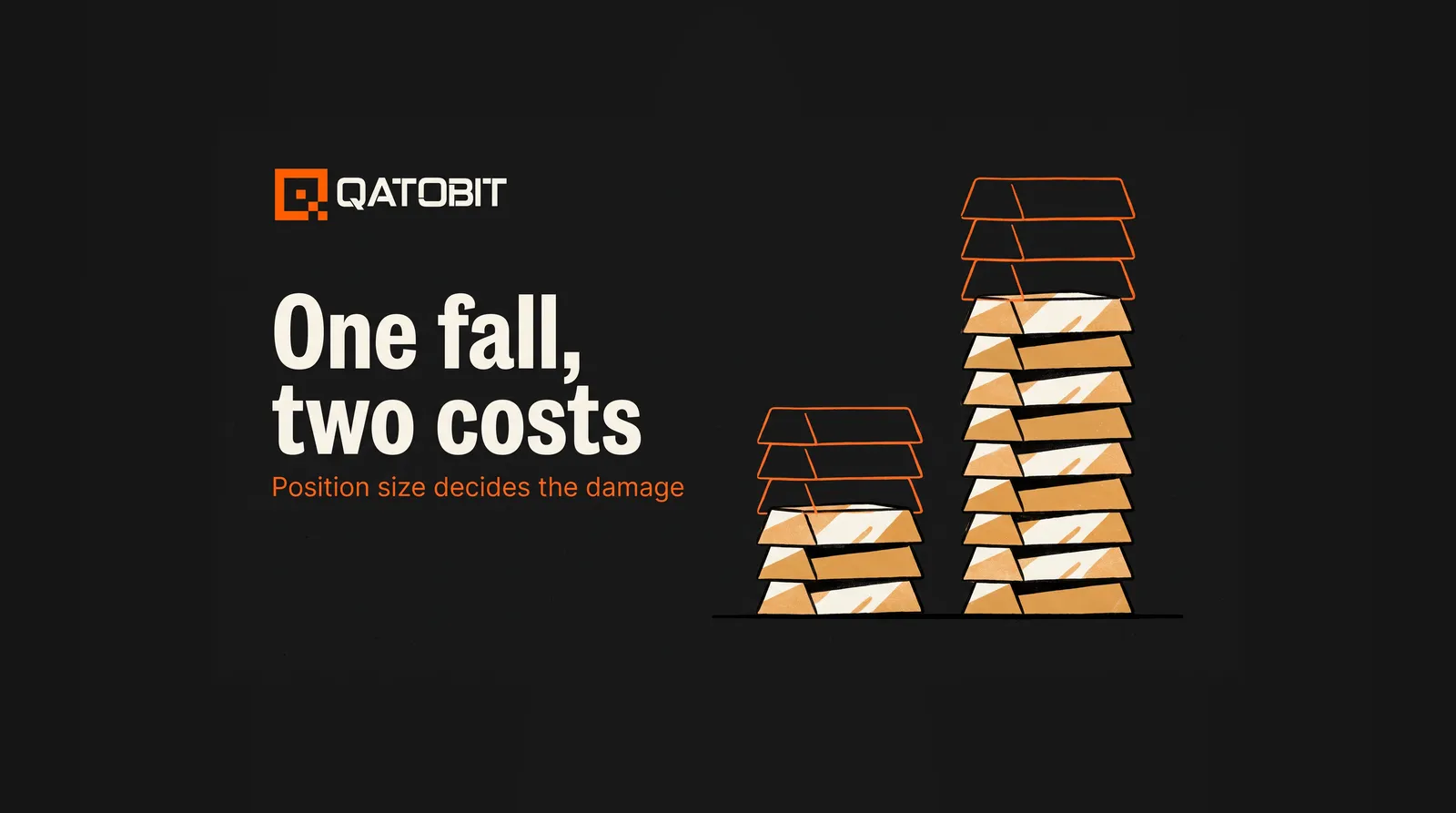
It asks a sizing question. A drawdown is the fall from a peak to a low, and what it costs a portfolio depends on how large the position was before it fell. The percentage on the metal is the same for everyone, but the damage to the whole portfolio is not.
Take a ₹1 crore portfolio. With 5 percent in gold, the position is ₹5 lakh, and a 32 percent fall costs ₹1.6 lakh, which is 1.6 percent of the portfolio (₹5,00,000 × 0.32 = ₹1,60,000). With 15 percent in gold, the position is ₹15 lakh, and the same fall costs ₹4.8 lakh, which is 4.8 percent of the portfolio (₹15,00,000 × 0.32 = ₹4,80,000).
The metal did the same thing in both cases. The difference came from a decision made before it fell. So position size deserves more attention than the story told about the asset. It is worth writing down, in advance, what fall you would accept from each sleeve.
A second question follows: what do you do after a fall like this? Holders who set a target weight for each sleeve and rebalance back to it after a fall have an answer ready. Holders who did not set one are deciding in the middle of the drop. Our framework piece on crypto allocation in an Indian portfolio walks through how to set those weights and size a sleeve against the whole portfolio.
QSI Core holds Bitcoin, Ethereum, Gold and a stable reserve, and the index is rebalanced monthly on a published methodology. The gold weight in an index is a stated rule, so its size is known before any fall.
Frequently asked questions
Why is the gold price falling?
Gold is down 32 percent from its January peak, near $3,778 an ounce as of 18 November 2026, per Deccan Chronicle. A January liquidation of crowded positions started it, and rate-hike expectations, a stronger dollar and higher bond yields have kept the pressure on.
How much has gold fallen from its peak?
About 32 percent in dollar terms, from a January peak near $5,599 an ounce to near $3,778 on 18 November 2026. Silver is down 62 percent from its peak, per the same report.
Why does a stronger rupee make gold fall more in India?
Gold is priced in dollars, so when the rupee gains, the same ounce costs fewer rupees. A 5 percent dollar-price fall with a 2 percent rupee gain gives about a 6.9 percent domestic fall, before duties and premiums, per Deccan Chronicle.
Are central banks still buying gold?
Yes. The World Gold Council data quoted by Deccan Chronicle shows central banks bought about 675 tonnes between January and September 2026, including 321 tonnes in the third quarter.
How should a portfolio holder think about a fall like this?
Through position size. A 32 percent fall on a 5 percent position costs a portfolio 1.6 percent, and on a 15 percent position it costs 4.8 percent. The size is decided before the fall.
Crypto investments are subject to market risk. Not financial advice.
“A better allocation begins with a better explanation.”
Qatobit principle
Published construction. Fixed cadence. Versioned control.