The point
A mutual fund SIP and a crypto SIP debit money the same way: a fixed rupee amount, on a fixed date, into whatever asset you chose. What differs is everything downstream of that debit. A mutual fund SIP buys units inside a SEBI-regulated trust, with a trustee and a custodian standing between your money and the fund house. A crypto SIP buys a basket on a platform with no equivalent regulator. That gap in oversight is the honest starting point here.
Every mutual fund figure below was checked against its source on 10 September 2026.
What the tax comparison already covers
If you came here for the tax question, you want does a crypto SIP save tax like a mutual fund SIP. It has the full answer: a flat 30 percent tax under Section 115BBH on crypto gains, against an ELSS SIP's Section 80C deduction and 12.5 percent long-term rate. This page will not re-argue that. It covers what the tax piece does not: regulation, ownership, cadence, liquidity, rebalancing, volatility, cost and provider risk.
Who regulates each one
A mutual fund in India runs inside a three-tier structure SEBI built to keep your money separate from the company managing it. A sponsor sets up a trust and appoints trustees; the trustees appoint an Asset Management Company to run the scheme day to day; a separate SEBI-registered custodian holds the actual securities, not the AMC (Bajaj Broking, read 10 September 2026). The trustees' job is to check the AMC stays inside SEBI's rules, an ongoing obligation rather than a one-time registration.
A crypto SIP has no statutory counterpart. India has no dedicated market regulator for virtual digital assets as an investment product. Every crypto platform must register with the Financial Intelligence Unit under the Prevention of Money Laundering Act, but that covers know-your-customer checks and transaction reporting, not investor protection or a mandated custody structure (Sansa Legal, published 21 May 2026, read 10 September 2026). SEBI's own remit covers tokens that behave like securities, not the major assets inside a crypto index. This is one place a mutual fund SIP is simply ahead: a statutory framework built to survive failure, not just success.
What you actually own
A mutual fund unit is a proportional claim on the trust's underlying securities, legally the investor's, held by the custodian and administered by the trustee.
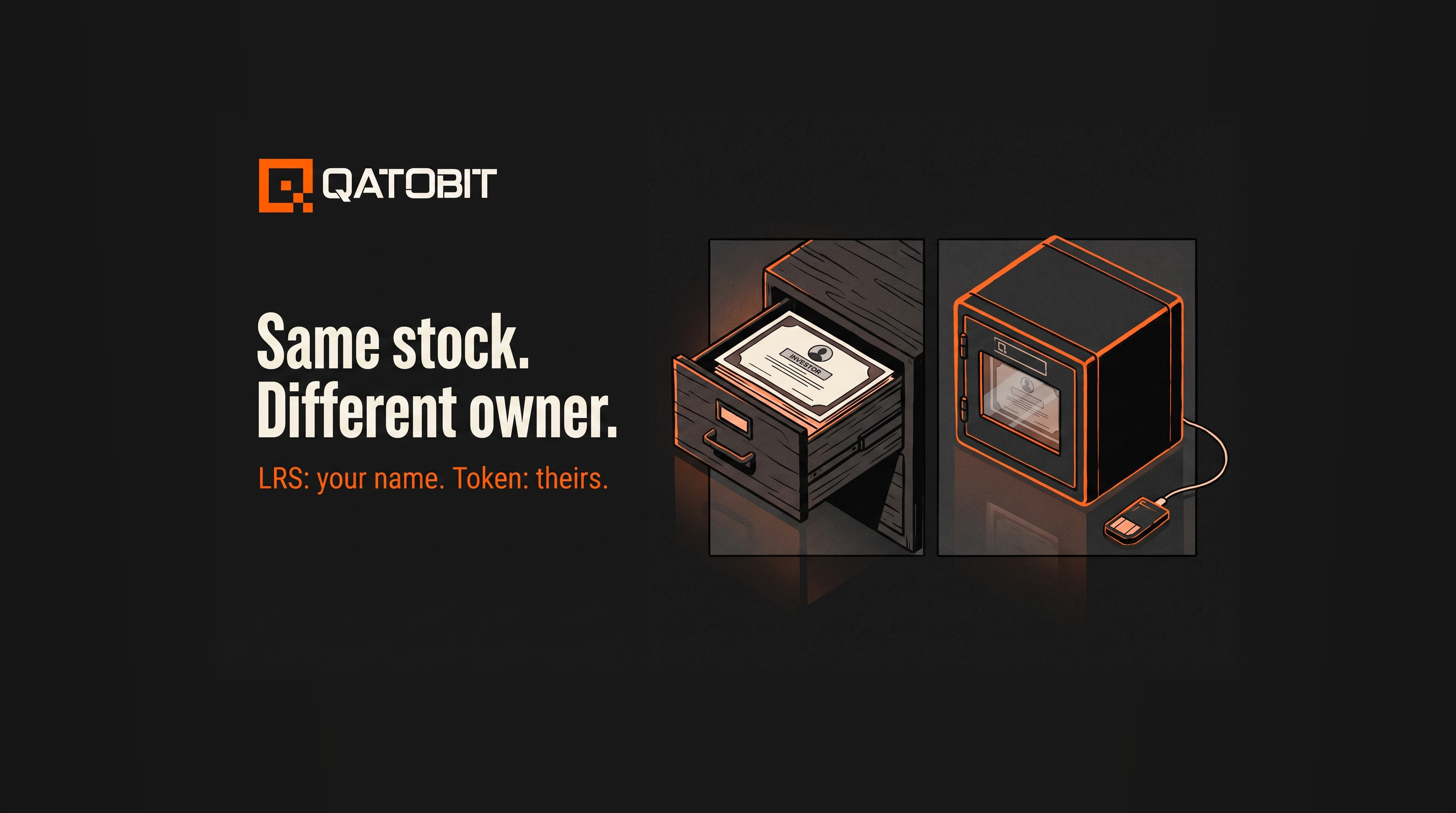
A Qatobit Crypto SIP works differently. You hold the basket, not the coins, and it sits inside Qatobit's own institutional custody rather than a SEBI-mandated trustee-and-custodian pairing. Qatobit publishes live Proof of Reserves so the holding can be checked at any time, a commitment the platform chose to make, not one a regulator requires. Is the crypto in your basket actually yours goes deeper on what custody means for a crypto holding.
Minimum instalment and how often you can invest
A mutual fund SIP typically starts at 500 rupees per instalment. Some fund houses run micro-SIPs as low as 100 rupees under an industry sachetisation push (IIFL, updated 27 October 2025, read 10 September 2026). Most funds let you choose a daily, weekly or monthly cadence, and autopay handles the debit either way.
A Qatobit Crypto SIP starts at 500 rupees weekly or biweekly, or 2,000 rupees monthly. A SIP into one of the four QSI Crypto Indices starts at 2,000 rupees per cadence, a higher floor because you are buying a basket, not a single asset. Both apply rupee cost averaging: spreading entry price across instalments instead of committing it all at once.
What happens when you exit
Redeem an equity mutual fund and the money reaches your bank account on a T+2 settlement cycle, the trading day plus two business days, a timeline AMFI moved to from T+3 in February 2023 (Angel One, published 1 February 2023, read 10 September 2026). Many equity schemes also carry an exit load, commonly around 1 percent within a year, falling to zero after that.
Withdraw from Qatobit and the money goes directly to your linked bank account, 200 rupees minimum, no fee. You can leave a Qatobit index whenever you want and it costs you nothing, at any holding period. That is a genuine advantage on the crypto SIP side, worth stating as plainly as the regulatory gap above.
What rebalancing means in each one
Portfolio rebalancing means returning a portfolio to its intended weights after the market has moved them. Inside an actively managed equity fund, that decision sits with a human fund manager working inside a stated mandate. An index fund instead tracks a benchmark's own published reconstitution schedule, set by the index provider rather than the AMC.
Inside a Qatobit QSI index, rebalancing is monthly and mechanical. The published methodology sets the target weights, and the platform executes the trim-and-top-up trades on that schedule. How a Crypto SIP works covers the cadence and cost-averaging mechanics in full.
Volatility and how each behaves in a downturn
An equity mutual fund spreads your money across dozens to hundreds of listed companies, often across sectors that do not all fall together at once. A crypto index is more concentrated by construction, a handful of assets rather than hundreds, and those assets have tended to move together more tightly in a sharp downturn than a diversified equity basket does. QSI Core and QSI Growth hold a Gold allocation built to behave differently from the crypto sleeve in a drawdown; QSI VRION carries no such buffer and suits only an investor who has deliberately chosen full crypto exposure over a multi-year horizon. Neither structure removes market risk, and no return figure for either instrument belongs in this comparison.
What each one costs
A mutual fund's ongoing charge is its expense ratio, deducted daily from the fund's NAV regardless of activity. SEBI's revised expense-ratio framework, effective from April 2026, caps that charge on a sliding scale by fund size: an index fund or ETF at 0.90 percent a year, a small actively managed equity scheme under 500 crore rupees in assets at 2.10 percent a year, falling to 0.95 percent a year for the largest funds (Value Research, Dhirendra Kumar, updated 20 December 2025, read 10 September 2026). These are regulatory ceilings, not universal charges, and a direct plan costs less than a regular one by the commission it skips.
A Qatobit index charges 0.35 percent on the transaction amount when you buy, sell, or when the index rebalances, and nothing else. There is no annual management fee on top.
For illustration only, no performance assumed: twelve monthly instalments of 5,000 rupees put 60,000 rupees to work over a year. Qatobit's 0.35 percent fee on each instalment totals about 210 rupees for the year. An equity scheme at the small-fund expense-ratio ceiling of 2.10 percent a year, applied to a balance averaging roughly half your contributions across the year, costs roughly 683 rupees. One is a fee on each purchase; the other a continuous charge on a growing balance, and which is smaller depends on how long you stay invested and which fund you compare against.
What happens if the provider fails
If an AMC shuts down, your fund's assets do not disappear with it, because they were never the AMC's assets. They sit with the trustee and the custodian, legally separate from the AMC's own balance sheet. SEBI can direct a transfer of the scheme to another AMC, and your units generally stay in your folio through that transition (Bajaj Finserv, read 10 September 2026).
Nothing in Indian law requires a crypto platform to run an equivalent structure. Qatobit's institutional custody and live Proof of Reserves are real, checkable commitments; does Proof of Reserves prove your crypto basket is backed explains what that attestation covers and what it does not. It is the platform's own discipline, not something a regulator enforces on every player. This is the second place a mutual fund SIP is genuinely ahead.
Who each one suits
A mutual fund SIP, especially an ELSS one, sits inside a regulator-built structure designed to survive the fund house's own failure, with a capped cost and a loss-offset rule crypto does not have. No crypto product, Qatobit's included, is a substitute for that statutory floor.
A crypto SIP is a different decision: a disciplined, rule-based way to hold a chosen slice of digital assets inside a portfolio whose regulated core sits elsewhere. No one funding retirement savings should treat a crypto SIP as that core. Someone who has already built that core, and wants a structured, rebalanced way to hold a crypto allocation on top of it, is the investor a Qatobit index is built for. Treat it as one allocation decision inside a wider portfolio.
Frequently asked questions
Is a crypto SIP the same thing as a mutual fund SIP?
No. Both debit a fixed amount on a fixed date, but a mutual fund SIP buys units inside a SEBI-regulated trust with a trustee and a custodian. A crypto SIP buys a basket on a platform with no equivalent regulator.
Which has the lower minimum, a mutual fund SIP or a crypto SIP?
A mutual fund SIP, generally. Most fund houses set 500 rupees as the standard SIP minimum, with some micro-SIPs starting at 100 rupees. A Qatobit Crypto SIP starts at 500 rupees weekly or biweekly, or 2,000 rupees monthly, and a SIP into a Crypto Index starts at 2,000 rupees per cadence.
What protects my money if the AMC or the platform shuts down?
A mutual fund's assets sit with an independent trustee and custodian, legally separate from the AMC, and SEBI can direct a transfer to another AMC. No equivalent statutory structure exists for a crypto platform in India. Qatobit's institutional custody and live Proof of Reserves are the platform's own operational commitments, not a regulator-enforced one.
Does a crypto index rebalance the same way a mutual fund does?
Not quite. An actively managed equity fund's rebalancing is a fund manager's discretionary decision inside a stated mandate. A Qatobit QSI index rebalances monthly on a fixed, published methodology, with no discretion involved.
Is a crypto SIP taxed the same as a mutual fund SIP?
No, and that question deserves its own full answer rather than a short one here. Does a crypto SIP save tax like a mutual fund SIP covers it in full: a flat 30 percent rate with no deduction and no loss set-off for crypto, against an ELSS SIP's Section 80C deduction and lower long-term rate.
Crypto investments are subject to market risk. Not financial advice.
“A better allocation begins with a better explanation.”
Qatobit principle
Published construction. Fixed cadence. Versioned control.