The point
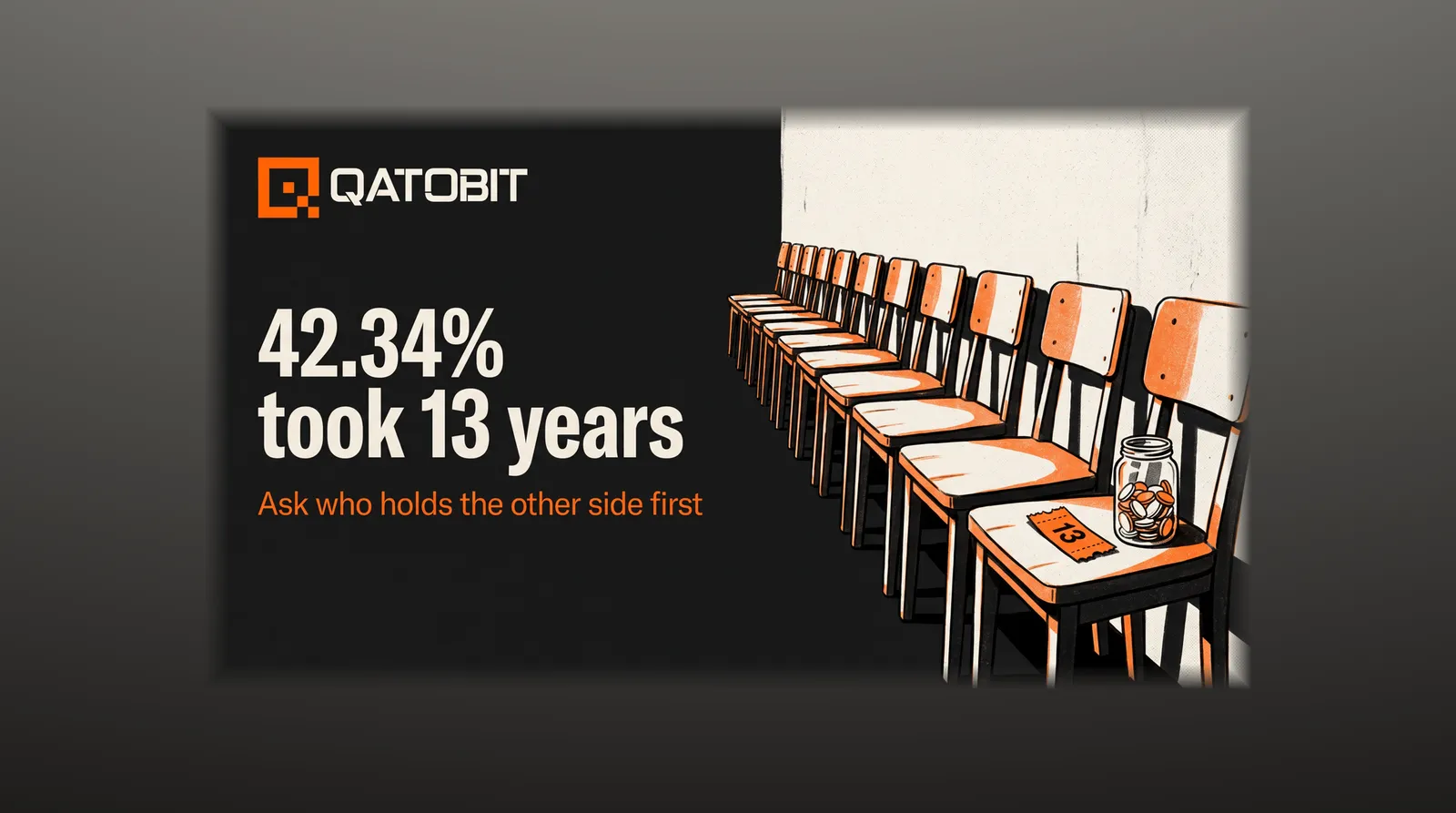
On 23 November 2026, NSEL paid ₹1,950 crore to 5,682 claimants, which is 42.34 percent of their admitted claims, nearly 13 years after the July 2013 default. The money was owed on contracts, and the wait shows what a position costs when the party holding the other side cannot pay. Three checks before any allocation answer that: who is on the other side, who holds the asset, and who can verify it.
What did the NSEL settlement actually pay?
The Free Press Journal reported on 23 November 2026 that NSEL disbursed ₹1,950 crore to 5,682 claimants under a one-time settlement. The scheme pays 42.34 percent of admitted claims to eligible creditors, and investors who had completed their KYC formalities received the payout.
Business Standard reported that the National Company Law Tribunal in Mumbai approved the scheme on 28 November 2025. In the vote, 92.81 percent of traders by number and 91.35 percent by value backed it. Payment is in proportion to each trader's outstanding as on 31 July 2024, and the traders assign their rights against the defaulters to 63 Moons Technologies, NSEL's parent.
Moneylife adds the funding detail. A Mumbai special court allowed attached assets of around ₹3,464 crore to be monetised, and the court order is dated 8 October 2026. The scheme pays ₹1,950 crore at this stage, and anything realised above that stays with the court until the proceedings end.
Sources: Free Press Journal, Business Standard, Moneylife, each read on 24 November 2026.
What does 42.34 percent mean for a real claim?
It means the claim is paid in part and years late. A claim of ₹1 crore admitted under this scheme returns ₹1 crore × 42.34 percent = ₹42.34 lakh. The shortfall is ₹1 crore − ₹42.34 lakh = ₹57.66 lakh, and it arrives after a wait of close to 13 years.
The Free Press Journal gives one case. A Mumbai investor who had put in around ₹12 crore received ₹4.73 crore, which is about 39 percent of the sum he put in. He told the paper the amount was only part of his original investment, though he welcomed having something back.
Smaller claims were paid far sooner. Business Standard notes that in August 2013 NSEL, with the support of 63 Moons, paid around ₹179 crore to 7,053 smaller traders whose outstanding was under ₹10 lakh. The size of a claim decided how long the claimant waited.
The sharper cost is the time. A position you cannot sell, move or value for a decade becomes a different asset, one the default chose for the holder.
Check one: who is on the other side of the position?
A position is a promise from somebody, and the promise is only as good as that somebody. NSEL members held contracts on a platform that sat between buyers and sellers. When the counterparty failed to pay after July 2013, every holder was in the same queue regardless of how well they had chosen what to buy.
The practical test is to name the party who must pay you, in one sentence, before you allocate. If the answer is a platform, an issuer or a pool, then its solvency is part of your position and belongs in your sizing.
For a crypto allocation, this check separates two things that look alike on a screen. Holding the asset yourself or through a custodian is one structure. Holding a promise from an exchange or a lender is another. The crypto allocation framework sizes the sleeve with that difference in mind.
Check two: who holds the asset, and is it kept apart?
Custody is the part of the chain that holds the asset itself, and the question is whether your holding sits apart from the holder's own money. Money kept in a pooled account that the operator also uses to run the business is the structure that ends in a queue.
According to Moneylife, the company's own filing says the money trail runs to 17 defaulter groups, from whom the money will be recovered. That filing is the company's position, and recovery from those groups is still to happen. For a holder, the useful reading is narrower: when assets are tied up in somebody else's dispute, the legal process sets the pace, and you do not.
Ask three plain things. Who holds the asset? Is it held apart from the operator's own funds? What happens to it if the operator stops? A platform that cannot answer the third question in a sentence has not designed for it. The piece on what happens to your basket if the platform shuts down walks through that last question for baskets.
Check three: can you verify it without asking?
The useful standard is a figure you can check yourself, on a schedule you do not control, without writing to anyone first.
In crypto the working version is Proof of Reserves, which is a published statement that the assets the platform says it holds exist and cover what it owes users. How to read one, and what it leaves out, is in the guide to reading a Proof of Reserves attestation.
My view is that this third check should come first in the order you apply them. Counterparty and custody questions are easy to answer well on a good day, because everyone's answer is good on a good day. Verification is the one that still works on a bad day.
How does Qatobit handle these three questions?
Qatobit holds assets under institutional custody. The platform's design separates user funds from operational funds. Qatobit publishes live Proof of Reserves, available at any time, and user assets are insured.
Reserves and insurance protect assets in custody. They do not protect an investment from the market falling, and crypto investments carry market risk: the value can rise or fall. The four QSI Crypto Indices are rebalanced monthly on a published methodology, which is covered in the index rules guide.
What to do with this before the next allocation
Write the three answers next to the position, in three lines, before you size it. Who pays me, who holds the asset, how do I check. If one line stays blank, size the position as if that blank were a risk, because the NSEL claimants discovered that it is.
The NSEL case ended with a settlement that the investors' own forum proposed, per Moneylife. More than 90 percent of claimants by value backed it. It was a negotiated recovery, and it still left a gap and took most of a decade. The cheaper time to ask these questions is the day you open the position.
Frequently asked questions
How much did NSEL investors receive in the one-time settlement?
NSEL paid ₹1,950 crore to 5,682 claimants, which is 42.34 percent of their admitted claims, according to the Free Press Journal's report of 23 November 2026. Payment is in proportion to each claimant's outstanding as on 31 July 2024.
Who approved the NSEL settlement scheme?
The National Company Law Tribunal in Mumbai approved it on 28 November 2025, per Business Standard. Before that, 92.81 percent of traders by number and 91.35 percent by value voted in favour. The settlement figure of ₹1,950 crore was proposed by the NSEL Investors Forum, per Moneylife.
What is counterparty risk in an investment?
Counterparty risk is the chance that the party who owes you money or holds your position cannot pay. In the NSEL case the counterparty's payment default after July 2013 left claimants waiting nearly 13 years for a 42.34 percent recovery.
How can I check where my crypto is held?
Ask who holds the asset, whether it is kept apart from the operator's own funds, and whether the platform publishes a Proof of Reserves you can read without asking anyone. Qatobit holds assets under institutional custody and publishes live Proof of Reserves.
Does Proof of Reserves protect against a fall in price?
No. Proof of Reserves and insurance relate to assets held in custody. They do not protect an investment from market movement, and crypto investments carry market risk.
Crypto investments are subject to market risk. Not financial advice.
“A better allocation begins with a better explanation.”
Qatobit principle
Published construction. Fixed cadence. Versioned control.