The point
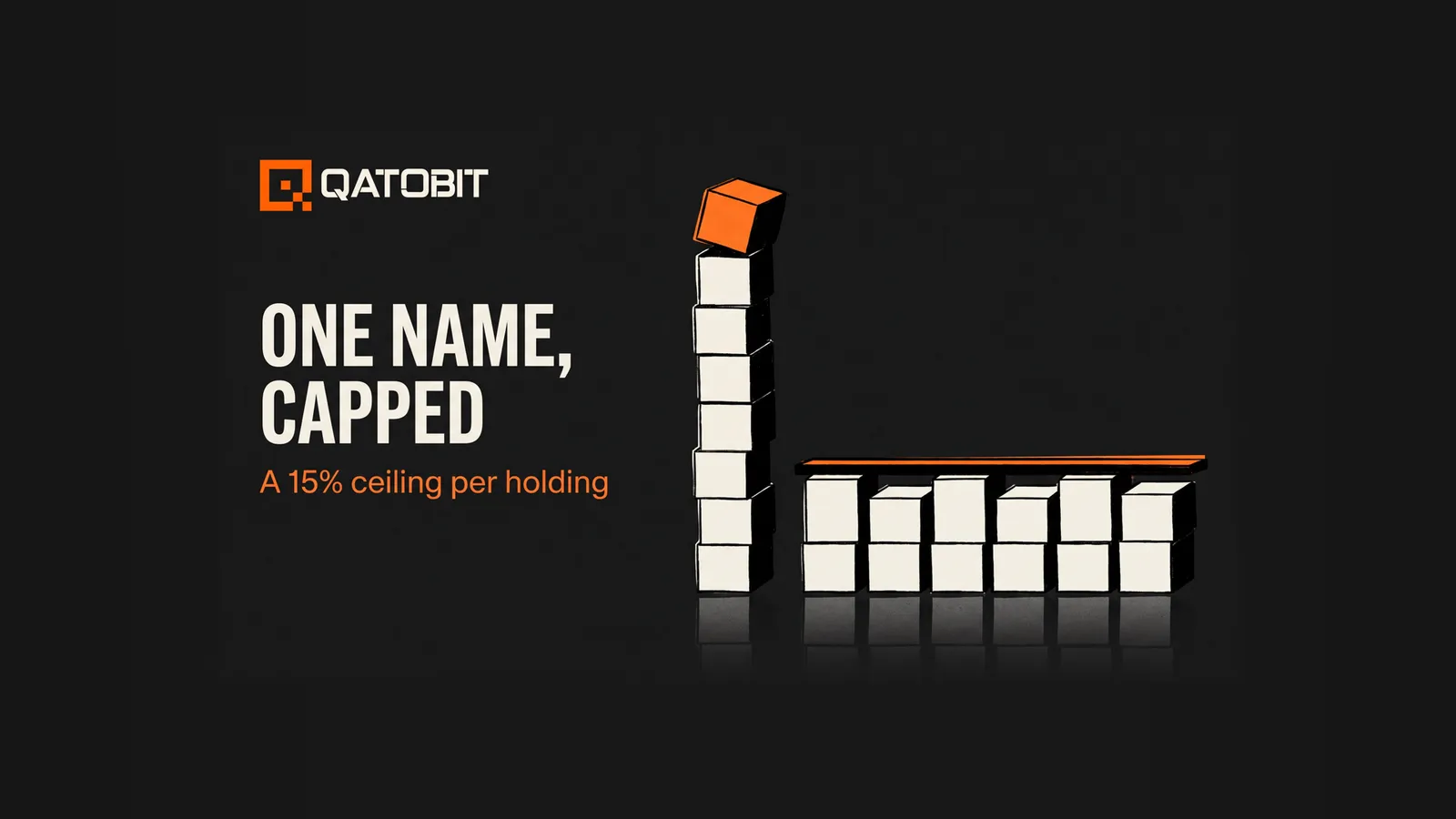
Nvidia's share price fell nearly 12 percent in early trading on the day the company said its founder and CEO, Jensen Huang, had resigned. A single position can carry that much risk when one person is the company's face. A capped index limits it by rule: QSI GEQ8 holds NVIDIA with no holding above 15 percent of the index.
What happened to the Nvidia share price, and why a CEO exit moves it
On 12 November 2026 Nvidia said in a regulatory filing that its board had accepted Huang's resignation as president and chief executive. TechCrunch reported the shares down nearly 12 percent in early trading that morning. From the prior Friday they had fallen as much as 19 percent, a market value loss of more than $855 billion (TechCrunch, read 13 November 2026). Decrypt reported that Nvidia gave no reason for the resignation (Decrypt, read 13 November 2026).
Chief financial officer Colette Kress became interim CEO while keeping her CFO role. Harvey C. Jones, on the board since 1993, became the company's first board chair. The board said it will search for a permanent CEO from inside and outside the company.
A price is a fast verdict on what a company will earn. When the person who set its direction for 33 years leaves in one day, the market has no way to price the gap, so it prices the doubt. That doubt shows up in a single session.
This piece looks at what that session does to a portfolio and the rule that limits it. It takes no view on where the stock goes next.
What is key-person risk?
Key-person risk is the chance that a company's results depend on one individual, so that losing that person changes the company. It differs from ordinary business risk because it arrives as an event, on a date, with no warning and no gradual earnings miss before it.
TechCrunch listed the reasons the Nvidia case is a clean example. Huang founded the company in 1993 and ran a flat organisation with around 60 direct reports. There was no heir apparent and no announced succession plan. He owned about 3.5 percent of the shares and held no supervoting rights, so the board could remove him at any time.
None of that was a secret before the resignation. A holder reading the annual filings could have seen the concentration of authority in one person. The risk was visible, but the day it would be tested was not.
The same article explains why the stock sat in so many portfolios. Before the AI boom its shares traded at about $15, and by the month before they had reached an all-time high of $243. A holding that grows that far becomes a larger share of the portfolio on its own, without the holder buying a single extra share.
How much does one position cost you in a single session?
The cost depends on the size of the position more than on the size of the fall. Take a portfolio of ₹1 crore with ₹25 lakh sitting in one stock, which is 25 percent of the portfolio. A 14 percent one-day fall (the figure Mint's headline gave for the Nvidia drop) takes ₹25 lakh down by ₹3.5 lakh. That is 3.5 percent of the whole portfolio from one name in one day.
Now cap the same position at 15 percent. ₹15 lakh falling 14 percent loses ₹2.1 lakh, which is 2.1 percent of the portfolio. The stock did exactly the same thing in both cases. The difference of ₹1.4 lakh came entirely from how much of the portfolio was allowed to sit in it.
This is an illustration of position size, with the 14 percent fall borrowed from a headline. It does not say what any stock will do, and a smaller position loses less on the way down and also gains less on the way up.
A holder with a large single-name position has three honest options. Keep it and accept the swings. Trim it to a size set in advance. Or hold the exposure through a basket where a rulebook sets the size and applies it on a schedule. Our piece on concentration risk walks through the first two.
What does a rules-based cap do when one holding drops?
A cap is a maximum weight written into an index's methodology. Weight means the share of the basket that one holding is allowed to occupy. When a holding grows or shrinks past its limit, the rules bring it back at the next scheduled rebalance. Nobody has to decide on the day.
QSI GEQ8 is a Qatobit-designed index of 8 global companies at the intersection of technology, digital finance and innovation. Its holdings are Apple, Amazon, Alphabet, Meta, NVIDIA, Coinbase, Robinhood and Tesla. NVIDIA sits in the Platform sleeve, which carries 45 to 55 percent of the index across five names.
The methodology sets weights by free-float market cap adjusted by a quarterly score, with hard caps: no holding above 15 percent or below 3 percent. The index is rebalanced monthly, with a quarterly composition review.
At each rebalance the most one name can carry is 15 percent of the index. A holding that falls 14 percent from that weight takes about 2.1 percent off the index, before any other holding moves.
The response is written down in advance. The monthly rebalance resets weights to the rules, and the quarterly review is where a composition change would be considered, well away from the hour the price is falling.
The other seven holdings also keep their roles, so a single event spreads across eight companies instead of landing on one.
GEQ8 holds global equities rather than crypto. Of Qatobit's four indices, three hold crypto and GEQ8 is the one that does not. It sits outside SEBI regulation and is framed distinctly from SEBI-regulated mutual funds.
What does it cost to hold a capped basket?
The only charge on a Qatobit index is 0.35 percent per rebalance. There is no annual management fee, and there is no exit load: no lock-in, no exit fee and no minimum holding period. Reporting is a monthly NAV, quarterly statements and annual tax documentation.
On a ₹5 lakh holding in GEQ8, one rebalance costs 0.35 percent, which is ₹1,750 (₹5,00,000 × 0.0035). The fee is stated in the methodology, and a holder who wants to leave can do so at any time at no exit cost.
Who should think about this, and who should not?
A cap suits a holder who has a large position in a single company and has not yet set a size limit for it. It suits someone who wants the exposure to a company like Nvidia but would rather the size be set by a published rule than by the last month's gain.
It does not suit someone who wants a concentrated bet on one name and accepts the swing that comes with it. A cap limits the loss from a single holding and also limits the gain from it.
Nothing in an index rule predicts whether a company will do well. Kress is interim, the search for a permanent CEO is open, and how that ends is not knowable from here. The rule is a way of deciding how much of a portfolio can depend on that answer.
For how a rebalance resets weights when one holding drops, see portfolio rebalancing when one holding falls 10 percent. For the allocation above any single pick, see what asset allocation is and what it decides.
Frequently asked questions
What happened to the Nvidia share price when Jensen Huang resigned?
Nvidia's shares were down nearly 12 percent in early trading after the resignation was announced, according to TechCrunch (read 13 November 2026). From the prior Friday the fall reached as much as 19 percent. Mint's headline put the day's drop at 14 percent, to a one-year low.
What is key-person risk in a stock?
Key-person risk is the chance that a company's results depend on one individual, so that losing that person changes the company. Nvidia had around 60 direct reports to its founder and no announced successor, which is why its CEO exit moved the price in one session.
How does a cap limit the damage from one stock falling?
A cap sets the maximum share of a portfolio one holding may take. At a 15 percent cap, a 14 percent fall in that holding takes about 2.1 percent off the portfolio, against 3.5 percent for a 25 percent position.
Does QSI GEQ8 hold NVIDIA, and how much?
Yes. NVIDIA is one of the eight holdings of QSI GEQ8, in its Platform sleeve. The methodology caps any holding at 15 percent and floors it at 3 percent, rebalanced monthly with a quarterly composition review.
What does QSI GEQ8 cost to hold?
The charge is 0.35 percent per rebalance, with no annual management fee and no exit load. GEQ8 sits outside SEBI regulation.
Crypto investments are subject to market risk. Not financial advice.
“A better allocation begins with a better explanation.”
Qatobit principle
Published construction. Fixed cadence. Versioned control.