The point
The reverse repo rate is what the RBI pays banks to take their cash. Its overnight floor, the Standing Deposit Facility, rose to 5.25 percent on 7 October 2026. A bank that parks idle cash with the central bank overnight earns that rate, and it sets the bottom of the range for short-term money.
What is the reverse repo rate?
The reverse repo rate is the interest the RBI pays a bank for lending its spare cash to the central bank. The repo rate is the opposite direction: the price a bank pays to borrow from the RBI against government securities.
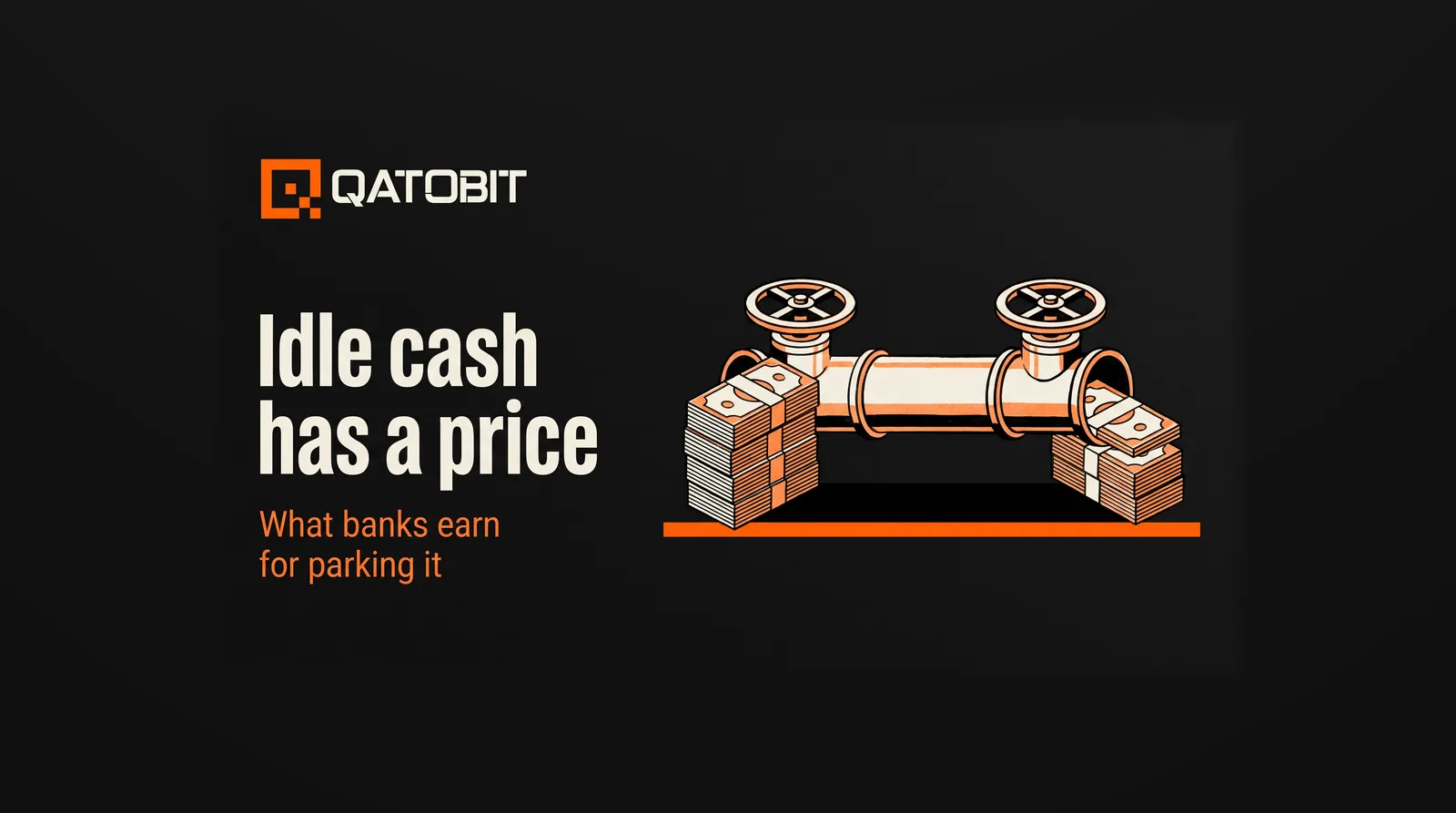
Think of one pipe with two ends. Cash flows from the RBI to banks at the repo rate and flows back from banks to the RBI at the reverse repo rate. The gap between the two ends is the corridor, and market rates for overnight money stay inside it.
The RBI uses the pipe to keep the amount of cash in the banking system close to what the economy needs. When banks hold more cash than they can lend, the RBI takes the excess in. When banks run short, it lends.
Where is the floor of the corridor today?
The floor is the Standing Deposit Facility, called the SDF. The SDF began on 8 April 2022. Dhyeya IAS's summary of that announcement says the RBI began using the SDF as the floor of the corridor in place of the reverse repo rate. The reverse repo rate was left at 3.35 percent. At launch the SDF paid 3.75 percent.
The practical difference is collateral. A bank placing money under the fixed reverse repo receives government securities in return. A bank placing money in the SDF gets no collateral and a higher rate.
As of 8 October 2026, the corridor reads like this, from Business Standard's report on the 7 October policy decision:
- The repo rate is 5.50 percent, raised by 25 basis points from 5.25 percent.
- The Standing Deposit Facility rate is 5.25 percent, the floor.
- The Marginal Standing Facility rate and the Bank Rate are both 5.75 percent, the ceiling.
Source: Business Standard, RBI MPC hikes repo rate by 25 bps to 5.5%, read for this article on 9 October 2026. Dhyeya IAS, RBI starts SDF, read for this article on 9 October 2026.
A basis point is one hundredth of a percentage point, so 25 basis points is 0.25 percentage points. The Monetary Policy Committee voted unanimously, and its stance changed from neutral to calibrated tightening. If the six-member committee that votes on this is new to you, the Monetary Policy Committee explainer covers who sits on it.
What does a variable rate reverse repo auction add?
The variable rate reverse repo, or VRRR, is how the RBI takes in cash for a fixed number of days at a rate set by bidding. The RBI announces an amount and a tenor. Banks offer cash and the rate at which they will lend it. The RBI accepts offers up to the amount it announced.
A fixed rate is a posted price. A VRRR is an auction, which lets the RBI pull in large sums for a week, 10 days or 29 days without moving the standing floor.
The money is locked for the tenor and then returns to the banking system. That return date matters in the next section.
What did the 29-day auction say about the cash banks hold?
On 8 October 2026 the RBI ran a 29-day VRRR with a notified amount of ₹2,00,000 crore. Banks offered ₹79,655 crore. The RBI accepted all of it at a cut-off rate of 5.49 percent. The RBI's press release number is 2026-2027/1277, and the figures also appear on the result page BestCurrentAffairs published.
That is 39.8 percent of the amount notified: ₹79,655 crore ÷ ₹2,00,000 crore = 0.398.
Business Standard reported that net liquidity in the banking system was in surplus by ₹4.23 trillion on 7 October 2026, the day the latest RBI data covered. A system with that much spare cash and a thin turnout looks contradictory.
A primary dealer told Business Standard that banks have little interest in the VRRR, because the money "is going to come back after a certain period of time."
Banks, the report says, were waiting for open market operation sales. In those, a bank buys securities from the RBI and the cash stays absorbed for longer.
A tepid auction in a system with surplus cash reflects where banks chose to park it.
Source: Business Standard, Banks park ₹79,655 crore at RBI's 29-day VRRR, read for this article on 9 October 2026.
Why would a bank skip a 5.49 percent offer?
A worked case shows how thin the reward for locking cash is. Take ₹1,000 crore, which is ₹10,000 million.
- Parked overnight in the SDF at 5.25 percent, it earns ₹1,000 crore × 0.0525 ÷ 365, about ₹14.4 lakh a day. The bank can take it back next morning.
- Locked for 29 days at the 5.49 percent cut-off, it earns ₹1,000 crore × 0.0549 × 29 ÷ 365, which is about ₹4.36 crore.
- The same ₹1,000 crore left in the SDF for the same 29 days earns ₹1,000 crore × 0.0525 × 29 ÷ 365, which is about ₹4.17 crore.
The extra reward for locking the cash is the difference, about ₹19 lakh on ₹1,000 crore over 29 days. This is arithmetic on the published rates, and each bank's own reasons are its own. It shows the price of giving up the option to move the money, and that price was small enough for 60 percent of the notified amount to go unbid.
What reaches an investor?
Three things reach a holder of a portfolio, and each can be read off rates already announced.
The first is the cost of borrowing. Loans linked to the repo rate move when the repo rate moves, and what a repo rate hike passes through to a portfolio walks the full chain. On a ₹50 lakh floating loan that passes the full 25 basis points through, the yearly interest rises by ₹50,00,000 × 0.0025 = ₹12,500.
The second is bond prices. When the RBI absorbs cash and rates rise, existing bonds with lower coupons are worth less. Business Standard reported the 10-year government bond yield settled at 7.29 percent on 8 October 2026, its highest since 1 December 2023. A bond's price and its yield move in opposite directions.
The third is the price of leverage anywhere. A position funded with borrowed money, in any asset including crypto, costs more to carry when the cheapest short-term money costs more. In crypto, that borrowed money shows up in what open interest counts. The rate tells you what the borrowing costs while you wait.
What should a holder do with this?
The reverse repo rate deserves a minute of attention and no more. It is the cleanest read on the price of idle cash, and the 29-day auction shows that surplus liquidity and low bidding can sit side by side.
Read three numbers when the RBI announces a policy decision: the repo rate, the SDF rate under it and the MSF rate over it. The first sets the cost of money from the central bank, the second what banks earn on spare cash, and the third what they pay when they are short.
Then check what in your own portfolio is priced off them: a loan, a bond fund's duration, a margin line. Those are the places a 25 basis point move shows up in rupees.
Frequently asked questions
What is the reverse repo rate in simple words?
It is the interest the RBI pays banks for taking their spare cash. As of 8 October 2026 the floor of the rate corridor is the Standing Deposit Facility, at 5.25 percent. It replaced the fixed reverse repo rate as the floor on 8 April 2022.
What is the difference between repo and reverse repo?
The repo rate is what banks pay to borrow from the RBI, 5.50 percent as of 8 October 2026. The reverse repo is what the RBI pays banks to hold their cash.
What is a VRRR auction?
A variable rate reverse repo auction is one in which the RBI announces an amount and a tenor, and banks bid the rate at which they will lend it cash. On 8 October 2026 the 29-day auction accepted ₹79,655 crore of the ₹2,00,000 crore notified at a cut-off of 5.49 percent.
Does a weak VRRR response mean banks are short of cash?
No. Net liquidity was in surplus by ₹4.23 trillion on 7 October 2026, according to Business Standard. Dealers quoted by the same report said banks preferred open market operation sales to locking money for the tenor.
Who sets the corridor around the reverse repo rate?
The six-member Monetary Policy Committee votes on the repo rate, and the SDF and MSF rates are set around it. On 7 October 2026 the committee voted unanimously to raise the repo rate by 25 basis points.
Crypto investments are subject to market risk. Not financial advice.
“A better allocation begins with a better explanation.”
Qatobit principle
Published construction. Fixed cadence. Versioned control.