The point
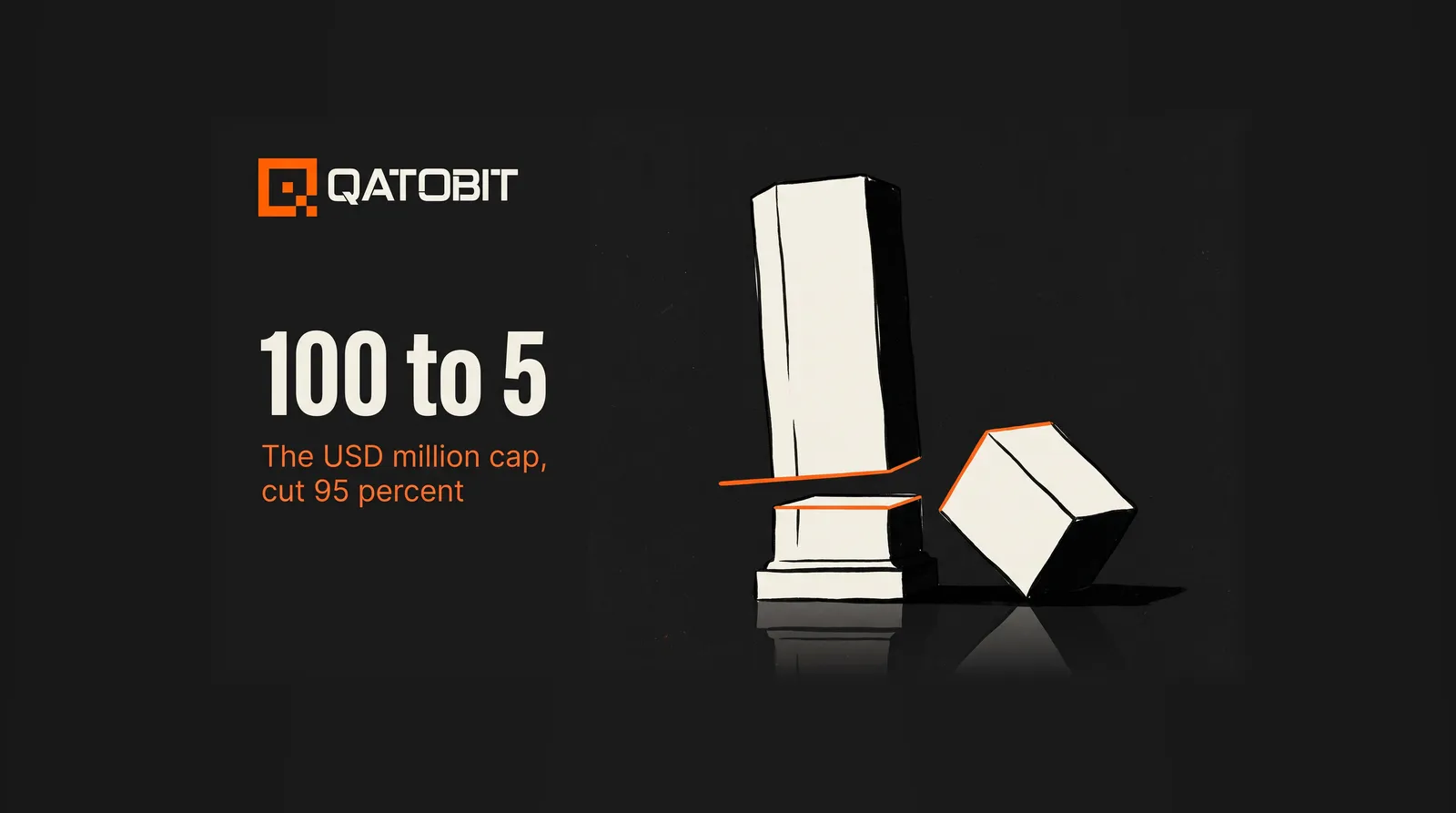
The most anyone can hold in rupee currency derivatives without proving a real dollar exposure is now USD 5 million, down from USD 100 million.
The Reserve Bank of India (RBI) cut the limit in two circulars dated 10 October 2026. Sebi then revised exchange rules to match, so a single USD 5 million ceiling now covers every rupee currency pair across all exchanges combined. Some headlines read it as a permission, but the figure is a ceiling that fell by 95 percent.
What is a currency derivative, in plain words?
A currency derivative is a contract whose value follows an exchange rate, such as dollars against rupees. You do not hold any dollars. You hold an agreement that pays out, or costs you, depending on where the rate lands when the contract ends.
Two kinds of people use these contracts. A hedger has a real dollar position and wants to fix its rupee value. A speculator has no dollar position and wants to gain from a move in the rate. The contract is identical in both cases; only the reason for holding it differs.
The limit in this story separates the two. It caps how large a position can be when the holder has not shown any underlying dollar exposure.
What exactly changed?
Three separate rules moved, and the sources describe each one differently.
- RBI, bank route: contracts booked with authorised dealers (banks licensed to deal in foreign exchange) can hedge a contracted exposure without proof of the underlying one up to a threshold. It fell from USD 100 million to USD 5 million equivalent. The figure is notional value outstanding at any point, across all authorised dealers.
- RBI, exchange route: the limit on long or short positions in exchange-traded currency derivatives fell from USD 100 million to USD 5 million equivalent. It counts all rupee currency pairs and all recognised stock exchanges combined.
- Sebi, exchange rules: domestic clients and foreign portfolio investors (FPIs) can take long or short positions up to one limit of USD 5 million equivalent in notional value. It is outstanding at any point and covers all rupee pairs and all recognised exchanges together.
Source: Moneylife, 12 October 2026, https://www.moneylife.in/article/rbi-tightens-forex-derivatives-rules-cuts-exposure-limit-to-us5mn-introduces-20-percentage-cash-reserve/81913.html. Hellobanker, 14 October 2026, https://hellobanker.in/rbi-tightens-rules-for-inr-derivative-contracts-cuts-position-limits-to-usd-5-million/. The Economic Times, report dated 5 November 2026, https://economictimes.indiatimes.com/markets/stocks/news/sebi-revises-currency-derivative-norms-for-domestic-investors-fpis-allows-to-trade-up-to-usd-5-mn/articleshow/135576552.cms.
Sebi's circular follows the RBI circular of 10 October 2026, according to The Economic Times. The same report says stock exchanges and clearing corporations must put systems in place to apply the revised provisions.
How does the USD 5 million cap work in practice?
The cap works as a test of proof. Below USD 5 million, a holder can take a position without showing what it protects. Above it, the holder needs an underlying exposure that the dealer or exchange member can see and verify.
Mechanism 1: a hedge needs something to hedge
An exporter invoices a customer in dollars and will receive USD 2 million in three months. A contract that fixes the rupee value of that receipt has a real counterpart behind it. The exposure is the invoice.
An investor in the same position would hold, say, US-listed shares worth USD 300,000. The shares are the exposure. Whether a particular holding counts as an underlying exposure under the rules is for the bank or broker to decide, because the bank must verify it.
Mechanism 2: a position with no exposure is a view
When nothing sits behind the contract, a gain or loss depends only on the exchange rate moving the way the holder expected. That is a view on the currency. The old rule let anyone take USD 100 million of such views, and the new one caps them at USD 5 million.
Mechanism 3: above the cap, the exposure has to be in India
For foreign portfolio investors, the Sebi circular adds two conditions. Their short positions across all dollar-rupee contracts must not exceed USD 5 million. For long positions above USD 5 million, they must hold an underlying exposure in Indian debt or equity securities, including units of equity and debt mutual funds.
Domestic clients can go beyond the limit only on the conditions RBI sets in its master direction on Risk Management and Inter-Bank Dealings.
Mechanism 4: the same circulars tightened the paperwork
The RBI circulars of 10 October 2026 also brought four other changes:
- Authorised dealers may not let a customer rebook a rupee derivative contract that was cancelled with any authorised dealer after the directions. Rolling a contract over at maturity stays allowed.
- When a customer hedges a contracted exposure, the dealer must collect an undertaking that the same exposure has not been hedged with another dealer. A customer who hedges in parts through several dealers states the amounts already booked.
- Dealers must keep the supporting documents for at least two years.
- A separate circular creates a foreign exchange risk reserve. It applies to contracts above USD 2 million equivalent that hedge a current account transaction, where the customer buys foreign currency against rupees. The dealer must deposit 20 percent of the rupee notional in cash with RBI until the contract ends.
Source: Moneylife, 12 October 2026, and Hellobanker, 14 October 2026, URLs above.
How big is USD 5 million, with the arithmetic?
Take three hypothetical positions and measure each against the old cap and the new one.
- A USD 300,000 position is 6 percent of the new cap (300,000 ÷ 5,000,000 = 0.06) and 0.3 percent of the old one (300,000 ÷ 100,000,000 = 0.003).
- A USD 1,000,000 position is 20 percent of the new cap and 1 percent of the old one.
- A USD 5,000,000 position uses the whole of the new cap and 5 percent of the old one.
The cut itself is arithmetic too. USD 5 million is one twentieth of USD 100 million, so the ceiling lost 95 percent of its size.
The reserve rule scales the same way. On a contract with a rupee notional of ₹100 crore, 20 percent is ₹20 crore (100 × 0.20), held in cash with RBI for as long as the contract runs. That cost falls on the dealer, and the sources do not say how dealers will pass it on. These are the rules as published, so the numbers show scale only.
What does this change for a portfolio?
The direction of the change matters more than the number. A ceiling of USD 5 million sounds generous until you learn it used to be USD 100 million.
For a portfolio that holds dollar assets and sits well under the cap, the limit does not bind. What changes is the file behind the contract. The undertaking, the documents and the two-year retention are all part of a regime that checks the exposure before it checks the size.
For a position at the scale of a business or a fund, the limit is the constraint. A hedger who needs more than USD 5 million either has the exposure to show for it, or does not get the position.
A circular cannot say whether a hedge suits a portfolio. That depends on the exposure, the horizon and the cost.
Where does dollar exposure sit in a portfolio?
An exchange contract covers one place a dollar exposure can sit. The others are easy to miss.
- Overseas listed shares and funds, priced in dollars and valued in rupees.
- Imported inputs for a business whose costs move with the exchange rate.
- Education or travel costs abroad, paid in dollars from rupee income.
- A crypto sleeve, because major crypto assets are quoted in dollars worldwide.
Each is a position in the dollar whether or not a contract sits behind it. Mapping them is an allocation task. Our guide to what asset allocation is and what it decides before any pick starts from that map. The related risk of one factor deciding too much of a portfolio is covered in concentration risk and what happens when a few holdings decide everything.
What to take from the USD 5 million limit
The USD 5 million figure is a cut. RBI lowered the no-exposure threshold from USD 100 million, Sebi aligned exchange rules to it, and the paperwork around proving an exposure tightened with it. The next question for any portfolio is where its dollar exposure sits, and whether any of it was ever expressed through a contract.
Frequently asked questions
What is the new limit on currency derivatives in India?
It is USD 5 million equivalent of notional value outstanding at any point. It covers all currency pairs involving the rupee and all recognised stock exchanges combined, for positions taken without establishing an underlying exposure. RBI's circulars of 10 October 2026 lowered it from USD 100 million.
Did Sebi raise the limit to USD 5 million?
No. The USD 5 million figure is a reduction from USD 100 million in RBI's rules, and Sebi revised its exchange norms to align with it. Reports that "Sebi allows USD 5 million" describe the size of the permitted position, which is now smaller than before.
What is an underlying exposure?
It is a real dollar position the contract protects, such as an export invoice or a holding of overseas assets. The authorised dealer must verify it and keep the documents for at least two years.
Can a foreign portfolio investor hold more than USD 5 million?
For long positions, yes, if the investor holds an underlying exposure in Indian debt or equity securities, including units of equity and debt mutual funds. Short positions across all dollar-rupee contracts must not exceed USD 5 million, according to the Sebi circular reported by The Economic Times.
Does the cap apply to rolling over a contract?
The sources say rolling over a contract at maturity stays permitted under the existing provisions of RBI's master direction. What RBI barred is rebooking a contract that was cancelled with an authorised dealer after the directions.
Crypto investments are subject to market risk. Not financial advice.
“A better allocation begins with a better explanation.”
Qatobit principle
Published construction. Fixed cadence. Versioned control.