The point
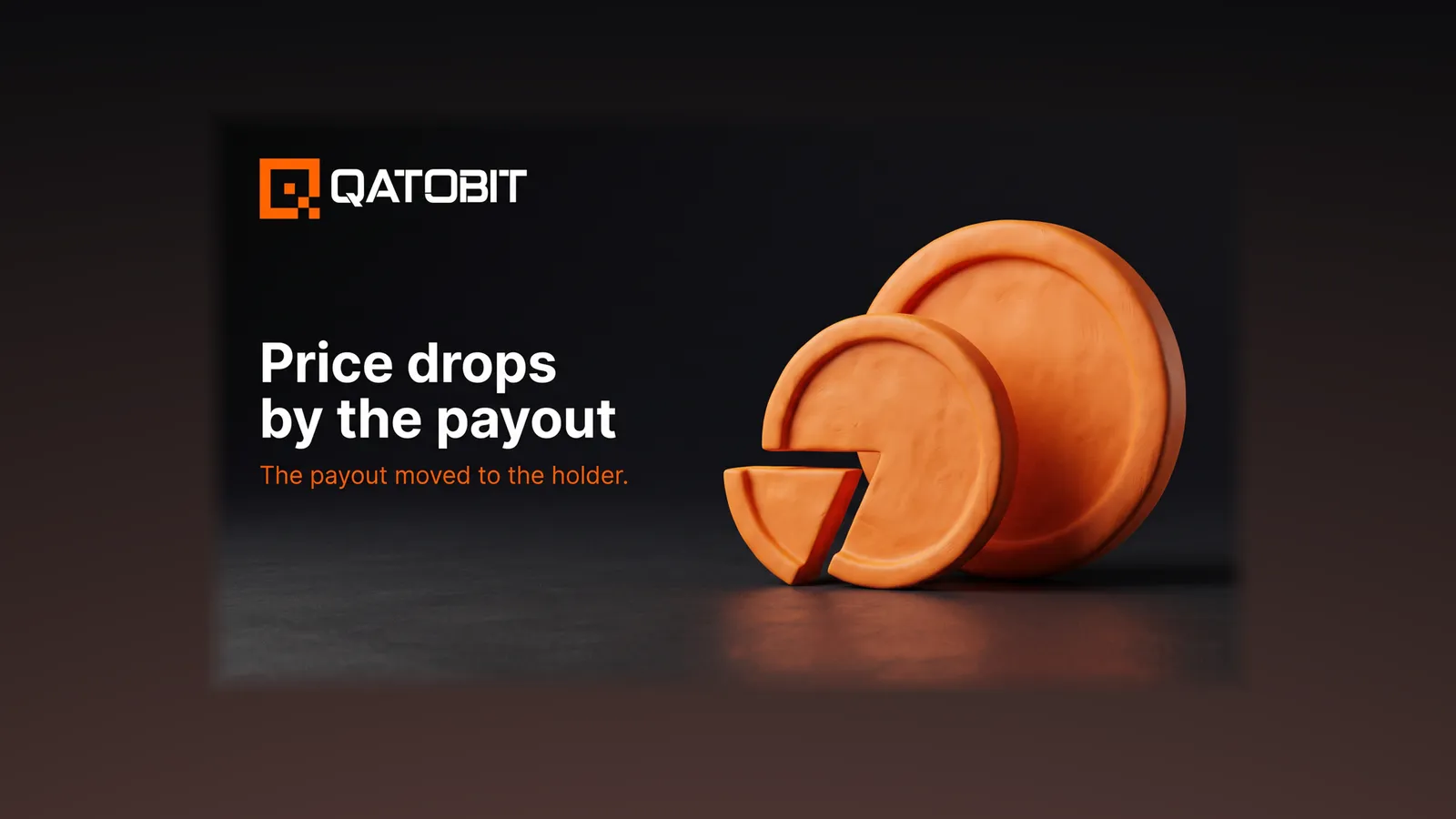
A share's price falls by roughly the dividend on the ex-dividend date, because a buyer from that day on no longer receives the payout. If a ₹500 share declares ₹10 a share, it may open near ₹490 on the ex-date. The ₹10 moved from the share's price into the pocket of the holder who owned it a day earlier.
What is the ex-dividend date?
It is the first day a share trades without the right to the dividend that has been declared. A person who buys on that day or later does not receive it.
Upstox explains in its learning centre that the stock exchange determines and notifies this date. The share price is adjusted for the payout on it. Buy before it and you are in. Buy on it or after and you are out.
Source: Upstox, read 2 November 2026.
Why does the price drop by the payout?
Before the ex-date, a share carries two things: the business and a cash payout that is already promised. After the ex-date, the same share carries only the business. The payout has been separated and now belongs to the earlier holder.
A buyer will not pay the same price for less. So the exchange adjusts the price for the dividend on the ex-date. Upstox gives a plain example. A stock closes at ₹500 and the company declares ₹10 a share. The stock may open around ₹490 on the ex-date, subject to market conditions.
Upstox also says the price may not fall by exactly the dividend, because buying and selling that day can push it either way. The adjustment is a starting point, and the market then trades from it.
Source: Upstox, read 2 November 2026.
Does the drop cost you money?
The drop and the dividend cancel out, so the payout leaves your total where it was.
Take 2,000 shares bought at ₹500, a position worth ₹10,00,000. These figures are an illustration, and the ₹500 and ₹10 pair is the one Upstox uses.
- Before the ex-date, the position is worth 2,000 multiplied by ₹500, which is ₹10,00,000.
- On the ex-date, the price opens near ₹490. The position is worth 2,000 multiplied by ₹490, which is ₹9,80,000.
- The dividend is 2,000 multiplied by ₹10, which is ₹20,000.
- The position plus the cash is ₹9,80,000 plus ₹20,000, which is ₹10,00,000.
You hold the same total wealth as before. What changed is its shape: part of it is now cash and part is shares.
The cash can be spent or reinvested. The shares can be held or sold. A dividend hands part of the share's value back to you and adds nothing to what you own.
Which date do you need to beat?
You need to own the share before the ex-date. The record date is the date the company uses to list its shareholders, and the ex-date is the one that tells you when buying stops qualifying.
Upstox says that under India's one-day settlement, a share bought today is credited to you on the next trading day. A buyer on the record date is therefore not yet in the company's list when it is drawn up. That is why the ex-date sits before the record date, usually by one trading day, and why the record date alone is the wrong date to watch.
Upstox gives a worked timeline. If the last day to buy and still qualify is Tuesday 18 March, then Wednesday 19 March is the ex-date and Thursday 20 March is the record date. A buyer on the 19th settles on the 20th, after the list is set, and gets nothing.
One caution. Pages that explain this do not all agree on the gap between the two dates. The exchange notice for the specific share is the final word, so read the ex-date there before you act on any article, this one included.
Dates count in trading days, not calendar days. If the record date is a Monday, the ex-date is generally the Friday before, assuming no market holiday.
Source: Upstox, read 2 November 2026.
What happens if you sell on the ex-date?
You still get the dividend. You owned the share before the ex-date, so you qualified, and selling on the ex-date does not take that back. What you sell is the share at its lower, adjusted price.
That is the other side of the same arithmetic. Someone who sells just before the ex-date takes the higher price but gives up the cash. Someone who sells on the ex-date takes the lower price and keeps the cash. The total is about the same either way.
Why is buying for the dividend a weak plan?
A buyer who purchases a day early and sells on the ex-date receives the dividend. The sale then happens at a price reduced by about the same amount. Upstox notes that you can do this, and that the price often adjusts downward on the ex-date.
My view is that a dividend is a poor reason to choose a share. The dividend reflects what the company has decided to hand out of the profit it already made. It is a fact about the company's cash policy, and whether the share is a good use of your capital is a separate question.
That view has a limit. A dividend is real cash that arrives in your account, and some holders need that income for expenses. For them the payout matters. It matters as a cash-flow choice, and a cash-flow choice is different from a gain.
What do the dividend lists look like in practice?
Dividend announcements come in bunches around results. Mint's 1 November 2026 report counted at least 20 companies with Q2FY27 results due and a dividend possible, including Power Finance Corporation, CONCOR, RITES and Sonata Software. Mint called these firms that may announce a payout, so none of them was decided when it was read.
Declared dividends sit in a separate list. Mint's November list, built from BSE data, shows an Infosys interim dividend of ₹26 a share with a record date of 3 November 2026. It shows a Colgate Palmolive (India) interim dividend of ₹24 a share with a record date of 2 November 2026.
Notice what the lists give you: the amount and the record date. Neither is the ex-date. To find the date that decides whether you qualify, go to the exchange notice for that company.
Source: Mint, both pages read 2 November 2026. Mint's list of companies announcing dividends with results is the second source.
How should a portfolio think about it?
A dividend is a slow, scheduled shrinking of the position. Each payout takes value out of the share and puts it in cash. Over time, a book of dividend payers drifts: the share weights fall a little at every payout and the cash balance grows.
That drift is a portfolio question, and the answer is a rule. Take a ₹1 crore portfolio with 3 percent in one dividend payer, which is ₹3,00,000. If the holding pays out 2 percent of its value in a year, that is ₹6,000 of cash and ₹6,000 less in the position. The arithmetic is 3,00,000 multiplied by 0.02. The 2 percent is an assumption for the example.
By itself that is small. Across twenty such positions the cash adds up and has to be put somewhere. Without a rule, it sits idle or goes into whatever looks good that week.
Portfolio rebalancing is the rule that handles it. It sells what has grown past its target and buys what has fallen below it, on a schedule chosen in advance. Qatobit applies the same discipline to crypto allocations. Qatobit designs and rebalances its QSI indexes monthly on a published methodology, so the weights come from a rule set before any payout or price move. The wider question is what asset allocation decides before any pick, and concentration risk is what a drifting position can become.
What to check before the next dividend
Three checks take a few minutes and need no forecast.
First, find the ex-date on the exchange notice for the share, not the record date from a headline. Count trading days, not calendar days.
Second, work out the total, not the dividend alone. Multiply your shares by the dividend to get the cash, then multiply them by the expected price drop and confirm the two match.
Third, decide where the cash goes before it lands. A payout with no plan becomes spending by default.
The next question is how to set a target weight for each position so that a payout does not quietly change the shape of the book.
Frequently asked questions
What is the ex-dividend date?
It is the first day a share trades without the right to the declared dividend. A buyer on that day or later does not receive the payout. The stock exchange notifies the date, and the price is adjusted for the dividend on it.
Why does a share price drop on the ex-dividend date?
Because a new buyer no longer gets the payout, so the share is worth less by about that amount. If a ₹500 share declares ₹10, it may open near ₹490. The actual move can differ, since buying and selling that day also push the price.
Do I lose money when the price drops on the ex-date?
No, not by the drop alone. On 2,000 shares at ₹500, the price falling by ₹10 takes ₹20,000 off the position, and the dividend pays ₹20,000 in cash. The total stays at ₹10,00,000 before any tax.
Will I get the dividend if I sell on the ex-date?
Yes. You owned the share before the ex-date, so you qualified. Selling on the ex-date only means you sell at the lower, adjusted price while keeping the dividend.
Which date should I watch to qualify for a dividend?
The ex-date, not the record date. You need to own the share before the ex-date, and the exchange notice for that share gives it. Because settlement takes one trading day, a buyer on the record date is generally too late.
Crypto investments are subject to market risk. Not financial advice.
“A better allocation begins with a better explanation.”
Qatobit principle
Published construction. Fixed cadence. Versioned control.