The point
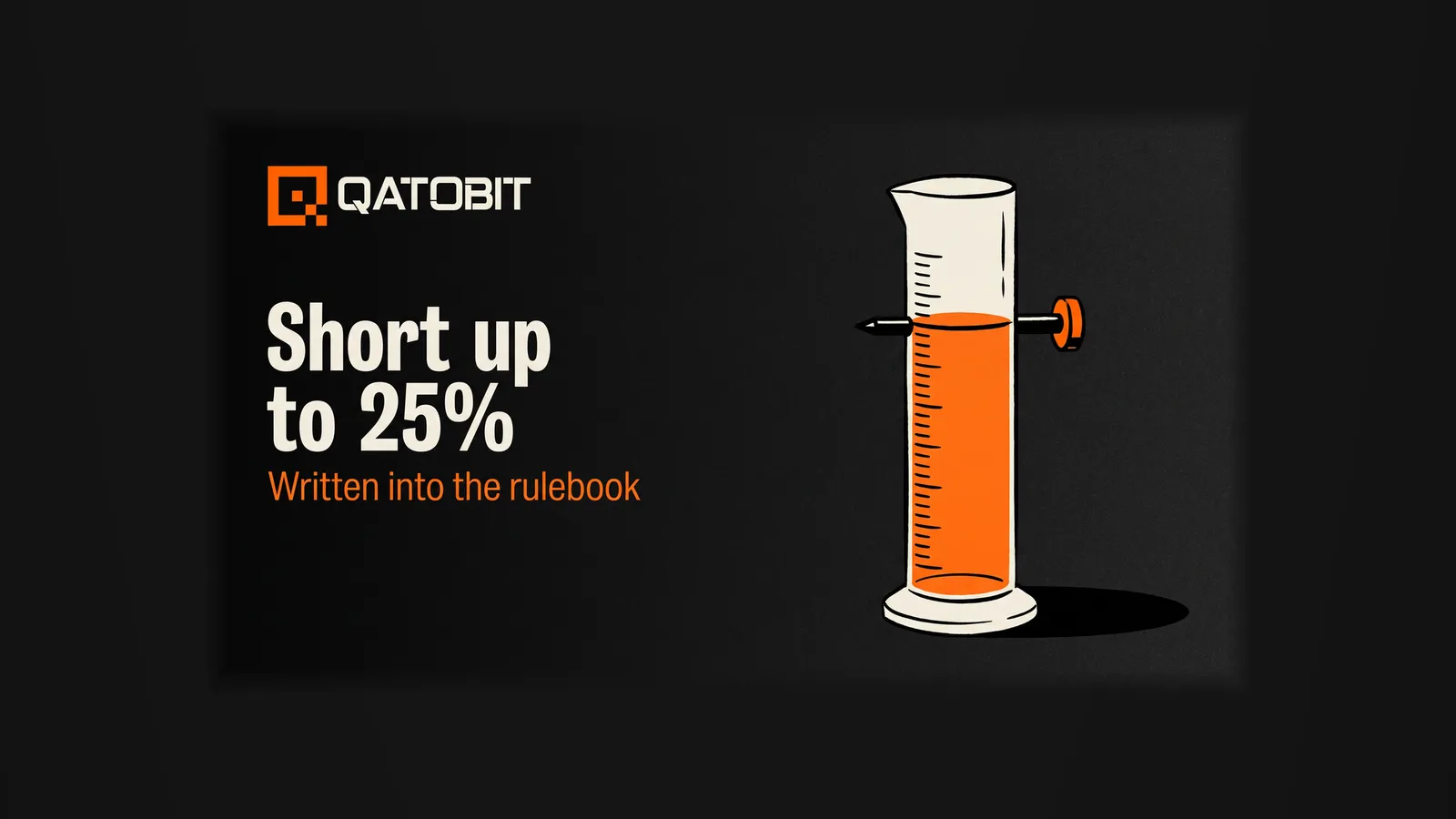
A specialised investment fund (SIF) is a Sebi-regulated product that sits between a mutual fund and a portfolio management service. Sebi's circular allows each of its strategies to hold limited short positions, up to 25 percent of net assets through unhedged derivatives. An investor must put in at least Rs 10 lakh across all of one fund house's SIF strategies, counted at PAN level, unless they are an accredited investor.
Why did Sebi create a category between a mutual fund and a PMS?
Sebi's circular of 27 February 2025 says a gap had opened between mutual funds and portfolio management services in portfolio flexibility. It describes the rules as getting more flexible in steps, from mutual funds to PMS to alternative investment funds, in line with the investment size of each product.
A SIF fills that middle step. It is set up under the SEBI (Mutual Funds) Regulations, 1996, as amended, and it came into force on 1 April 2025. You can read the full text in Sebi's circular of 27 February 2025.
Under a SIF each product is called an investment strategy, and the circular permits only one strategy per category. A fund house cannot launch five variants of the same idea.
Who is allowed to run one?
Only some fund houses qualify. The circular sets two routes, and a mutual fund must meet one of them and also file for prior approval from Sebi.
Route 1 is a track record. The mutual fund has operated for at least 3 years with an average assets under management of at least Rs 10,000 crore over the preceding 3 years.
Route 2 is people. The fund house appoints a chief investment officer for the SIF with at least 10 years of fund management experience and an average of at least Rs 5,000 crore managed. It also appoints an additional fund manager with at least 3 years of experience and an average of at least Rs 500 crore managed.
Both routes also need a clean record. No action may have been taken against the sponsor or fund house under sections 11, 11B or 24 of the SEBI Act, 1992 in the last 3 years.
The SIF must carry its own brand name and logo, separate from the fund house's mutual fund brand. It also needs a separate website or dedicated webpage.
What can a SIF hold that a mutual fund scheme cannot?
The answer is limited, planned short exposure. The circular lists the strategies permitted at this stage. Each one states what it must hold and how much it may short.
Mechanism 1: equity strategies
The Equity Long-Short Fund must keep at least 80 percent in equity and equity-related instruments. It may take up to 25 percent in unhedged short derivative positions.
The Equity Ex-Top 100 Long-Short Fund must keep at least 65 percent in stocks outside the top 100 by market capitalisation, with the same 25 percent ceiling on unhedged shorts.
The Sector Rotation Long-Short Fund must keep at least 80 percent in a maximum of 4 sectors. If it shorts a sector, every stock it holds in that sector must be held as a short position.
Mechanism 2: debt and hybrid strategies
The Debt Long-Short Fund invests across duration and may short through exchange-traded debt derivatives. The Sectoral Debt Long-Short Fund holds at least two sectors, with a maximum of 75 percent in any one.
On the hybrid side, the Active Asset Allocator Long-Short Fund moves dynamically across equity, debt, derivatives, REITs, InvITs and commodity derivatives. The Hybrid Long-Short Fund must hold at least 25 percent in equity and at least 25 percent in debt. All of these carry the same 25 percent ceiling on unhedged shorts.
Mechanism 3: the limits that stay in place
Total gross exposure across equity, debt, derivatives, REITs, InvITs and other permitted assets cannot exceed 100 percent of net assets. Exposure to a single stock through derivatives is capped at 10 percent of the strategy.
For debt, a strategy cannot put more than 20 percent of net asset value in one AAA-rated issuer. The cap is 16 percent for an AA-rated issuer and 12 percent for one rated A and below. No more than 25 percent can sit in the debt of one sector.
How does the 25 percent short limit work in rupees?
Sebi's own illustration uses a long-short equity strategy with Rs 100 crore of assets. Unhedged short exposure is capped at 25 percent, so Rs 100 crore x 25% = Rs 25 crore across the whole portfolio.
For one stock, the cap is 10 percent of the strategy, so Rs 100 crore x 10% = Rs 10 crore. Sebi's example stock future is priced at Rs 2,525 with a lot size of 500. One contract is worth Rs 2,525 x 500 = Rs 12,62,500, and Rs 10 crore divided by Rs 12,62,500 is 79 contracts at most.
So a fund manager running a Rs 100 crore strategy could short that stock up to 79 contracts and no further. The limit is a written number, applied the same way every day.
What does the Rs 10 lakh threshold mean for an allocation?
The circular states the investor-level rule in plain words: a SIF cannot accept less than Rs 10 lakh from an investor across all its investment strategies. The test sits at PAN level, and investments in the same fund house's ordinary mutual fund schemes do not count toward it.
Take a Rs 1 crore portfolio. A 5 percent SIF sleeve is Rs 5 lakh, which is below the threshold, so the investor cannot hold it. A 10 percent sleeve is Rs 10 lakh, which just clears it. The threshold assumes a portfolio in which Rs 10 lakh is one position among many.
Accredited investors are exempt from the minimum.
Sebi's circular also covers falls in value. If a market decline pushes your holding below Rs 10 lakh, that is a passive breach and not a violation. Say the holding is Rs 10 lakh and a fall in net asset value takes it to Rs 8 lakh. The circular then permits only a full redemption of the remaining Rs 8 lakh. The fund house must also make sure your own redemptions never push you below the threshold.
How do redemptions, risk labels and taxation work?
Redemption frequency depends on the strategy. An equity long-short strategy offers daily or any lesser frequency, as the fund house decides. A debt strategy offers redemption once a week or less often. A hybrid strategy offers it twice a week or less often. A fund house may also set a notice period of up to 15 working days, and you then receive the net asset value at the end of that period.
A strategy without daily subscription and redemption is classed as an interval strategy. Its units must be listed on a stock exchange, which gives investors an exit route.
Every strategy gets a risk-band from level 1, the lowest risk, to level 5, the highest, reviewed monthly. Portfolios are disclosed every alternate month. Every advertisement must carry Sebi's standard warning, which says a SIF involves relatively higher risk, including potential loss of capital and liquidity risk.
On tax, one fund house's explainer on SIF taxation says SIFs are generally taxed at the investor level. For a SIF with at least 65 percent in listed equity, it says gains held up to 12 months are taxed at 20 percent. Gains held beyond 12 months are taxed at 12.5 percent. It says a SIF that is mostly debt may be a specified mutual fund under section 50AA, taxed at the investor's slab rate. The tax treatment of your own holding depends on the strategy's allocation, so read the fund house's tax disclosure before you invest.
What does a SIF teach about reading any product?
One idea carries across every part of the circular. A written document defines the vehicle. Its limits can be checked: equity of at least 80 percent, shorts of at most 25 percent, one stock at most 10 percent. The rulebook says what the product may hold, and you can check the manager against it.
The same test applies to any allocation, including crypto. A position held on a stated methodology is easier to size than one held on a hunch, and it makes concentration risk visible before it bites. Qatobit's four QSI indices work on that principle, with a documented methodology per index and monthly rebalancing. For the basics, start with what a crypto index is.
Frequently asked questions
What is a specialised investment fund?
A specialised investment fund is a Sebi-regulated product, set up under the SEBI (Mutual Funds) Regulations, 1996, that sits between a mutual fund and a portfolio management service. It came into force on 1 April 2025 and its strategies may take limited short positions.
What is the minimum investment in a SIF?
The minimum is Rs 10 lakh per investor across all of one fund house's SIF strategies, counted at PAN level. Accredited investors are exempt from the minimum, and investments in the fund house's ordinary mutual fund schemes do not count toward it.
How much can a SIF short?
Each permitted long-short strategy may take unhedged short exposure of up to 25 percent of net assets through derivatives. Exposure to any single stock through derivatives is capped at 10 percent of the strategy.
Can I redeem a SIF whenever I want?
Redemption frequency is set by the strategy. Equity strategies offer daily or less frequent redemption, debt strategies weekly or less often, and hybrid strategies twice a week or less often. A notice period of up to 15 working days is allowed.
Is a SIF the same as a mutual fund scheme?
No. A SIF is created under the same mutual fund regulations but carries its own brand, its own website, the Rs 10 lakh minimum and permission for limited unhedged short exposure. Sebi describes it as bridging the gap between mutual funds and portfolio management services.
Crypto investments are subject to market risk. Not financial advice.
“A better allocation begins with a better explanation.”
Qatobit principle
Published construction. Fixed cadence. Versioned control.