The point
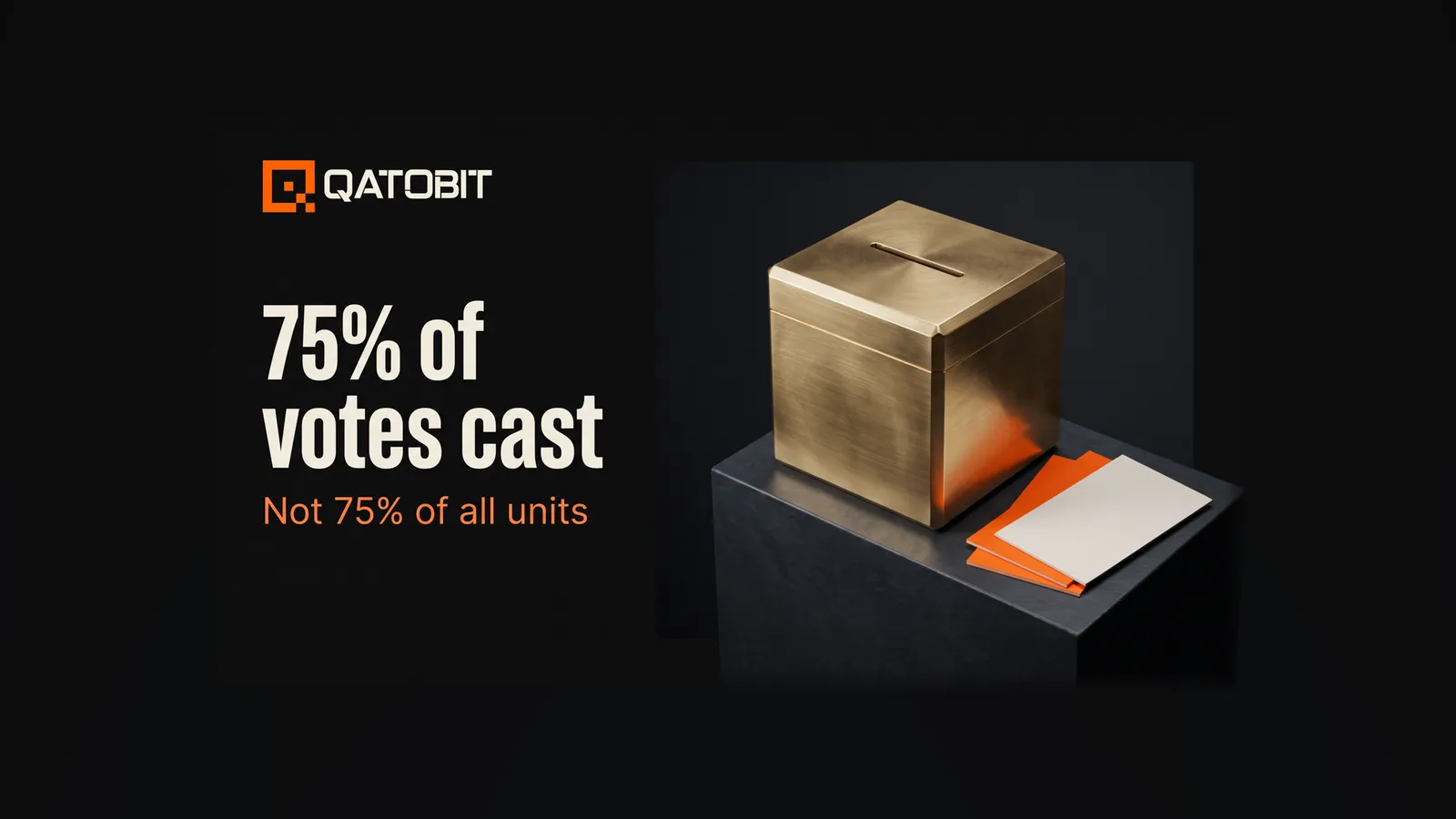
A REIT is a trust that owns rent-earning property and sells units in it on a stock exchange. A unit is a claim on that pool. Sebi's original framework requires at least 90 percent of net distributable cash flows to be paid out at least half-yearly. Sebi's amendments of 12 October 2026 change how unitholders vote: approval now needs 75 percent of the votes cast, not 75 percent of all units.
What does a REIT unit actually give you a claim on?
A REIT unit gives you a share in a trust that holds commercial property, either directly or through special purpose vehicles (companies set up to hold one property each). You do not own an office floor. You own a slice of the trust that owns many.
Sebi's press release on the original rules says a REIT is set up as a trust and registered with Sebi. It has a trustee, one or more sponsors and a manager. The trustee must be a Sebi-registered debenture trustee that is not an associate of the sponsor or manager. The manager runs the operations.
Those four roles matter because each unitholder vote, discussed below, is a vote on what the manager and sponsors may do with the pool. The structure is laid out in Sebi's press release on the original REIT Regulations.
Where does the money you receive come from?
It comes from rent and other cash the properties earn, after the trust's costs. Sebi's framework says a REIT shall distribute not less than 90 percent of its net distributable cash flows, at least on a half-yearly basis.
The arithmetic is simple. Say a trust has ₹100 crore of net distributable cash flows in a half-year. At least ₹90 crore must go out to unitholders, which leaves at most ₹10 crore inside the trust. A unitholder with 0.01 percent of the units is entitled to ₹9,000 of that ₹90 crore.
The rule covers cash the properties earn. The price of the unit on the exchange moves separately.
The 80 percent rule
The same press release requires not less than 80 percent of the value of REIT assets to sit in completed and revenue-generating properties. No more than 20 percent may go into developmental properties, mortgage-backed securities, real estate debt, listed real estate equity, government securities or money market instruments. Developmental properties are capped at 10 percent.
This is why a REIT behaves like a rent collector. The framework pushes the pool towards buildings that already have tenants.
Listing and spread
Units of a REIT must be listed on a recognised stock exchange, per the same press release. You buy and sell them through a broker like any listed share. A REIT must also invest in at least two projects, with no more than 60 percent of asset value in one project. That cap is a written concentration rule, the same idea behind concentration risk in any portfolio.
What did Sebi change on 12 October 2026?
Sebi notified the Securities and Exchange Board of India (Real Estate Investment Trusts) (Second Amendment) Regulations, 2026, number SEBI/LAD-DOP/2026/328, on 12 October 2026. TaxGuru reproduces the notification, which says the regulations come into force on publication in the Official Gazette. Four changes are in the text.
Change 1: 75 percent of votes cast
Under regulation 22(6A), approval used to need 75 percent of unitholders by value, excluding related parties. It now needs votes in favour of at least 75 percent of the total votes cast on the resolution, again excluding votes cast by parties related to the transaction. Regulation 22(8)(a) gets the same threshold.
An illustration with invented numbers: a trust has 100 units outstanding and a resolution draws 40 votes, of which 30 are in favour. Under the old test, 30 of 100 is 30 percent, so the resolution fails. Under the new test, 30 of 40 votes cast is 75 percent, so it passes. The silent 60 units no longer count against it.
Angel One's report on the Board's decision, updated 28 September 2026, says Sebi found the earlier requirement hard to meet. Ownership is spread across many holders and some do not vote. It adds that the new approach follows the Companies Act, 2013.
Change 2: an exit option when one of several sponsors leaves
A new regulation 22(8)(b)(iv) covers a REIT with more than one sponsor. When one sponsor exits, dissenting unitholders get an option to exit. The outgoing sponsor or its group entities must buy their units, or a continuing sponsor or its group entities can, in the manner Sebi specifies.
Change 3: depository receipts
A new regulation 14(12A) allows depository receipts to be issued on REIT units, subject to the REIT Regulations and to the manner Sebi specifies. The notification gives no further detail, so what this means for any listed REIT in practice depends on the later specification.
Change 4: wider common infrastructure
Regulation 2(1)(zi) no longer limits common infrastructure to composite real estate projects, industrial parks and special economic zones. Angel One reports that Sebi said the change supports environmental sustainability by letting infrastructure located away from the project qualify. The notification text itself states only the deletion.
What the vote change means for a holder
The change moves power from the number of units to the number of units that show up. A holder who votes counts for more. A holder who never votes counts for nothing, where before an abstention worked like a vote against.
Angel One also reports two related items from the Board's decision, which the notification text above does not carry. Only unitholders who vote against a resolution would count as dissenting, so the exit option goes to them alone. All units tendered under an exit offer would be accepted, with one year to restore minimum public holding if the offer takes the trust below it. Treat those two as reported, and confirm them against Sebi's circular before relying on them.
For an allocator who holds a REIT, the practical steps are small. Read the notice of any unitholder meeting. Vote on it. Check whether the resolution touches sponsors, because that is where the exit option sits.
How a REIT compares as a design
A REIT is a rules-first holding. The pool has written limits (80 percent in income-producing assets, at least two projects, 90 percent paid out), and a regulator amends them in public. Qatobit's indexes run on the same idea in a different asset class. What a crypto index is is a basket held under a documented methodology and rebalanced monthly, so the written rules decide the allocation.
A REIT holds property. An index on Qatobit holds a basket of digital assets.
Frequently asked questions
What is a REIT in simple terms?
A REIT is a trust that owns rent-earning commercial property and lists its units on a stock exchange. Each unit is a claim on the pool, and Sebi's framework requires at least 90 percent of net distributable cash flows to be distributed at least half-yearly.
How much of a REIT must be in finished, rent-earning property?
Not less than 80 percent of the value of REIT assets must be in completed and revenue-generating properties, per Sebi's press release on the original rules. Developmental properties are limited to 10 percent.
What vote does a REIT resolution now need?
Under the Second Amendment Regulations notified on 12 October 2026, votes in favour must be at least 75 percent of the total votes cast. Votes cast by parties related to the transaction are excluded.
What happens when one of several sponsors leaves a REIT?
Regulation 22(8)(b)(iv) gives dissenting unitholders an option to exit. The outgoing sponsor or its group entities, or a continuing sponsor or its group entities, buy their units in the manner Sebi specifies.
Can depository receipts be issued on REIT units?
Yes. Regulation 14(12A) permits depository receipts on REIT units, subject to the REIT Regulations and to the manner Sebi specifies.
Crypto investments are subject to market risk. Not financial advice.
“A better allocation begins with a better explanation.”
Qatobit principle
Published construction. Fixed cadence. Versioned control.