The point
As of 17 October 2026, XRP trades 64.1 percent below its all-time high of $3.65. Bitcoin sits 35.3 percent below its high of $126,080, and Ethereum 50.9 percent below $4,946.05. Choosing between XRP and Bitcoin means choosing between two stories. A rule that sets how much of each you hold does not need either story to be right.
Why "which is better" is the wrong question
XRP vs Bitcoin is usually framed as a contest with a winner. The numbers above say the result differed for every holder, depending on the day they bought.
Someone who bought Bitcoin at its high is down about a third. Someone who bought XRP at its high is down almost two thirds. Both were in the same market, and neither could have known the order in advance.
A single-coin holding is a bet on that coin's own story. An allocation decides in advance how large each position may get and when it is trimmed.
Four differences that explain the gap
How the supply is designed
Bitcoin has a maximum of 21 million coins. CoinGecko's Bitcoin page, read on 17 October 2026, shows its fully diluted value equal to its market capitalization of $1,638,943,431,243. Nothing is waiting to be released.
XRP has a maximum of 100 billion tokens, of which CoinGecko lists 63 billion as tradable. Its fully diluted valuation is $130,859,759,962 against a market capitalization of $82,623,227,347.
For XRP, part of the future supply sits outside the market today, so the market value you see understates what the market may have to absorb. Size the position with that in mind.
Who holds the unreleased supply
Ripple's own XRP page says 80 billion XRP were gifted to the company when it was founded so it could build use cases around the asset. The same page lists 32,600,000,000 XRP placed in on-ledger escrow lockups.
Bitcoin has no company at the centre of its supply. No issuer holds a block of coins that its own schedule can release.
With XRP, one holder's decisions matter to the whole market. A position in it carries a concentration risk that a Bitcoin position does not, and the size should reflect that.
What the coin is used for
Ripple's page describes XRP as built for cross-border payments, a bridge asset on the XRP Ledger's exchange, and tokenization. Its value rests on whether that use grows and whether the asset captures it.
Bitcoin is a fixed-supply asset, and CoinGecko's figures put its market capitalization at about 20 times XRP's: $1,638,943,431,243 against $82,623,227,347.
XRP depends on an adoption story you have to keep checking. Bitcoin depends on fewer moving parts, which makes it easier to read and no safer.
How deep each drawdown went
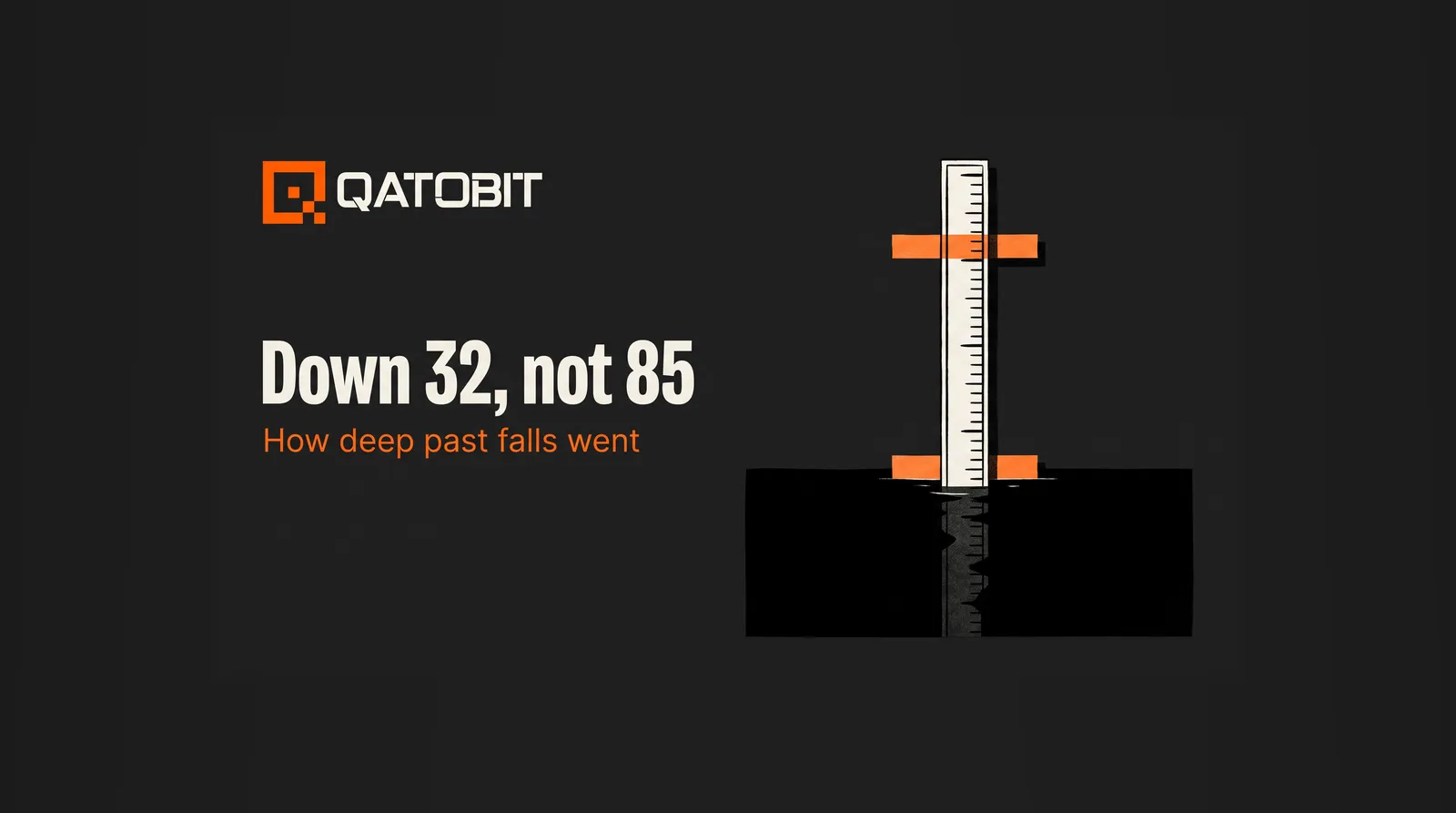
CoinGecko's pages give each distance from the peak as of 17 October 2026: Bitcoin 35.3 percent, Ethereum 50.9 percent, XRP 64.1 percent.
A worked example shows the spread in rupees. Take a ₹5 lakh lump sum placed at each coin's own high, which is the worst-timed case and is not a forecast of anything. At 35.3 percent below the peak (100 percent minus 35.3 leaves 64.7 percent), ₹5,00,000 × 0.647 = ₹3,23,500 in Bitcoin. At 50.9 percent below, ₹5,00,000 × 0.491 = ₹2,45,500 in Ethereum. At 64.1 percent below, ₹5,00,000 × 0.359 = ₹1,79,500 in XRP.
The gap between the best and worst of the three is ₹1,44,000 on the same ₹5 lakh, which is what the wrong pick cost in this example.
Source: CoinGecko coin pages for Bitcoin, Ethereum and XRP, read on 17 October 2026. Historical figures only.
The same ₹5 lakh, split three ways
Now split the ₹5 lakh equally across the three coins, ₹1,66,667 each, each placed at its own high. The three positions are worth ₹1,66,667 × 0.647 = ₹1,07,833 in Bitcoin, ₹1,66,667 × 0.491 = ₹81,833 in Ethereum and ₹1,66,667 × 0.359 = ₹59,833 in XRP. The total is ₹2,49,500, about 50 percent below what was put in.
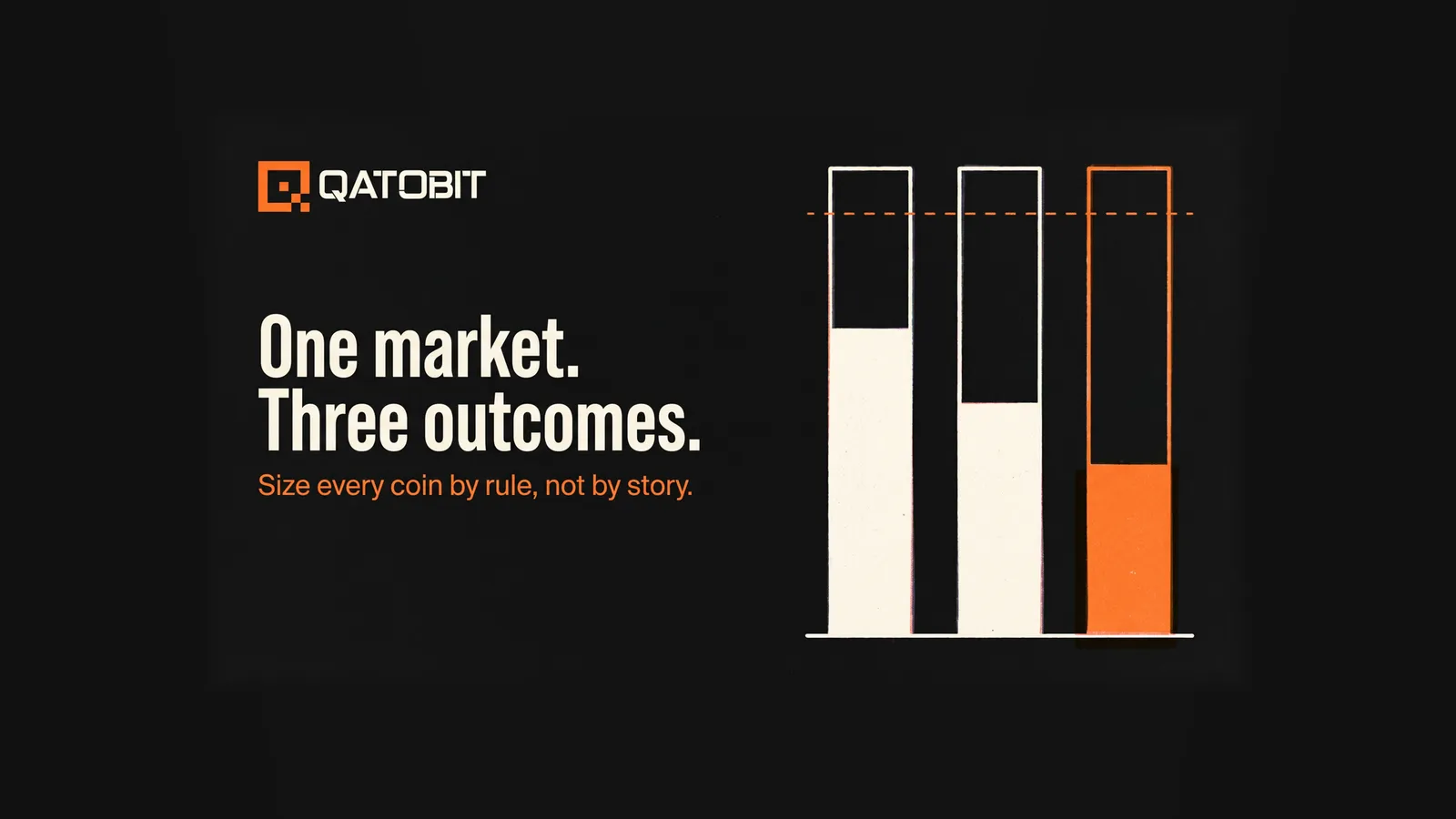
That is worse than holding Bitcoin alone in this example, because in hindsight a split trails the best coin. What it buys is that the worst coin cannot set the whole outcome, and nobody has to know in advance which coin is which. A rule sizes each position before the answer arrives.
What a rule does that a view cannot
A view says "I think this coin will do well" and sizes the position by conviction. A rule says how large each position may be, what happens when one grows past that size, and when the list itself is reviewed.
Qatobit's QSI indices work the second way. QSI Growth holds Bitcoin, Ethereum, Solana, Gold and a stable reserve (USDT Earn), and rebalances monthly on a published methodology. QSI VRION holds Bitcoin, Ethereum and Solana with no hedge layer, also rebalanced monthly, and is built for a horizon of five years at minimum. The investor makes one decision about the thesis, and the methodology handles the decision per coin.
A rule does not remove market risk, and either index can fall. It changes who sets the weights: a published methodology applied on a schedule, in place of the mood on the day.
For the mechanics, start with how a coin gets in and gets cut from an index. Then read how to read a crypto basket before you invest. The methodology pages show how each QSI index sets its weights.
Three questions to answer in writing
If you hold XRP, Bitcoin or both, write down three things. How large may any one coin become before you trim it? What would make you add? When will you review the list?
Answer them before the next move starts. A written rule is easier to follow in a bad quarter than a feeling is.
Frequently asked questions
Is XRP or Bitcoin the better crypto to hold?
Neither wins for every buyer. As of 17 October 2026, CoinGecko shows Bitcoin 35.3 percent below its all-time high and XRP 64.1 percent below its high, so the outcome depended on the buying day. Size each position by a written rule.
Why is XRP further below its high than Bitcoin?
The figures show a gap of 64.1 percent against 35.3 percent as of 17 October 2026. Two structural facts differ: XRP has 100 billion maximum tokens with 63 billion tradable, and Ripple's page lists 32,600,000,000 XRP in escrow. Bitcoin's supply is fixed at 21 million.
Does a crypto index include XRP?
It depends on the index's published rules. QSI Growth holds Bitcoin, Ethereum, Solana, Gold and a stable reserve, and QSI VRION holds Bitcoin, Ethereum and Solana. Each index's methodology page lists what it holds and how weights are set.
How do I decide how much of each coin to hold?
Write the rule down first: a maximum size for any one coin, a trigger for trimming, and a review date. Then apply it on that schedule. A published index methodology does the same thing on your behalf.
Does diversifying across coins prevent a loss?
No. In the ₹5 lakh example above, a three-way split placed at each coin's high was about 50 percent below cost. Splitting reduces dependence on one coin's story. It does not remove market risk.
Crypto investments are subject to market risk. Not financial advice.
“A better allocation begins with a better explanation.”
Qatobit principle
Published construction. Fixed cadence. Versioned control.